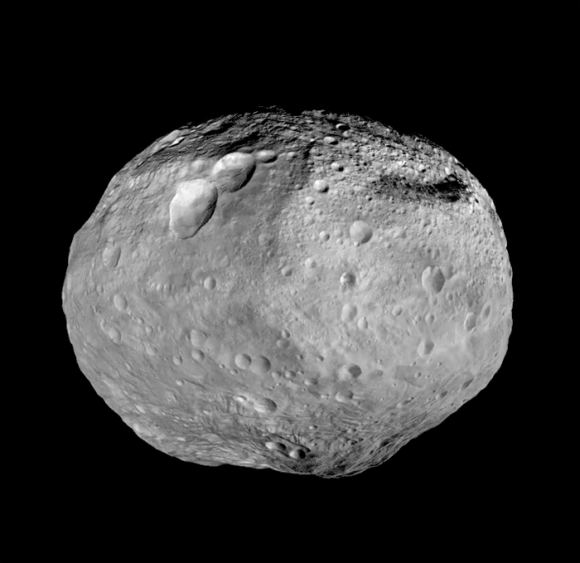
Dinosaur Killing Asteroid hit Earth in Exactly the Wrong Spot Sixty-six million years ago, an asteroid struck Earth in what is now the Yucatan Peninsula in southern Mexico. This event, known as the Chicxulub asteroid impact, measured 9 km in diameter and caused extreme global cooling and drought. This led to a mass extinction, which not only claimed the lives of the dinosaurs, but also wiped out about 75% of all land and sea animals on Earth. However, had this asteroid impacted somewhere else on the planet, things could have turned out very differently. According to a new study produced by a team of JapaneseRead More →

Weekly Space Hangout – Nov. 15, 2017: Dr. Manuella Campanelli and Dr. John Whelan of RIT Hosts: Fraser Cain (universetoday.com / @fcain) Dr. Paul M. Sutter (pmsutter.com / @PaulMattSutter) Dr. Kimberly Cartier (KimberlyCartier.org / @AstroKimCartier ) Dr. Morgan Rehnberg (MorganRehnberg.com / @MorganRehnberg ChartYourWorld.org) Special Guests: “This week we are honored to welcome two (of the numerous) Rochester Institute of Technology faculty members who are part of the LIGO Scientific Collaboration. RIT researchers played a significant role in the recently announced detection of both gravitational waves and light, dubbed Multimessenger Astronomy, that resulted from the merger of two distant neutron stars. Joining us today are Dr.Read More →

Antares Rocket Blasts Off from Virginia Bound for Space Station with Cygnus Cargo Ship and Tons of Vital Science Supplies Orbital ATK’s eighth contracted cargo delivery flight to the International Space Station successfully launched at 7:19 a.m. EST on an Antares rocket from Pad 0A at NASA’s Wallops Flight Facility in Virginia, Sunday, Nov. 12, 2017 carrying the Cygnus OA-8 resupply spacecraft. Credit: Ken Kremer/kenkremer.com NASA WALLOPS FLIGHT FACILITY, VA – An Orbital ATK Antares rocket successfully blasted off this morning, Sunday, Nov. 12, from the eastern shore of Virginia on a NASA contracted mission bound for the International Space Station (ISS) carrying a CygnusRead More →

NASA Moving Ahead with Deployment of Orion Capsule and Space Launch System On October 11th, 2010, Congress signed the bipartisan NASA Authorization Act, which allocated the necessary funding for the space agency to commence preparations for its “Journey to Mars“. For the sake of mounting the first crewed missions to the Red Planet, several components were designated as being crucial. These included the Space Launch System (SLS) and the Orion Multi-Purpose Crew Vehicle. Despite a recent announcement that NASA would be prioritizing a return to the Moon in the coming years, both the SLS and Orion are on track with the eventual goal of mountingRead More →

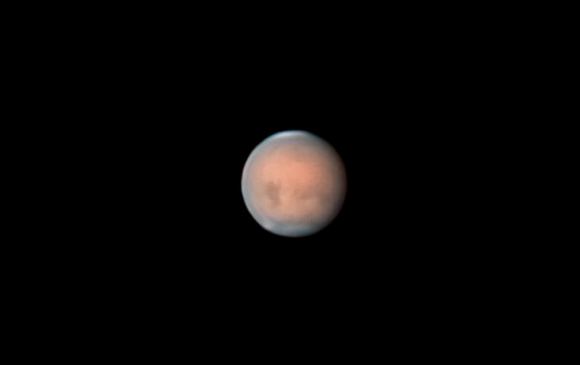
Life on Mars can Survive for Millions of Years Even Right Near the Surface Mars is not exactly a friendly place for life as we know it. While temperatures at the equator can reach as high as a balmy 35 °C (95 °F) in the summer at midday, the average temperature on the surface is -63 °C (-82 °F), and can reach as low as -143 °C (-226 °F) during winter in the polar regions. Its atmospheric pressure is about one-half of one percent of Earth’s, and the surface is exposed to a considerable amount of radiation. Until now, no one was certain if microorganismsRead More →

Orbital ATK Antares Rocket Set for Breakfast Blastoff from Virginia to Space Station with S.S. Gene Cernan Cargo Freighter Nov. 11: Watch Live The Orbital ATK Antares rocket topped with the Cygnus OA-8 spacecraft creates a beautiful water reflection in this prelaunch nighttime view across the inland waterways. Launch is targeted for Nov. 11, 2017, at NASA’s Wallops Flight Facility in Virginia. Credit: Ken Kremer/kenkremer NASA WALLOPS FLIGHT FACILITY, VA – The Orbital ATK Antares rocket is all set for a breakfast time blastoff from the commonwealth of Virginia to the International Space Station for NASA with a Cygnus cargo freighter named in honor ofRead More →

Building Electronics That Can Work on Venus The weather on Venus is like something out of Dante’s Inferno. The average surface temperature – 737 K (462 °C; 864 °F) – is hot enough to melt lead and the atmospheric pressure is 92 times that of Earth’s at sea level (9.2 Mbar). For this reason, very few robotic missions have ever made it to the surface of Venus, and those that have did not last long – ranging from about 20 minutes to just over two hours. Hence why NASA, with an eye to future missions, is looking to create robotic missions and components that canRead More →

A Brown Dwarf Prevented a Regular Star from Going Through its Full Life Cycle Eclipsing binary star systems are relatively common in our Universe. To the casual observer, these systems look like a single star, but are actually composed of two stars orbiting closely together. The study of these systems offers astronomers an opportunity to directly measure the fundamental properties (i.e. the masses and radii) of these systems respective stellar components. Recently, a team of Brazilian astronomers observed a rare sight in the Milky Way – an eclipsing binary composed of  a white dwarf and a low-mass brown dwarf. Even more unusual was the factRead More →

Busy Space Coast December Ahead as SpaceX Reactivates Damaged Cape Launch Pad, Aims for Year End Maiden Falcon Heavy Blastoff Upgraded SpaceX Falcon 9 blasts off with Thaicom-8 communications satellite on May 27, 2016 from Space Launch Complex 40 at Cape Canaveral Air Force Station, FL. 1st stage booster landed safely at sea minutes later. Credit: Ken Kremer/kenkremer.com KENNEDY SPACE CENTER, FL – A very busy and momentous December is ahead for SpaceX workers on Florida’s Space Coast as the company plans to reactivate the firms heavily damaged pad 40 at Cape Canaveral for a NASA resupply mission liftoff in early December while simultaneously aimingRead More →

Astronomers Practice Responding to a Killer Asteroid” Beyond the Earth-Moon system, thousands of asteroids known as Near-Earth Objects (NEOs) are known to exist. These rocks periodically cross Earth’s orbit and make close a flyby of Earth. Over the course of millions of years, some even collide with the Earth, causing mass extinctions. Little wonder then why NASA’s Center for Near Earth Object Studies (CNEOS) is dedicated to monitoring the larger objects that occasionally come close to our planet. One of these objects is 2012 TC4, a small and oblong-shaped NEO that was first spotted in 2012 during a close flyby of Earth. During its mostRead More →

Weekly Space Hangout – Nov 8, 2017: This Week in Musk, and More! Hosts: Fraser Cain (universetoday.com / @fcain) Dr. Paul M. Sutter (pmsutter.com / @PaulMattSutter) Dr. Kimberly Cartier (KimberlyCartier.org / @AstroKimCartier ) Dr. Morgan Rehnberg (MorganRehnberg.com / @MorganRehnberg ChartYourWorld.org) Announcements: If you would like to join the Weekly Space Hangout Crew, visit their site here and sign up. They’re a great team who can help you join our online discussions! We record the Weekly Space Hangout every Wednesday at 5:00 pm Pacific / 8:00 pm Eastern. You can watch us live on Universe Today, or the Weekly Space Hangout YouTube page – Please subscribe!Read More →

Carnival of Space #534 This week’s Carnival of Space is hosted by Allen Versfeld at his Urban Astronomer blog. Click here to read Carnival of Space #534. And if you’re interested in looking back, here’s an archive to all the past Carnivals of Space. If you’ve got a space-related blog, you should really join the carnival. Just email an entry to carnivalofspace@gmail.com, and the next host will link to it. It will help get awareness out there about your writing, help you meet others in the space community – and community is what blogging is all about. And if you really want to help out,Read More →

Proxima Centauri has a Cold Dust Belt that Could Indicate Even More Planets Proxima Centauri, in addition to being the closest star system to our own, is also the home of the closest exoplanet to Earth. The existence of this planet, Proxima b, was first announced in August of 2016 and then confirmed later that month. The news was met with a great deal of excitement, and a fair of skepticism, as numerous studies followed t were dedicated to determining if this planet could in fact be habitable. Another important question has been whether or not Proxima Centauri could have any more objects orbiting it.Read More →

They Just Began Casting the Giant Magellan Telescope’s 5th Mirror. What a Monster Job. The fifth mirror for the Giant Magellan Telescope (GMT) is now being cast, according to an announcement from the Giant Magellan Telescope Organization (GMTO), the body behind the project. The GMT is a ground-breaking segmented telescope consisting of 7 gigantic mirrors, and is being built at the Las Campanas Observatory, in Atacama, Chile. The mirrors for the GMT are being cast at the Richard F. Caris Mirror Laboratory, at the University of Arizona. This lab is the world centre when it comes to building large mirrors for telescopes. But in aRead More →

New Study Says Enceladus had Internal Ocean for Billions of Years When the Cassini mission arrived in the Saturn system in 2004, it discovered something rather unexpected in Enceladus’ southern hemisphere. From hundreds of fissures located in the polar region, plumes of water and organic molecules were spotted periodically spewing forth. This was the first indication that Saturn’s moon may have an interior ocean caused by hydrothermal activity near the core-mantle boundary. According to a new study based on Cassini data, which it obtained before diving into Saturn’s atmosphere on September 15th, this activity may have been going on for some time. In fact, theRead More →

Messier 59 – the NGC 4621 Elliptical Galaxy Welcome back to Messier Monday! Today, we continue in our tribute to our dear friend, Tammy Plotner, by looking at the spiral galaxy known as Messier 59. In the 18th century, while searching the night sky for comets, French astronomer Charles Messier kept noting the presence of fixed, diffuse objects he initially mistook for comets. In time, he would come to compile a list of approximately 100 of these objects, hoping to prevent other astronomers from making the same mistake. This list – known as the Messier Catalog – would go on to become one of theRead More →

Cutting-Edge Astronomy Confirms Most Ancient Galaxy to Date Since the deployment of the Hubble Space Telescope, astronomers have been able to look deeper into the cosmic web than ever before. The farther they’ve looked, the deeper back in time they are able to see, and thus learn what the Universe looked like billions of years ago. With the deployment of other cutting-edge telescopes and observatories, scientists have been able to learn a great deal more about the history and evolution of the cosmos. Most recently, an international team of astronomers using the Gemini North Telescope in Hawaii were able to spot a spiral galaxy locatedRead More →

The SpaceX Booster is Back in Town, Legs Quickly Detached: Photo/Video Gallery Recovered SpaceX first stage booster from KoreaSat-5A launch is towed into the mouth of Port Canaveral, FL atop OCISLY droneship to flocks of birds and onlookers as Atlantic Ocean waves crash onshore at sunset Nov. 2, 2017. Credit: Ken Kremer/Kenkremer.com PORT CANAVERAL/KENNEDY SPACE CENTER, FL – ‘The SpaceX boosters back in town! The boosters back in town!’ paraphrasing the popular lyrics of the hit single from Irish hard rock band Thin Lizzy – its what comes to mind with the speedy cadence of ‘launch, land and relaunch’ firmly established by CEO Elon Musk’sRead More →

Carnival of Space #533 This week’s Carnival of Space is hosted by Brian Wang at his Next Big Future blog. Click here to read Carnival of Space #533 And if you’re interested in looking back, here’s an archive to all the past Carnivals of Space. If you’ve got a space-related blog, you should really join the carnival. Just email an entry to carnivalofspace@gmail.com, and the next host will link to it. It will help get awareness out there about your writing, help you meet others in the space community – and community is what blogging is all about. And if you really want to help out, sign upRead More →

Check Out NASA’s New Instrument that will Look for Life on Enceladus Ever since the Cassini mission entered the Saturn system and began studying its moons, Enceladus has become a major source of interest. Once the probe detected plumes of water and organic molecules erupting from the moon’s southern polar region, scientists began to speculate that Enceladus may possess a warm-water ocean in its interior – much like Jupiter’s moon Europa and other bodies in our Solar System. In the future, NASA hopes to send another mission to this system to further explore these plumes and the interior of Enceladus. This mission will likely include aRead More →