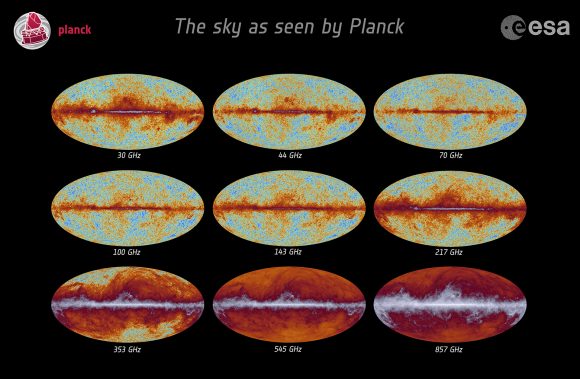
Oort Clouds Around Other Stars Should be Visible in the Cosmic Microwave Background For decades, scientists have theorized that beyond the edge of the Solar System, at a distance of up to 50,000 AU (0.79 ly) from the Sun, there lies a massive cloud of icy planetesimals known as the Oort Cloud. Named in honor of Dutch astronomer Jan Oort, this cloud is believed to be where long-term comets originate from. However, to date, no direct evidence has been provided to confirm the Oort Cloud’s existence. This is due to the fact that the Oort Cloud is very difficult to observe, being rather far fromRead More →

Spinning Heat Shield Concept Could Provide a Lightweight Way to Survive Atmospheric Re-entry One of the more challenging aspects of space exploration and spacecraft design is planning for re-entry. Even in the case of thinly-atmosphered planets like Mars, entering a planet’s atmosphere is known to cause a great deal of heat and friction. For this reason, spacecraft have always been equipped with heat shields to absorb this energy and ensure that the spacecraft do not crash or burn up during re-entry. Unfortunately, current spacecraft must rely on huge inflatable or mechanically deployed shields, which are often heavy and complicated to use. To address this, aRead More →

Carnival of Space #574 This week’s Carnival of Space is hosted by Allen Versfeld at his Urban Astronomer blog. Click here to read Carnival of Space #574. And if you’re interested in looking back, here’s an archive to all the past Carnivals of Space. If you’ve got a space-related blog, you should really join the carnival. Just email an entry to susie@wshcrew.space, and the next host will link to it. It will help get awareness out there about your writing, help you meet others in the space community – and community is what blogging is all about. And if you really want to help out, sign upRead More →

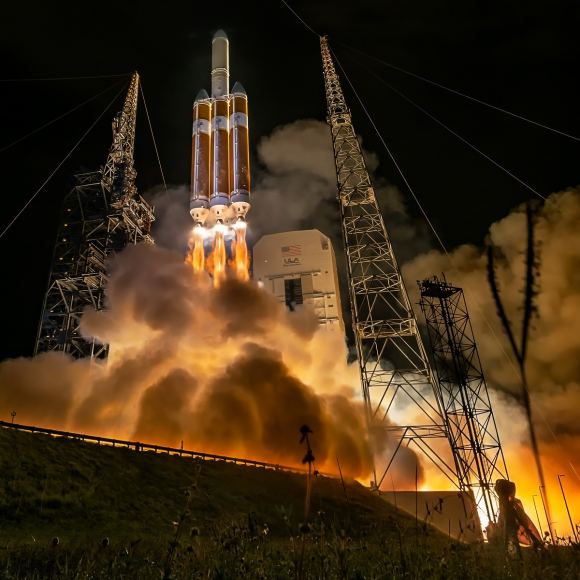
The Sun is Actually One of the Most Difficult Places to Reach in the Solar System. Here’s how the Parker Solar Probe Will Do It When it comes to exploring our Solar System, there are few missions more ambitious than those that seek to study the Sun. While NASA and other space agencies have been observing the Sun for decades, the majority of these missions were conducted in orbit around Earth. To date, the closest any probes have got to the Sun were the Helios 1 and 2 probes, which studied the Sun during the 1970s from inside Mercury’s orbit at perihelion. NASA intends toRead More →

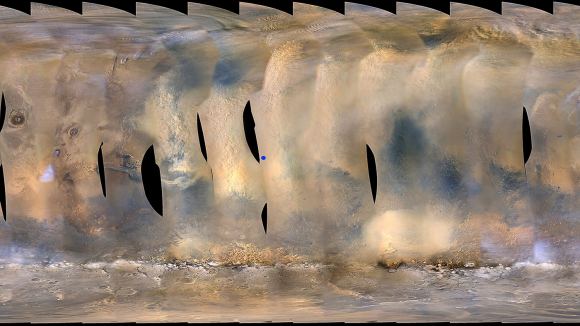
As the Martian Dust Storm Subsides, There’s Still No Word From Opportunity Martian dust storms are a pretty common occurrence, and generally happen whenever the southern hemisphere is experiencing summer. Though they can begin quite suddenly, these storms typically stay contained to a local area and last only about a few weeks. However, on occasion, Martian dust storms can grow to become global phenomena, covering the entire planet. One such storm began back in May, starting in the Arabia Terra region and then spreading to become a planet-wide dust storm within a matter of weeks. This storm caused the skies over the Perseverance Valley, whereRead More →

TESS Practices on a Comet Before Starting on its Science Operations On April 18th, 2018, NASA deployed the Transiting Exoplanet Survey Satellite (TESS), a next-generation exoplanet hunting telescope that is expected to find thousands of planets in the coming years. Alongside other next-generation telescopes like the James Webb Space Telescope (JWST), TESS will effectively pick up where space telescopes like Hubble and Kepler left off. The mission recently started science operations (on July 25th, 2018) and is expected to transmit its first collection of data back to Earth this month. But before that, the planet-hunting telescope took a series of images that featured a recently-discoveredRead More →

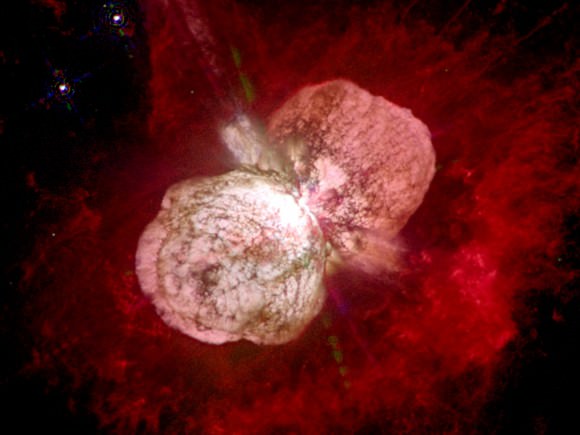
170 Years Ago, Eta Carinae Erupted Dramatically. Astronomers Now Think They Know Why Eta Carinae, a double star system located 7,500 light years away in the constellation Carina, has a combined luminosity of more than 5 million Suns – making it one of the brightest stars in the Milky Way galaxy. But 170 years ago, between 1837 and 1858, this star erupted in what appeared to be a massive supernova, temporarily making it the second brightest star in the sky. Strangely, this blast was not enough to obliterate the star system, which left astronomers wondering what could account for the massive eruption. Thanks to newRead More →

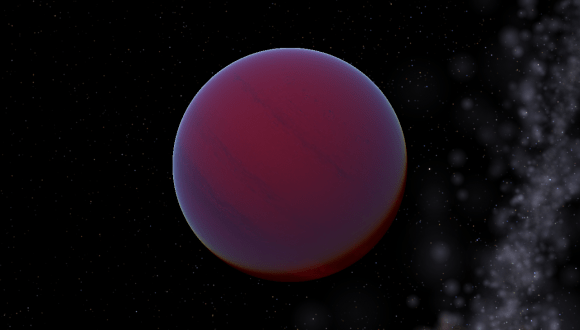
Is it a Massive Planet or a Tiny Brown Dwarf. This Object is Right at the Border Between Planet and Star Rogue planets are a not-too-uncommon occurrence in our Universe. In fact, within our galaxy alone, it is estimated that there are billions of rogue planets, perhaps even more than there are stars. These objects are basically planet-mass objects that have been ejected from their respective star systems (where they formed), and now orbit the center of the Milky Way. But it is especially surprising to find one orbiting so close to our own Solar System! In 2016, scientists detected what appeared to be eitherRead More →

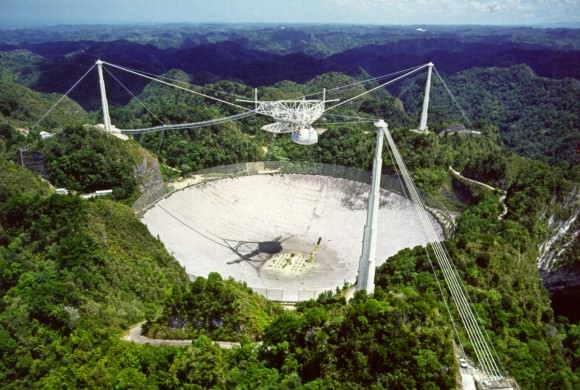
New Canadian Radio Telescope is Detecting Fast Radio Bursts Since they were first detected in 2007, Fast Radio Bursts (FRBs) have been a source of mystery to astronomers. In radio astronomy, this phenomenon refers to transient radio pulses coming from distant sources that typically last a few milliseconds on average. Despite the detection of dozens of events since 2007, scientists are still not sure what causes them – though theories range from exploding stars, black holes, and magnetars to alien civilizations! To shed light on this mysterious phenomena, astronomers are looking to new instruments to help search for and study FRBs. One of these isRead More →

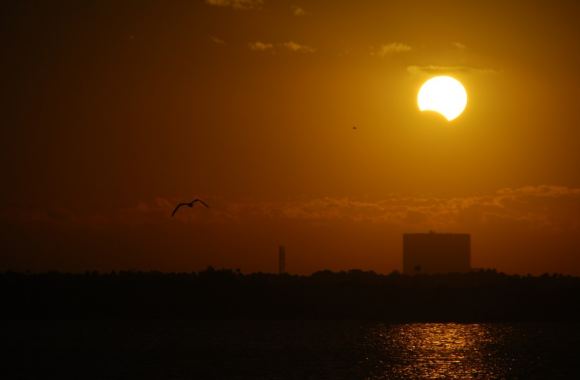
A Partial Solar Eclipse and the Perseids Round Out August A partial solar eclipse rising over the Vehicle Assembly Building along the Florida Space Coast. Credit: Dave Dickinson How about that Total Lunar Eclipse this past July 13th? It has been a busy year for astronomy for sure, with two total lunar eclipses, a comet fading out from an unexpected burst of glory, and Saturn, Jupiter and Mars reaching opposition in quick succession. Now, watch for a rare event this weekend, with the final eclipse for 2018 coming up on Saturday, August 11th, with a partial solar eclipse spanning northern Europe and the Arctic. CircumstancesRead More →

It Looks Like Plate Tectonics Aren’t Required to Support Life When looking for potentially-habitable extra-solar planets, scientists are somewhat restricted by the fact that we know of only one planet where life exists (i.e. Earth). For this reason, scientists look for planets that are terrestrial (i.e. rocky), orbit within their star’s habitable zones, and show signs of biosignatures such as atmospheric carbon dioxide – which is essential to life as we know it. This gas, which is the largely result of volcanic activity here on Earth, increases surface heat through the greenhouse effect and cycles between the subsurface and the atmosphere through natural processes. ForRead More →

Five Teams Compete to Design a 3D Printed Mars Habitat for NASA If and when we decide to go to Mars (and stay there), the Martian settlers will face some serious challenges. For one, the planet is extremely cold compared to Earth, averaging at about -63 °C (-82°F), which is comparable to cold night in Antarctica. On top of that, there’s the incredibly thin atmosphere that is unbreathable to humans and terrestrial creatures. Add to that the radiation, and you begin to see why settling Mars will be difficult. But as the saying goes, necessity is the mother of invention. And to stimulate the inventionRead More →

The Coldest Place in Space Has Been Created. Next Challenge, Coldest Place in the Universe Despite decades of ongoing research, scientists are trying to understand how the four fundamental forces of the Universe fit together. Whereas quantum mechanics can explain how three of these forces things work together on the smallest of scales (electromagnetism, weak and strong nuclear forces), General Relativity explains how things behaves on the largest of scales (i.e. gravity). In this respect, gravity remains the holdout. To understand how gravity interacts with matter on the tiniest of scales, scientists have developed some truly cutting-edge experiments. One of these is NASA’s Cold AtomRead More →

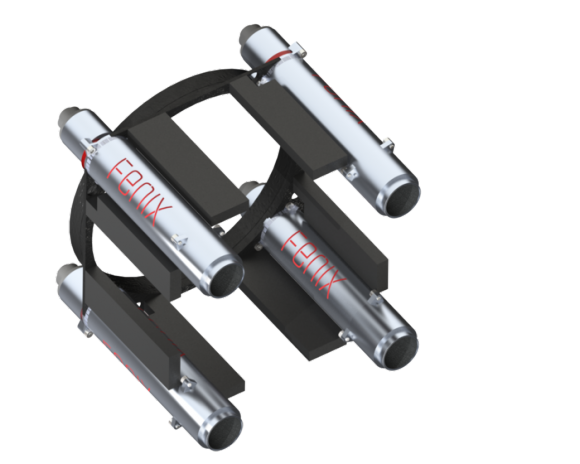
Look at This Adorable Pen-Sized Booster, Perfect for Tiny Satellites When it comes to space exploration, the motto “keep it simple” isn’t always followed! For the most part, satellites, spacecraft, telescopes, and the many other technologies that allow humans to study and explore the Universe are the result of highly-technical and complex feats of engineering. But sometimes, it is the simplest ideas that offer the most innovative solutions. This is especially true when it comes to the today’s space agencies, who are concerned with cutting costs and increasing accessibility to space. A good example is the Fenix propulsion system, a proposal created by Italian techRead More →

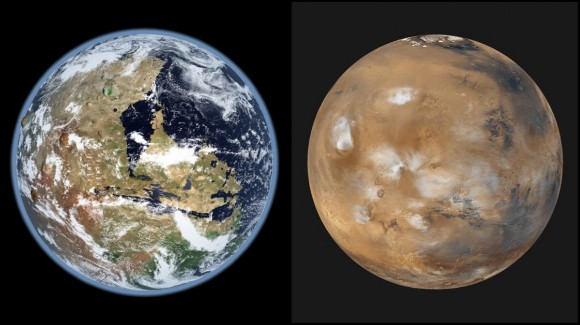
Uh oh, Mars Doesn’t Have Enough Carbon Dioxide to be Terraformed For almost a century now, the concept of terraforming has been explored at length by both science fiction writers and scientists alike. Much like setting foot on another planet or traveling to the nearest star, the idea of altering an uninhabitable planet to make it suitable for humans is a dream many hope to see accomplished someday. At present, much of that hope and speculation is aimed at our neighboring planet, Mars. But is it actually possible to terraform Mars using our current technology? According to a new NASA-sponsored study by a pair ofRead More →

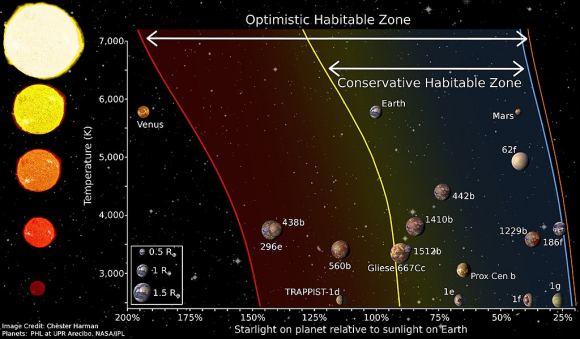
With All These New Planets Found in the Habitable Zone, Maybe it’s Time to Fine Tune the Habitable Zone In the past few decades, thousands of extra-solar planets have been discovered within our galaxy. As of July 28th, 2018, a total of 3,374 extra-solar planets have been confirmed in 2,814 planetary systems. While the majority of these planets have been gas giants, an increasing number have been terrestrial (i.e. rocky) in nature and were found to be orbiting within their stars’ respective habitable zones (HZ). However, as the case of the Solar System shows, HZs do not necessary mean a planet can support life. EvenRead More →

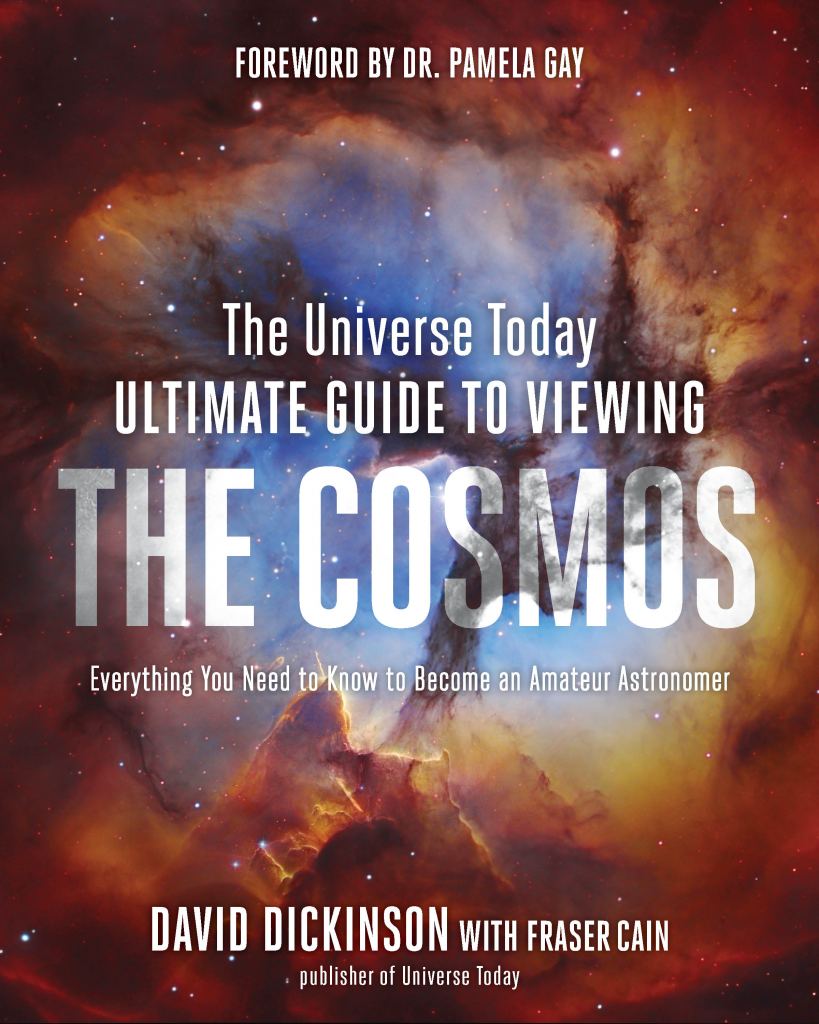
Our Book: The Universe Today Ultimate Guide to Viewing the Cosmos The Universe Today Ultimate Guide to Viewing the Cosmos by David Dickinson with Fraser Cain Have you ever wanted to get into the hobby of astronomy but don’t know where to start? It can be challenging, especially with the bewildering array of telescopes, objects in the night sky, and techniques. Our new book, The Universe Today Ultimate Guide to Viewing the Cosmos, is all you need to get started. It’s written by David Dickinson, the Universe Today reporter who covers skywatching and astronomical events, with additional material from Fraser Cain, publisher of Universe Today,Read More →

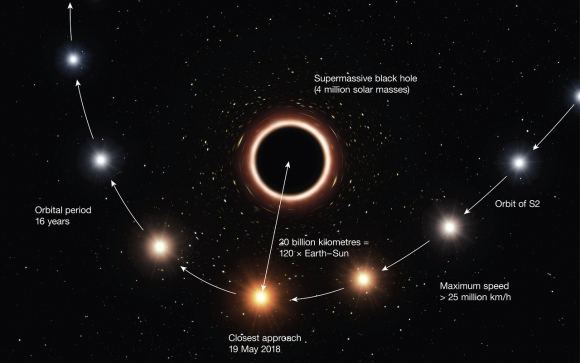
Einstein Was Right… Again! Successful Test of General Relativity Near a Supermassive Black Hole In 1915, Albert Einstein published his famous Theory of General Relativity, which provided a unified description of gravity as a geometric property of space and time. This theory gave rise to the modern theory of gravitation and revolutionized our understanding of physics. Even though a century has passed since then, scientists are still conducting experiments that confirm his theory’s predictions. Thanks to recent observations made by a team of international astronomers (known as the GRAVITY collaboration), the effects of General Relativity have been revealed using a Supermassive Black Hole (SMBH) forRead More →

Carnival of Space #572 This week’s Carnival of Space is hosted by Allen Versfeld at his Urban Astronomer blog. Click here to read Carnival of Space #572. And if you’re interested in looking back, here’s an archive to all the past Carnivals of Space. If you’ve got a space-related blog, you should really join the carnival. Just email an entry to susie@wshcrew.space, and the next host will link to it. It will help get awareness out there about your writing, help you meet others in the space community – and community is what blogging is all about. And if you really want to help out, sign upRead More →

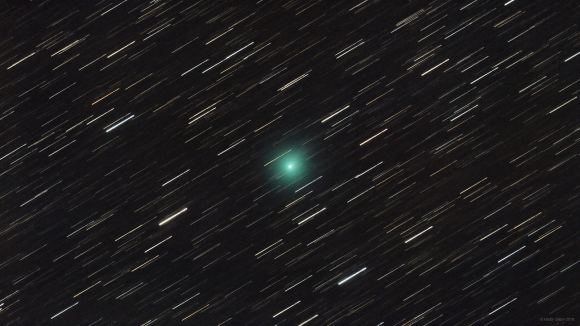
Catch Comet C/2017 S3 PanSTARRS in Outburst Comet C/2017 S3 PanSTARRS from July 22nd. Image credit and copyright: hodorgabor Comets are one of those great question marks in observational astronomy. Though we can plot their orbits thanks to Newton and Kepler, just how bright they’ll be and whether or not they will fizzle or fade is always a big unknown, especially if they’re a dynamic newcomer from the Oort Cloud just visiting the inner solar system for the first time. We had just such a surprise from a cosmic visitor over the past few weeks, as comet C/2017 S3 PanSTARRS erupted twice, brightening into binocularRead More →