Hubble Sees Intense Auroras on Uranus This is a composite image of Uranus by Voyager 2 and two different observations made by Hubble — one for the ring and one for the auroras. These auroras occurred in the planet’s southern latitudes near the planet’s south magnetic pole. Like Jupiter and Saturn, hydrogen atoms excited by blasts of the solar wind are the cause for the glowing white patches seen in both photos. Credit: NASA/ESA Earth doesn’t have a corner on auroras. Venus, Mars, Jupiter, Saturn, Uranus and Neptune have their own distinctive versions. Jupiter’s are massive and powerful; Martian auroras patchy and weak. Auroras areRead More →

What Constellation is the Sun in? Since ancient times, astronomers have organized the stars into various constellations. We have the Big Dipper (Ursa Major), Orion the Hunter, and his “Greater Dog” and “Lesser Dog”(Canis Major and Canis Minor). And those are just some of the better-known ones. But have you ever wondered if the Sun belongs to one of these collections of stars? The simple answer is that – in accordance with both ancient astrological tradition and modern astronomy – the Sun technically has no constellation. But if you were to change locations and travel to a new star system, you would then be ableRead More →

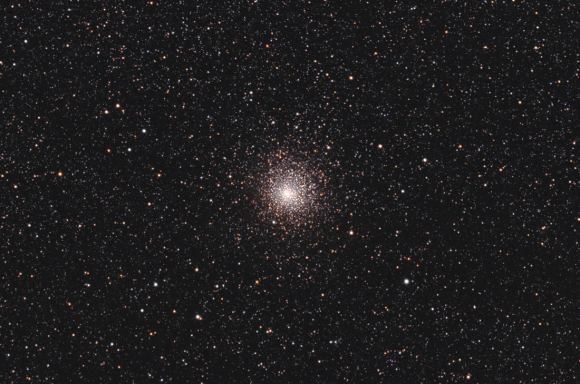
Messier 39 – The NGC 7092 Open Star Cluster Welcome back to Messier Monday! In our ongoing tribute to the great Tammy Plotner, we take a look at the open galactic star cluster known as Messier 39. Enjoy! During the 18th century, famed French astronomer Charles Messier noted the presence of several “nebulous objects” in the night sky. Having originally mistaken them for comets, he began compiling a list of them so that others would not make the same mistake he did. In time, this list (known as the Messier Catalog) would come to include 100 of the most fabulous objects in the night sky.Read More →

Hubble Takes Advantage Of Opposition To Snap Jupiter On April, 7th, 2017, Jupiter will come into opposition with Earth. This means that Earth and Jupiter will be at points in their orbit where the Sun, Earth and Jupiter will all line up. Not only will this mean that Jupiter will be making its closest approach to Earth – reaching a distance of about 670 million km (416 million mi) – but the hemisphere that faces towards us will be fully illuminated by the Sun. Because of its proximity and its position, Jupiter will be brighter in the night sky than at any other time duringRead More →

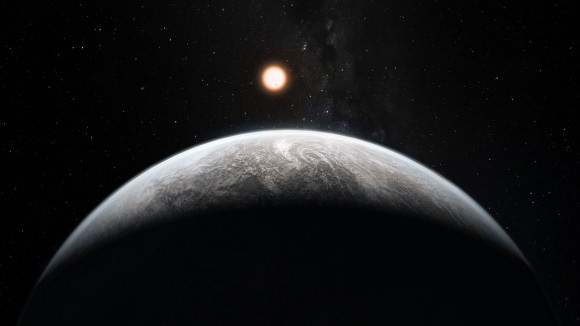
Finally! A Low Mass Super-Earth With Some Funky Atmosphere In 2015, astronomers discovered an intriguing extrasolar planet located in a star system some 39 light years from Earth. Despite orbiting very close to its parent star, this “Venus-like” planet – known as GJ 1138b – appeared to still be cool enough to have an atmosphere. In short order, a debate ensued as to what kind of atmosphere it might have, whether it was a “dry Venus” or a “wet Venus”. And now, thanks to the efforts of an international team of researchers, the existence of an atmosphere has been confirmed around GJ 1138b. In additionRead More →

Carnival of Space #503 This week’s Carnival of Space is hosted by Brian Wang at his Next Big Future blog. Click here to read Carnival of Space #503 And if you’re interested in looking back, here’s an archive to all the past Carnivals of Space. If you’ve got a space-related blog, you should really join the carnival. Just email an entry to carnivalofspace@gmail.com, and the next host will link to it. It will help get awareness out there about your writing, help you meet others in the space community – and community is what blogging is all about. And if you really want to help out, sign upRead More →

When Will Mars Be Close to Earth? As neighboring planets, Earth and Mars have a few things in common. Both are terrestrial in nature (i.e. rocky), both have tilted axes, and both orbit the Sun within its circumstellar habitable zone. And during the course of their orbital periods (i.e. a year), both planets experience variations in temperature and changes in their seasonal weather patterns. However, owing to their different orbital periods, a year on Mars is significantly longer than a year on Earth – almost twice as long, in fact. And because their orbits are different, the distance between our two planets varies considerably. Basically,Read More →

Weekly Space Hangout – April 7, 2017: Weekly News Roundup Host: Fraser Cain (@fcain) Guests: Paul M. Sutter (pmsutter.com / @PaulMattSutter) Their stories this week: Rogue Black Hole! We use a tool called Trello to submit and vote on stories we would like to see covered each week, and then Fraser will be selecting the stories from there. Here is the link to the Trello WSH page (http://bit.ly/WSHVote), which you can see without logging in. If you’d like to vote, just create a login and help us decide what to cover! If you would like to join the Weekly Space Hangout Crew, visit their siteRead More →

Confirmed: Ceres Has a Transient Atmosphere Sometimes they see it, sometimes they don’t. That’s why scientists have never been completely sure if Ceres has an atmosphere or not. But now data from the Dawn spacecraft — in orbit of Ceres — confirms the dwarf planet really does have a very weak atmosphere, but it comes and goes. The on-again-off-again nature of Ceres’ atmosphere appears to be linked to solar activity. When energetic particles from the Sun hit exposed ice within the craters on Ceres, the ice can sublimate and create an “exosphere” that lasts for a week or so. Michaela Villarreal from UCLA, lead authorRead More →

What Are You Doing For Yuri’s Night? On April 12th, 1961, history was made when the first human being – Russian cosmonaut Yuri Gagarin – went into space. Similarly, on April 12th, 1981, the inaugural launch of the Space Shuttle took place. In recognition of these accomplishments, people from all around the world have been celebrating “Yuri’s Night” – a global festival honoring humanity’s past, present, and future in space – for over a decade and a half. This year will mark the 56th anniversary of Yuri Gagarin’s historic flight and of human spaceflight in general. As with every Yuri’s Night that has happened sinceRead More →

A Star Going Supernova In Slow Motion Discovered A supernova is a rare and wondrous event. Since these intense explosions only take place when a massive star reaches the final stage of its evolutionary lifespan – when it has exhausted all of its fuel and undergoes core collapse – or when a white dwarf in a binary star system consumes its companion, being able to witness one is quite the privilege. But recently, an international team of astronomers witnessed something that may be even rarer – a supernova event that appeared to be happening in slow-motion. Whereas supernova of its kind (SN Type Ibn) areRead More →

By Jove: Jupiter at Opposition 2017 Jupiter from January 7th, 0217. Image credit and copyright: Fred Locklear. Been missing the evening planets? Currently, Saturn and Venus rule the dawn, and Mars is sinking into the dusk as it recedes towards the far side of the Sun. The situation has been changing for one planet however, as Jupiter reaches opposition this week. Jupiter in 2017 Currently in the constellation Virgo near the September equinoctial point where the celestial equator meets the ecliptic in 2017, Jupiter rules the evening skies. Orbiting the Sun once every 11.9 years, Jupiter moves roughly one zodiacal constellation eastward per year, asRead More →

World’s Largest Rocket Will Be Recoverable & Reusable When Elon Musk launched SpaceX in 2002, he did so with the intention of making reusability a central feature of his company. Designed to lower the costs associated with launches, being able to reuse boosters was also a means of making space more accessible. “If one can figure out how to effectively reuse rockets just like airplanes,” he said, “the cost of access to space will be reduced by as much as a factor of a hundred.” And with last week’s successful launch of the first reusable Falcon 9 (the SES-10 Mission) Musk chose to unveil moreRead More →

Worlds’ 1st Recycled Booster from SpaceX Sails Serenely at Sunrise into Port Canaveral – Photo/Video Gallery World’s first reflown rocket booster – the SpaceX Falcon 9 first stage – sails back into Port Canaveral, FL just before sunrise atop OCISLY droneship on which it landed 9 minutes after March 30, 2017 liftoff from KSC with SES-10 telecomsat – as seen entering channels mouth trailing a flock of birds from Jetty Park pier on April 4, 2017. Credit: Ken Kremer/Kenkremer.com PORT CANAVERAL/KENNEDY SPACE CENTER, FL – Basking in the sunrise glow, the world’s first recycled booster – namely a SpaceX Falcon 9 – sailed serenely intoRead More →

Cassini’s Final Mission to Annihilation Starts April 22 Grab the tissues. This video nearly had the Cassini team all choked up during today’s press briefing, and virtual sobs and sniffs were abundant on social media posts sharing the video. “We get goosebumps and get emotional every time we see it,” said Earl Maize, Cassini project manager at JPL. On April 22 the Cassini spacecraft will begin its ‘Grand Finale’ — the beginning of the end of this tremendous mission that has provided breathtaking images and so many new discoveries of Saturn, its rings and moons. The mission will end on September 15, 2017, when itRead More →

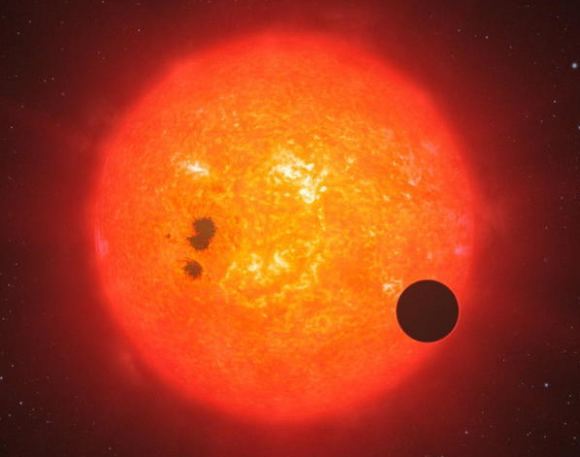
TRAPPIST-1 Is Showing A Bit Too Much Flare It turns out that the TRAPPIST-1 star may be a terrible host for the TRAPPIST planets announced in February. The TRAPPIST-1 star, a Red Dwarf, and its 7 planets caused a big stir in February when it was discovered that 3 of the rocky planets are in the habitable zone. But now more data is coming which suggests that the TRAPPIST-1 star is much too volatile for life to exist on its planets. Red Dwarfs are much dimmer than our Sun, but they also last much longer. Their lifetimes are measured in trillions of years, not billions.Read More →

Extraterrestrial Origin Of Fast Radio Burst Phenomenon Confirmed Fast Radio Bursts (FRBs) have puzzled astronomers since they were first detected in 2007. These mysterious milliseconds-long blasts of radio waves appear to be coming from long distances, and have been attributed to various things such as alien signals or extraterrestrial propulsion systems, and more ‘mundane’ objects such as extragalactic neutron stars. Some scientists even suggested they were some type of ‘local’ source, such as atmospheric phenomena on Earth, tricking astronomers about their possible distant origins. So far, less than two dozen FRBs have been detected in a decade. But now researchers from the Australian National UniversityRead More →

Venus 2.0 Discovered In Our Own Back Yard It has been an exciting time for exoplanet research of late! Back in February, the world was astounded when astronomers from the European Southern Observatory (ESO) announced the  discovery of seven planets in the TRAPPIST-1 system, all of which were comparable in size to Earth, and three of which were found to orbit within the star’s habitable zone. And now, a team of international astronomers has announced the discovery of an extra-solar body that is similar to another terrestrial planet in our own Solar System. It’s known as Kepler-1649b, a planet that appears to be similar inRead More →

Astronomy Cast Ep. 444: Fractals For this historic 444th episode of Astronomy Cast, we talk about fractals. Those amazing mathematical visualizations of recursive algorithms. What are they, how do you get them? Why are they important? Visit the Astronomy Cast Page to subscribe to the audio podcast! We usually record Astronomy Cast as a live Google+ Hangout on Air every Friday at 1:30 pm Pacific / 4:30 pm Eastern. You can watch here on Universe Today or from the Astronomy Cast Google+ page. The post Astronomy Cast Ep. 444: Fractals appeared first on Universe Today. Universe Today Go to Source Powered by WPeMaticoRead More →

Mars’ Trojans Show Remains Of Ancient Planetoid Trojan asteroids are a fascinating thing. Whereas the most widely known are those that orbit Jupiter (around its L4 and L5 Lagrange Points), Venus, Earth, Mars, Uranus and Neptune have populations of these asteroids as well. Naturally, these rocky objects are a focal point for a lot of scientific research, since they can tell us much about the formation and early history of the Solar System. And now, thanks to an international team of astronomers, it has been determined that the Trojan asteroids that orbit Mars are likely the remains of a mini-planet that was destroyed by aRead More →