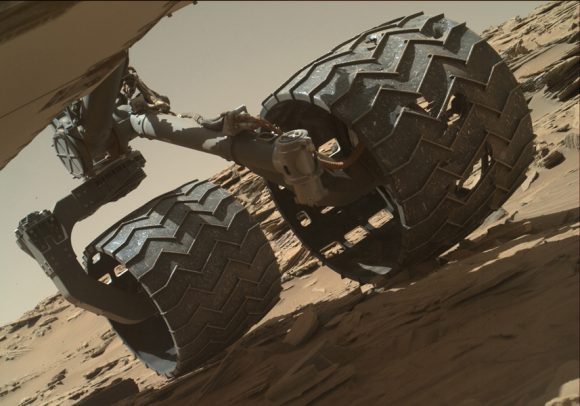
The Next Mars Rover’s Wheels Won’t Get Torn Apart by the Red Planet The Curiosity Rover has made some incredible discoveries during the five years it has been operating on the surface of Mars. And in the course of conducting its research, the rover has also accrued some serious mileage. However, it certainly came as a surprise when during a routine examinations in 2013, members of the Curiosity science team noted that its wheels had suffered rips in their treads (followed by breaks reported in 2017). Looking to the future, researchers at NASA’s Glenn Research Center hope to equip next-generation rovers with a new wheel.Read More →
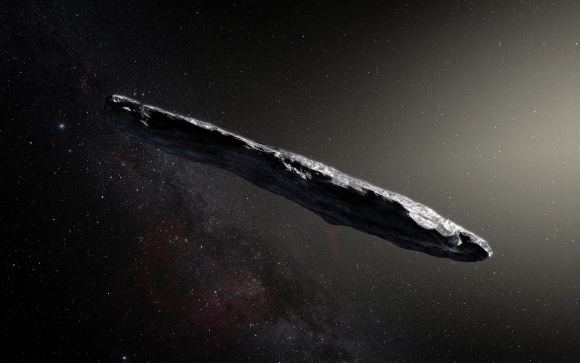
Project Lyra, a Mission to Chase Down that Interstellar Asteroid Back in October, the announcement that the first interstellar asteroid triggered a flurry of excitement. Since that time, astronomers have conducted follow-up observations of the object known as 1I/2017 U1 (aka. `Oumuamua) and noted some rather interesting things about it. For example, from rapid changes in its brightness, it has been determined that the asteroid is rocky and metallic, and rather oddly-shaped. Observations of the asteroid’s orbit have also revealed that it made its closest pass to our Sun back in September of 2017, and it is currently on its way back to interstellar space.Read More →

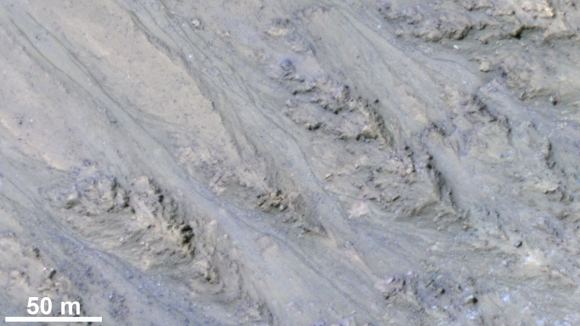
These Streaks on Mars Could be Flowing Sand, not Water When robotic missions first began to land on the surface of Mars in the 1970s, they revealed a harsh, cold and desiccated landscape. This effectively put an end generations of speculation about “Martian canals” and the possibility of life on Mars. But as our efforts to explore the Red Planet have continued, scientists have found ample evidence that the planet once had flowing water on its surface. In addition, scientists have been encouraged by the appearance of Recurring Slope Lineae (RSL), which were believed to be signs of seasonal water flows. Unfortunately, a new studyRead More →

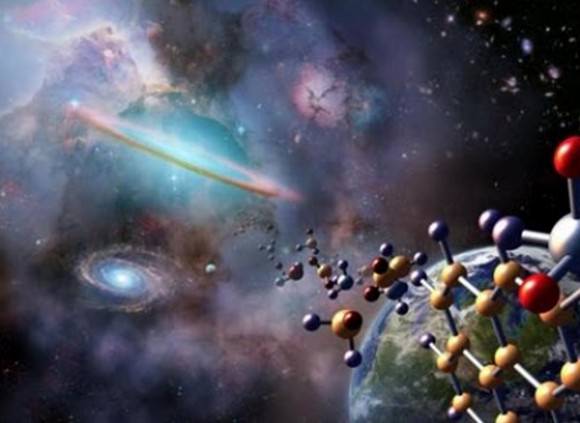
Galactic Panspermia: Interstellar Dust Could Transport Life from Star to Star The theory of Panspermia states that life exists through the cosmos, and is distributed between planets, stars and even galaxies by asteroids, comets, meteors and planetoids. In this respect, life began on Earth about 4 billion years ago after microorganisms hitching a ride on space rocks landed on the surface. Over the years, considerable research has been devoted towards demonstrating that the various aspects of this theory work. The latest comes from the University of Edinburgh, where Professor Arjun Berera offers another possible method for the transport of life-bearing molecules. According to his recentRead More →

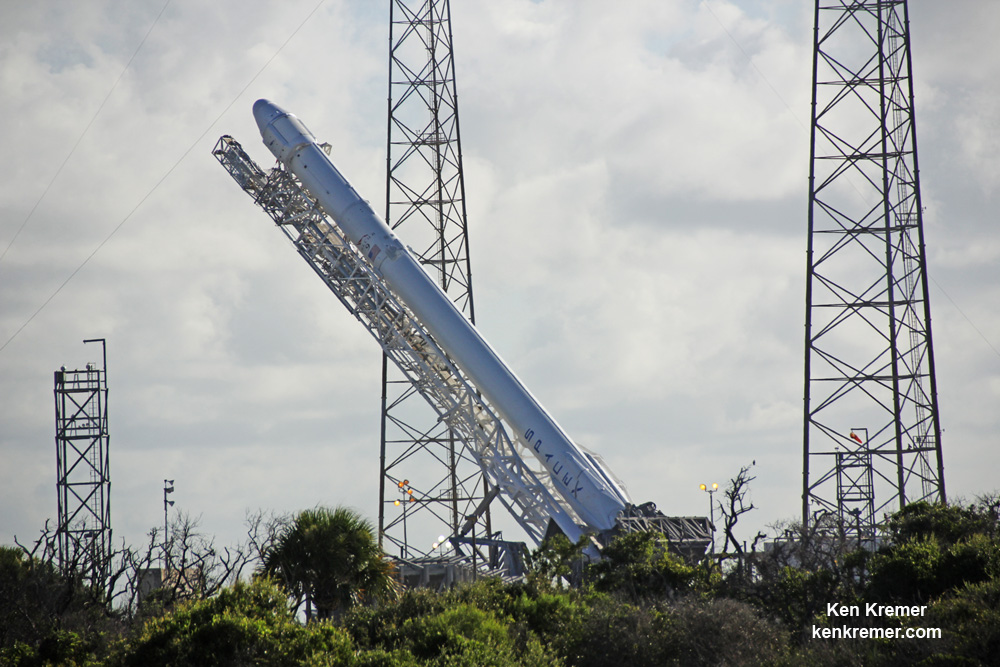
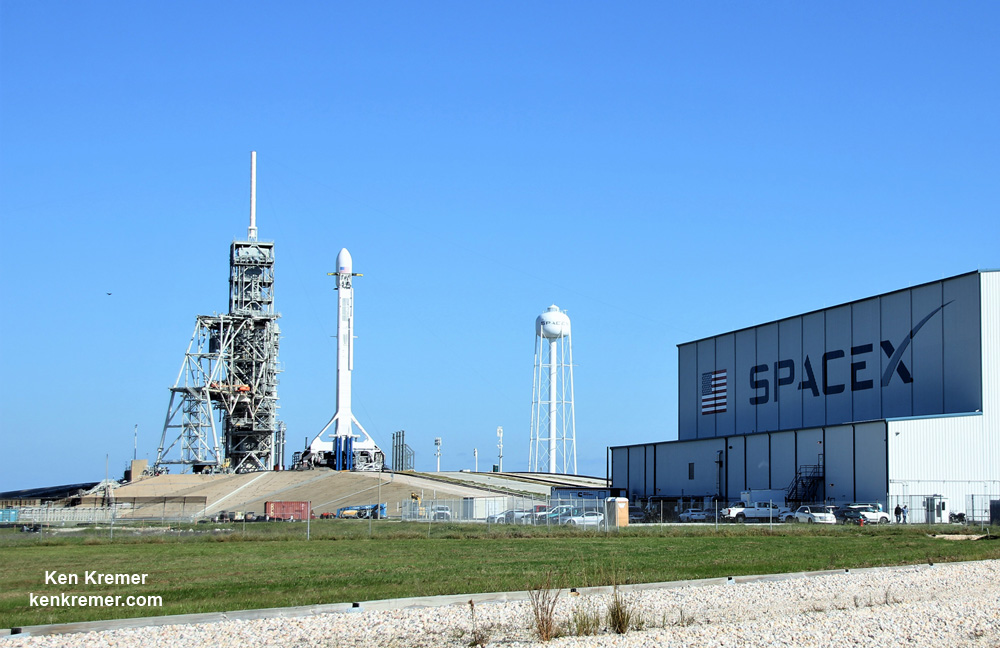
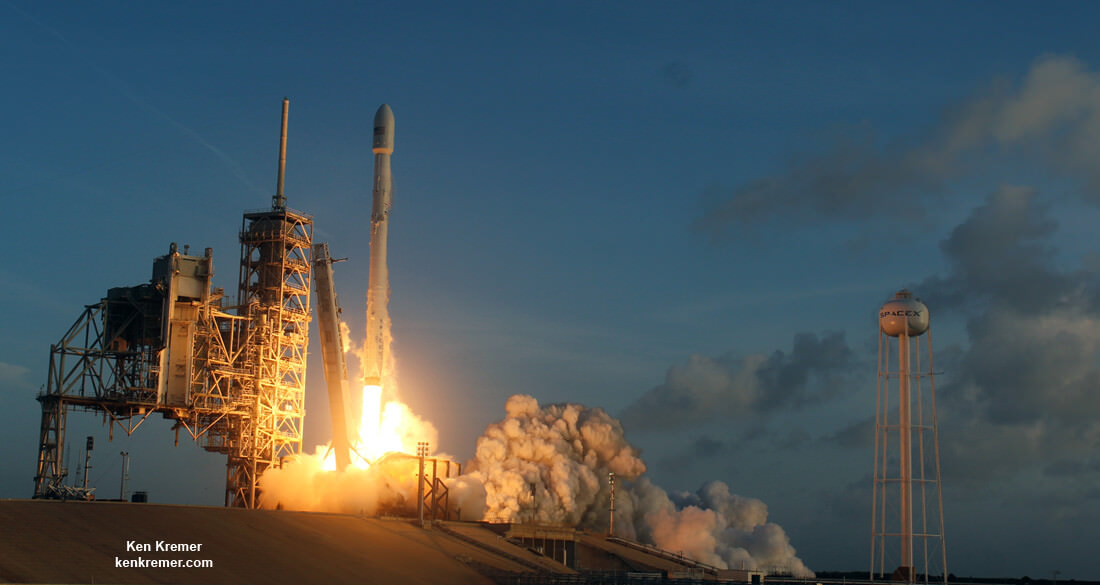
SpaceX Resuming Launches from Damaged Pad 40 on Dec. 4 with Station Resupply Flight for NASA; Covert Zuma Remains on Hold SpaceX Dragon CRS-9 was the last International Space Station resupply mission to lift off successfully from pad 40 on July 18, 2016, prior to the Cape Canaveral, FL, launch pad explosion with the Amos-6 payload that heavily damaged the pad and infrastructure on Sept. 1, 2016. Cargo launches for NASA will resume with Dragon CRS-13 in December 2017. Credit: Ken Kremer/kenkremer.com KENNEDY SPACE CENTER, FL – After postponing last week’s liftoff of the covert ‘Zuma’ spy satellite due to last minute concerns about theRead More →

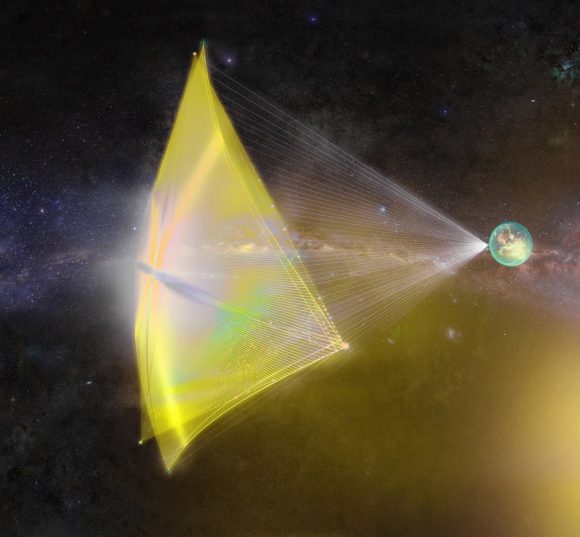
Could Magnetic Sails Slow an Interstellar Spacecraft Enough? The number of confirmed extra-solar planets has increased by leaps and bounds in recent years. With every new discovery, the question of when we might be able to explore these planets directly naturally arises. There have been several suggestions so far, ranging from laser-sail driven nanocraft that would travel to Alpha Centauri in just 20 years (Breakthrough Starshot) to slower-moving microcraft equipped with a gene laboratories (The Genesis Project). But when it comes to braking these craft so that they can slow down and study distant stars and orbit planets, things become a bit more complicated. AccordingRead More →

Book Review: Cosmology for the Curious What will Curious George grow up to be? Being curious, then George will ask a lot of questions. And if lucky then physics will be George’s destiny, for physics seems to have so many answers. From the biggest to the smallest, that’s its purview. And for Delia Perlov and Alex Vilenkin in their book “Cosmology for the Curious” aim to answer a great many of those questions. Or at least those questions pertaining to mankind’s place in space. Cosmology is all about space and time. Which means that this book begins by traveling back in time. Traveling to theRead More →

That Interstellar Asteroid is Probably Pretty Strange Looking On October 19th, 2017, the Panoramic Survey Telescope and Rapid Response System-1 (Pan-STARRS-1) telescope in Hawaii picked up the first interstellar asteroid, named 1I/2017 U1 (aka. `Oumuamua). After originally being mistaken for a comet, observations performed by the European Southern Observatory (ESO) and other astronomers indicated that it was actually an asteroid that measures about 400 meters (1312 ft) long. Thanks to data obtained by the ESO’s Very Large Telescope (VLT) at the Paranal Observatory in Chile, the brightness, color and orbit of this asteroid have been precisely determined. And according to a new study led byRead More →

Carnival of Space #536 This week’s Carnival of Space is hosted by Brian Wang at his Next Big Future blog. Click here to read Carnival of Space #536 And if you’re interested in looking back, here’s an archive to all the past Carnivals of Space. If you’ve got a space-related blog, you should really join the carnival. Just email an entry to carnivalofspace@gmail.com, and the next host will link to it. It will help get awareness out there about your writing, help you meet others in the space community – and community is what blogging is all about. And if you really want to help out, sign upRead More →

Weekly Space Hangout – Nov. 22, 2017: Andy Weir and ARTEMIS Hosts: Fraser Cain (universetoday.com / @fcain) Dr. Paul M. Sutter (pmsutter.com / @PaulMattSutter) Dr. Kimberly Cartier (KimberlyCartier.org / @AstroKimCartier ) Dr. Morgan Rehnberg (MorganRehnberg.com / @MorganRehnberg ChartYourWorld.org) Special Guests: This week, we are SUPER excited to welcome author Andy Weir (The Martian), back to the show to chat with us about his new book, Artemis. Viewers who have seen Andy’s first appearance on our show on January 9, 2015, will remember just how awesome he is as a guest – and why we can’t wait to catch up with him this week. Andy beganRead More →

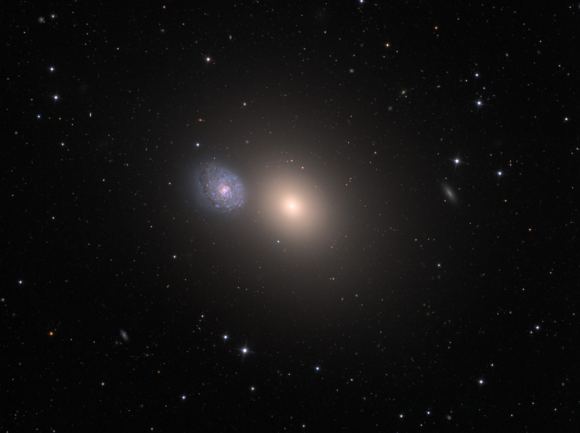
Messier 60 – the NGC 4649 Galaxy Welcome back to Messier Monday! Today, we continue in our tribute to our dear friend, Tammy Plotner, by looking at the elliptical galaxy known as Messier 60. In the 18th century, while searching the night sky for comets, French astronomer Charles Messier kept noting the presence of fixed, diffuse objects he initially mistook for comets. In time, he would come to compile a list of approximately 100 of these objects, hoping to prevent other astronomers from making the same mistake. This list – known as the Messier Catalog – would go on to become one of the mostRead More →

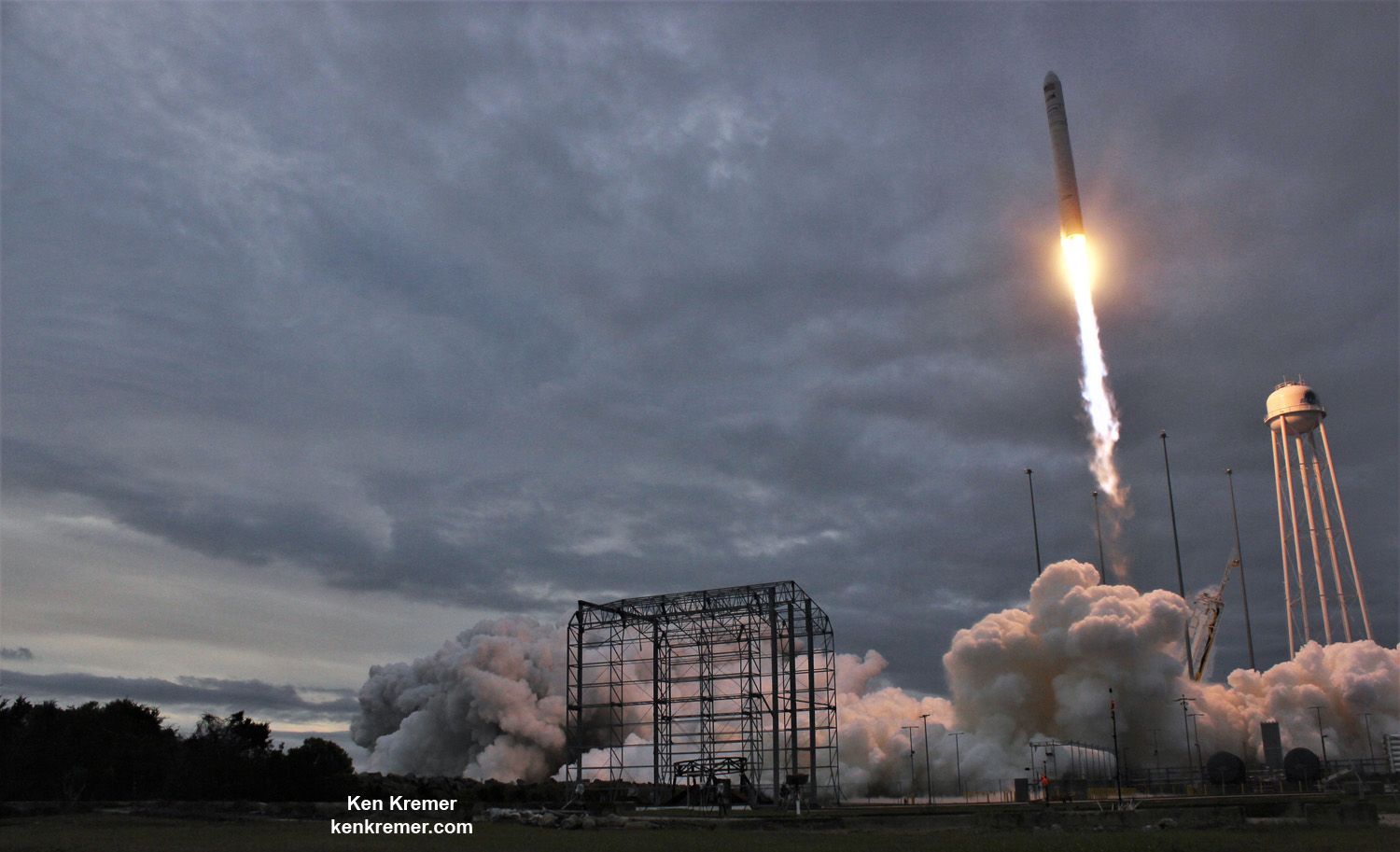
Station Astronauts Unload Cygnus Science; Antares Launch Gallery Orbital ATK Antares rocket lifts off on Nov. 12, 2017 carrying the S.S. Gene Cernan Cygnus OA-8 cargo spacecraft from Pad 0A at NASA’s Wallops Flight Facility in Virginia to the International Space Station. Credit: Ken Kremer/kenkremer.com NASA WALLOPS FLIGHT FACILITY, VA – Astronauts aboard the International Space Station are now busily unloading nearly four tons of science experiments, research gear, station equipment and crew supplies – following the spectacular launch of the Orbital ATK Antares rocket earlier this week on Sunday Nov. 12 from Virginia’s eastern shore that propelled the Cygnus cargo freighter to an onRead More →

Clandestine Zuma SpySat’s SpaceX Liftoff Postponed Indefinitely to Resolve Payload Fairing Issue SpaceX Falcon 9 rocket blastoff of clandestine Zuma spysat to low earth orbit for a classified US government customer is postponed indefinitely from Launch Complex 39A at the Kennedy Space Center, FL, from last targeted launch date of 17 Nov 2017. Credit: Ken Kremer/Kenkremer.com KENNEDY SPACE CENTER, FL – Liftoff of the clandestine spy satellite codenamed ‘Zuma’ on a SpaceX Falcon 9 rocket has been postponed indefinitely to resolve a lingering issue with the testing of a payload fairing for another customer. SpaceX announced today, Friday, Nov 17, that they will ‘stand down’Read More →

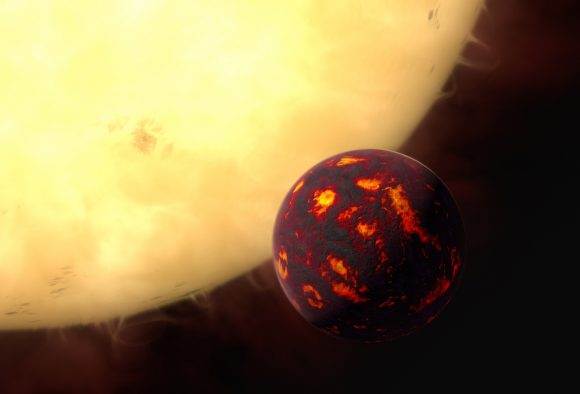
Planet With Lava Oceans Also has an Atmosphere, Says New Study The super-Earth 55 Cancri e (aka. Janssen) is somewhat famous, as exoplanet go. Originally discovered in 2004, this world was one of the few whose discovery predated the Kepler mission. By 2016, it was also the first exoplanet to have its atmosphere successfully characterized. Over the years, several studies have been conducted on this planet that revealed some rather interesting things about its composition and structure. For example, scientists believed at one time that 55 Cancri e was a “diamond planet“, whereas more recent work based on data from the Spitzer Space Telescope concludedRead More →

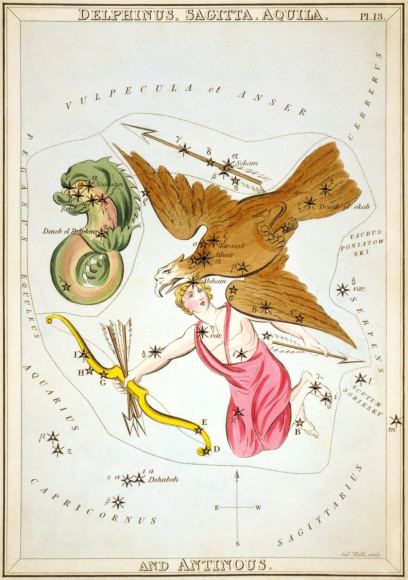
The Delphinus Constellation Welcome to another edition of Constellation Friday! Today, in honor of the late and great Tammy Plotner, we take a look at “the Dolphin” – the Delphinus constellation. Enjoy! In the 2nd century CE, Greek-Egyptian astronomer Claudius Ptolemaeus (aka. Ptolemy) compiled a list of all the then-known 48 constellations. This treatise, known as the Almagest, would be used by medieval European and Islamic scholars for over a thousand years to come, effectively becoming astrological and astronomical canon until the early Modern Age. One of these is the northern constellation of Delphinus, which translates to “the Dolphin” in Latin. This constellation is locatedRead More →

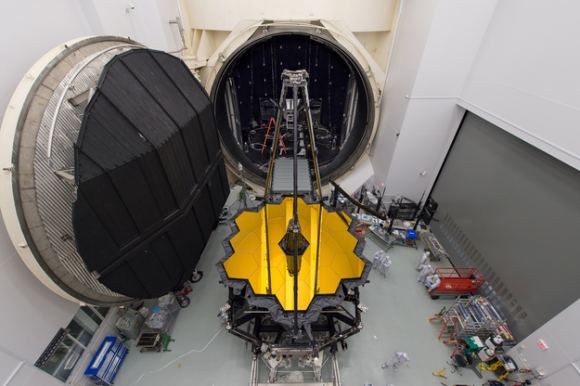
When James Webb Finally Reaches Space, Here’s What it’ll be Hunting Ever since the project was first conceived, scientists have been eagerly awaiting the day that the James Webb Space Telescope (JWST) will take to space. As the planned successor to Hubble, the JWST will use its powerful infrared imaging capabilities to study some of the most distant objects in the Universe (such as the formation of the first galaxies) and study extra-solar planets around nearby stars. However, there has been a lot of speculation and talk about which targets will be the JWST’s first. Thankfully, following the recommendation of the Time Allocation Committee and aRead More →

Antarctica has a Huge Mantle Plume Beneath it, Which Might Explain Why its Ice Sheet is so Unstable Beneath the Antarctic ice sheet, there lies a continent that is covered by rivers and lakes, the largest of which is the size of Lake Erie. Over the course of a regular year, the ice sheet melts and refreezes, causing the lakes and rivers to periodically fill and drain rapidly from the melt water. This process makes it easier for Antarctica’s frozen surface to slide around, and to rise and fall in some places by as much as 6 meters (20 feet). According to a new studyRead More →

Carnival of Space #535 This week’s Carnival of Space is hosted by Gadi Eidelheit at his The Venus Transit blog. Click here to read Carnival of Space #535. And if you’re interested in looking back, here’s an archive to all the past Carnivals of Space. If you’ve got a space-related blog, you should really join the carnival. Just email an entry to carnivalofspace@gmail.com, and the next host will link to it. It will help get awareness out there about your writing, help you meet others in the space community – and community is what blogging is all about. And if you really want to helpRead More →

Ownerless Super Secret Zuma Spysat Set for Dark Veiled Dark Night SpaceX Blastoff and Land Landing Nov. 16: Watch Live SpaceX Falcon 9 rocket carrying classified NROL-76 surveillance satellite for the National Reconnaissance Office successfully launches shortly after sunrise from Launch Complex 39A on 1 May 2017 from NASA’s Kennedy Space Center in Florida. 1st stage accomplished successful ground landing at the Cape nine minutes later. Credit: Ken Kremer/Kenkremer.com KENNEDY SPACE CENTER, FL – The super secret ‘Zuma’ mission claimed by no U.S. government entity – not even the elusive NRO spy agency ! – and whose goals are veiled in virtually complete darkness– isRead More →

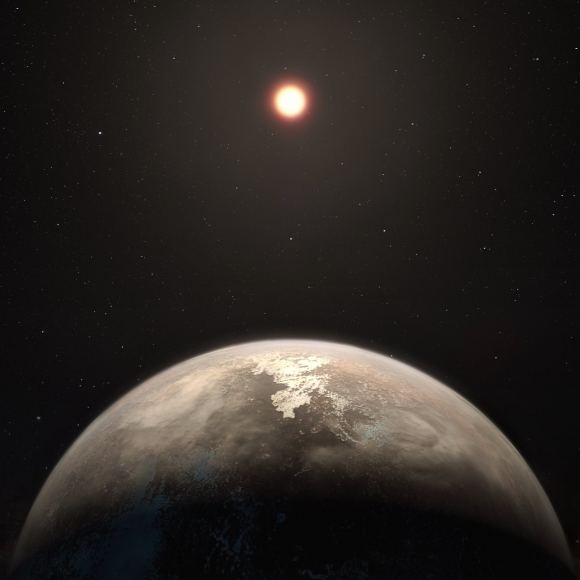
Closest Potentially-Habitable World Found Around “Quiet” Star In August of 2016, the European Southern Observatory (ESO) announced the discovery of a terrestrial (i.e. rocky) extra-solar planet orbiting within the habitable zone of the nearby Proxima Centauri star system, just 4.25 light-years away. Naturally, news of this was met with a great deal of excitement. This was followed about six months later with the announcement of a seven-planet system orbiting the nearby star of TRAPPIST-1. Well buckle up, because the ESO just announced that there is another potentially-habitable planet in our stellar neighborhood! Like Proxima b, this exoplanet – known as Ross 128b – is relativelyRead More →