Another Juno Flyby, Another Amazing Sequence of Images of Jupiter In July of 2016, the Juno spacecraft established orbit around Jupiter, becoming the first spacecraft since the Galileo probe to study the planet directly. Since that time, the probe has been sending back vital information about Jupiter’s atmosphere, magnetic field and weather patterns. With every passing orbit – known as perijoves, which take place every 53 days – the probe has revealed more exciting things about this gas giant. In addition, each perijove has been an opportunity for Juno to snap pictures with its JunoCam. With the help of the public, these pictures have beenRead More →

New Horizons Sees its Next Target for the First Time: Ultima Thule. Flyby Happens January 1, 2019 In July of 2015, NASA’s New Horizons mission made history when it became the first spacecraft to conduct a flyby of Pluto. Since that time, the spacecraft’s mission was extended so it could make its way farther into the outer Solar System and become the first spacecraft to explore some Kuiper Belt Objects (KBOs). It’s first objective will be the KBO known as 2014 MU69, which was recently given the nickname “Ultima Thule” (“ultima thoo-lee”). Earlier this month (on August 16th), the New Horizons spacecraft managed to capture anRead More →

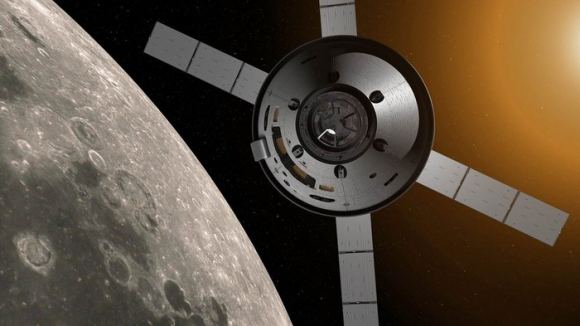
Construction on the Orion Capsule is Done. Next it’ll be Sent to Florida for Final Assembly In recent years, NASA has been busy developing the technology and components that will allow astronauts to return to the Moon and conduct the first crewed mission to Mars. These include the Space Launch System (SLS), which will be the most powerful rocket since the Saturn V (which brought the Apollo astronauts to the Moon), and the Orion Multi-Purpose Crew Vehicle (MPCV). Over the past few months, engineers at the Michoud Assembly Facility near New Orleans finished welding together the capsule structure (aka. pressure vessel) of the Orion thatRead More →

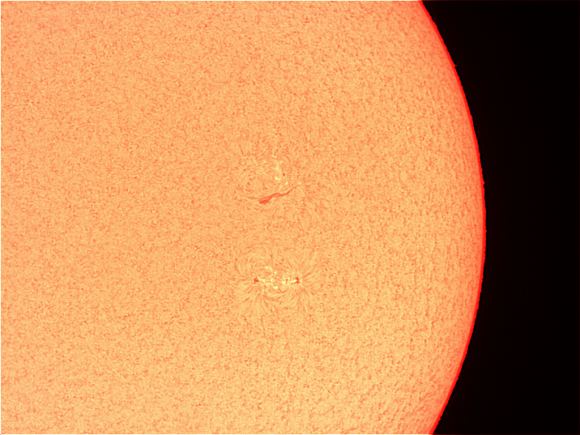
Are We Witnessing the Start of Solar Cycle 25? A precursor to the start of Solar Cycle 25? The Sun in hydrogen alpha from August 25th, 2018, showing enigmatic sunspot AR 2720. Image credit and copyright: Damien Weatherly. What’s up with the Sun? As we’ve said previous, what the Sun isn’t doing is the big news of 2018 in solar astronomy. Now, the Sun sent us another curveball this past weekend, with the strange tale of growing sunspot AR 2720. We’re currently headed towards a solar minimum, forecasted to arrive in 2019 as the Sun switches over from Solar Cycle 24 to Solar Cycle 25.Read More →

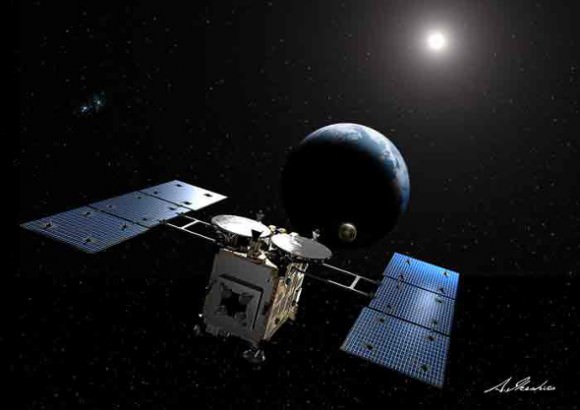
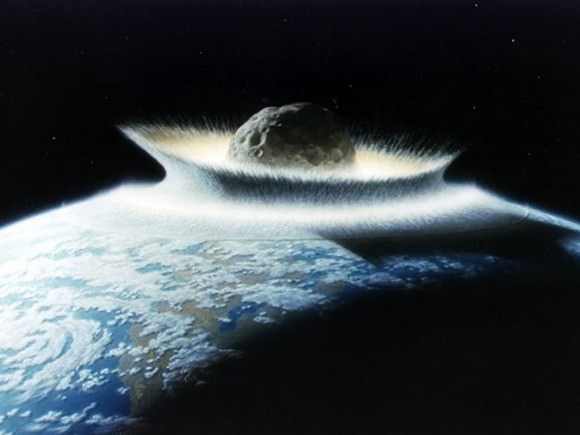
Hayabusa’s Target Itokawa Formed 4.6 Billion Years Ago, But Then it Was Smashed Up About 1.5 Billion Years Ago Within Earth’s orbit, there are an estimated eighteen-thousands Near-Earth Asteroids (NEAs), objects whose orbit periodically takes them close to Earth. Because these asteroids sometimes make close flybys to Earth – and have collided with Earth in the past – they are naturally seen as a potential hazard. For this reason, scientists are  dedicated to tracking NEAs, as well as studying their origin and evolution. However, when and how NEAs formed and what they experienced during their lifetimes has remained an enduring mystery. Luckily, a team ofRead More →

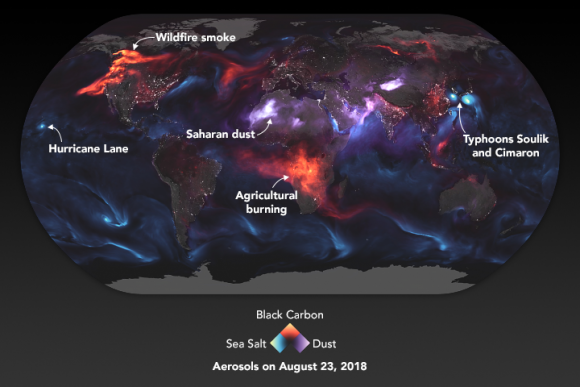
Look at all the Aerosols Pushed into the Atmosphere, from Fires, Volcanoes and Pollution. Even Sea Salt Thrown into the Air from Hurricanes Stand outside and take deep breath. Do you know what you’re breathing? For most people, the answer is simple – air. And air, which is essential to life as we know it, is composed of roughly twenty-percent oxygen gas (O²) and seventy-eight percent nitrogen gas (N²). However, within the remaining one-percent and change are several other trace gases, as well as few other ingredients that are not always healthy. For instance, taking a deep breath outdoors, even on a clear day, willRead More →

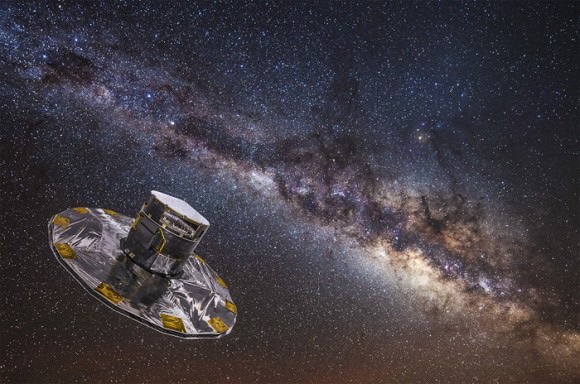
This is a 3D map of 400,000 Hot Massive Stars Located Within 10,000 Light-Years From the Sun, Thanks to Gaia! In December of 2013, the European Space Agency (ESA) launched the Gaia mission, a space observatory designed to measure the positions of movements of celestial bodies. Over the course of its five-year mission, this observatory has been studying a total of 1 billion objects – including distant stars, planets, comets, asteroids, quasars, etc. – for the sake of creating the largest and most precise 3D space catalog ever made. With the second release of Gaia data, which took place on April 25th, 2018, astronomers haveRead More →

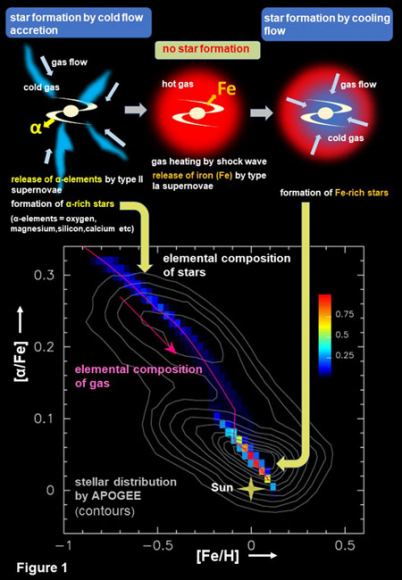
We’re in the Milky Way’s Second Life. Star Formation was Shut Down for Billions of Years Since the birth of modern astronomy, scientists have sought to determine the full extent of the Milky Way galaxy and learn more about its structure, formation and evolution. According to current theories, it is widely believed that the Milky Way formed shortly after the Big Bang (roughly 13.51 billion years ago). This was the result of the first stars and star clusters coming together, as well as the accretion of gas directly from the Galactic halo. Since then, multiple galaxies are thought to have merged with the Milky Way,Read More →

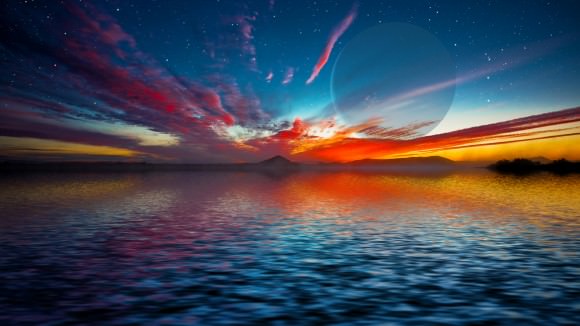
There are so Many Water-Worlds Out There Ever since the first exoplanet was confirmed in 1992, astronomers have found thousands of worlds beyond our Solar System. With more and more discoveries happening all the time, the focus of exoplanet research has begun to slowly shift from exoplanet discovery to exoplanet characterization. Essentially, scientists are now looking to determine the composition of exoplanets to determine whether or not they could support life. A key part of this process is figuring out how much water exists on exoplanets, which is essential to life as we know it. During a recent scientific conference, a team of scientists presentedRead More →

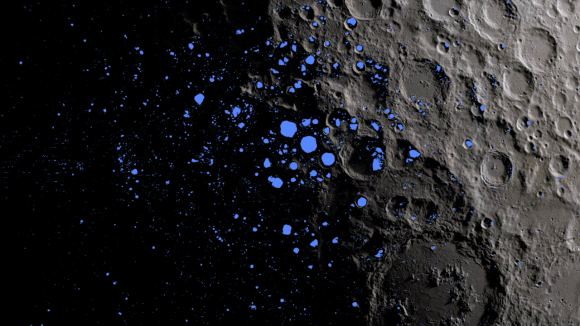
Dust off Your Lunar Colony Plans. There’s Definitely Ice at the Moon’s Poles. When it comes right down to it, the Moon is a pretty hostile environment. It’s extremely cold, covered in electrostatically-charged dust that clings to everything (and could cause respiratory problems if inhaled), and its surface is constantly bombarded by radiation and the occasional meteor. And yet, the Moon also has a lot going for it as far as establishing a human presence there is concerned. In addition to offering astronauts with extensive research opportunities, scientists have theorized for decades that water ice exists on the lunar surface. But thanks to a newRead More →

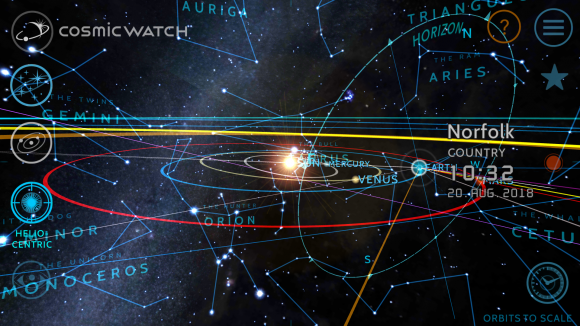
Cosmic Watch Review: A Unique Perspective on the Night Sky A view along the Solar System, using Cosmic Watch. Watching the heavens on a nightly, or even casual basis? The web and modern technology has certainly altered the landscape of modern astronomy, (mostly) for the better. Once, we all huddled around cardboard planispheres, illuminated by red flashlights; now, it’s now a common sight to see illuminated smartphone apps accompanying telescopes at star parties, all waving skyward with virtual planetarium programs guiding users around the night sky. We’ve used a few different planetarium apps over the past few years, mostly as curiosities and teaching tools. OneRead More →

Building Bricks on the Moon From Lunar Dust In the coming decades, many space agencies hope to conduct crewed missions to the Moon and even establish outposts there. In fact, between NASA, the European Space Agency (ESA), Roscosmos, and the Indian and Chinese space agencies, there are no shortages of plans to construct lunar bases and settlements. These will not only establish a human presence on the Moon, but facilitate missions to Mars and deeper into space. For instance, the ESA is planning on building an “international lunar village” on the Moon by the 2030s. As the spiritual successor to the International Space Station (ISS),Read More →

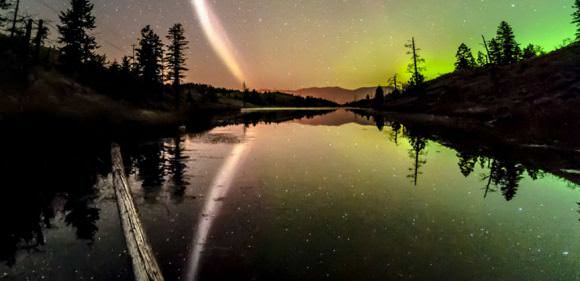
That New Kind of Aurora Called “Steve”? Turns Out, it Isn’t an Aurora at All Since time immemorial, people living in the Arctic Circle or the southern tip of Chile have looked up at the night sky and been dazzled by the sight of the auroras. Known as the Aurora Borealis in the north and Aurora Australis in the south (the “Northern Lights” and “Southern Lights”, respectively) these dazzling displays are the result of interactions in the ionosphere between charged solar particles and the Earth’s magnetic field. However, in recent decades, amateur photographers began capturing photos of what appeared to be a new type ofRead More →

Earth’s Mini-Moons are the Perfect Targets to Test Out Asteroid Mining Roughly 4.5 billion years ago, scientists theorize that Earth experienced a massive impact with a Mars-sized object (named Theia). In accordance with the Giant Impact Hypothesis, this collision placed a considerable amount of debris in orbit, which eventually coalesced to form the Moon. And while the Moon has remained Earth’s only natural satellite since then, astronomers believe that Earth occasionally shares its orbit with “mini-moons”. These are essentially small and fast-moving asteroids that largely avoid detection, with only one having been observed to date. But according to a new study by an international teamRead More →

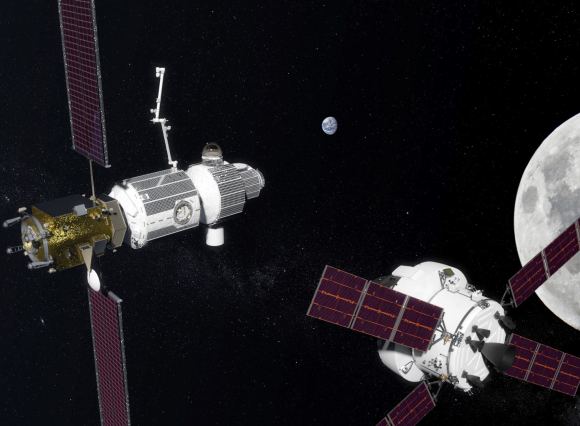
Lockheed Martin Shows off its new Space Habitat In their pursuit of returning astronauts to the Moon, and sending crewed missions to Mars, NASA has contracted with a number of aerospace companies to develop all the infrastructure it will need. In addition to the Space Launch System (SLS) and the Orion spacecraft – which will fly the astronauts into space and see them safety to their destinations – they have teamed up with Lockheed Martin and other contractors to develop the Deep Space Gateway. This orbiting lunar habitat will not only facilitate missions to and from the Moon and Mars, it will also allow humanRead More →

Another Way to Search for Biosignatures of Alien Life. The Material Blasted out of Asteroid Impacts In recent years, the number of confirmed extra-solar planets has risen exponentially. As of the penning of the article, a total of 3,777 exoplanets have been confirmed in 2,817 star systems, with an additional 2,737 candidates awaiting confirmation. What’s more, the number of terrestrial (i.e. rocky) planets has increased steadily, increasing the likelihood that astronomers will find evidence of life beyond our Solar System. Unfortunately, the technology does not yet exist to explore these planets directly. As a result, scientists are forced to look for what are known asRead More →

Carnival of Space #575 Welcome to the 575th Carnival of Space! The Carnival is a community of space science and astronomy writers and bloggers, who submit their best work each week for your benefit. We have a fantastic roundup today including news from the IAU, so now, on to this week’s worth of stories!The Atlantic An Asteroid named Aretha Universe Today: The Sun is Actually One of the Most Difficult Places to Reach in the Solar System. Here’s how the Parker Solar Probe Will Do It TESS Practices on a Comet Before Starting on its Science Operations As the Martian Dust Storm Subsides, There’s StillRead More →

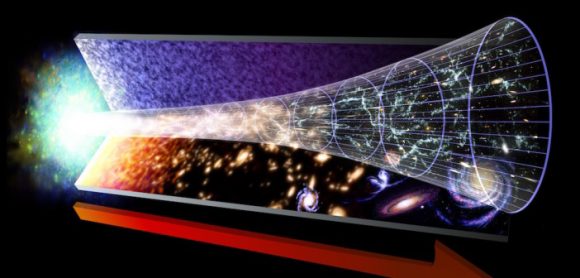
Cosmic Void Contains Fewer Galaxies than Expected, which, Ironically, Makes it Harder for Light to get Through According to the Big Bang Theory of cosmology, the Universe began roughly 13.8 billion years ago as all matter in the Universe began to expand from a single point of infinite density. Over the next few billion years, the fundamental forces of the Universe began to separate from each other and subatomic particles and atoms formed. In time, this first stars and galaxies formed, giving rise to the large-scale structure of the Universe. However, it was only by roughly 1 billion years after the Big Bang that theRead More →

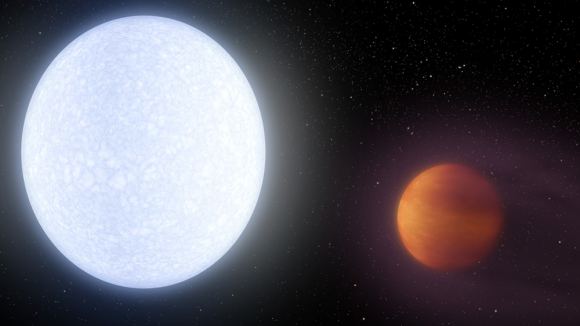
This Planet is so Metal. Iron and Titanium Vapour Found in the Atmosphere of an “Ultra-Hot Jupiter” In the course of discovering planets beyond our Solar System, astronomers have found some truly interesting customers! In addition to “Super-Jupiters” (exoplanets that are many times Jupiter’s mass) a number of “Hot Jupiters” have also been observed. These are gas giants that orbit closely to their stars, and in some cases, these planets have been found to be so hot that they could melt stone or metal. This has led to the designation “ultra-hot Jupiter”, the hottest of which was discovered last year. But now, according to aRead More →

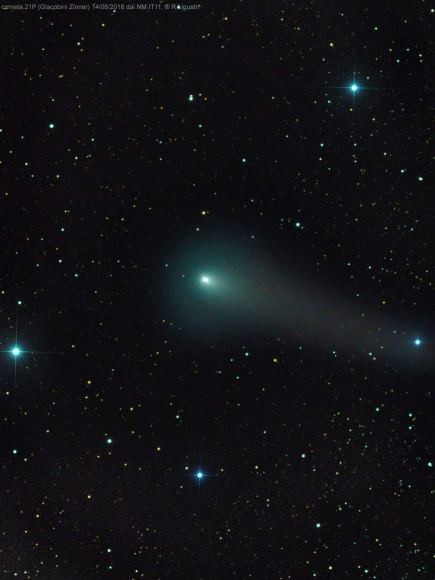
Catch Comet 21/P Giacobini-Zinner at Its Best Comet 21/P Giacobini-Zinner from August 14th. Image credit and copyright: Rolando Ligustri. A periodic comet may put on a fine show for northern hemisphere viewers over the next few months. Comet 21/P Giacobini-Zinner is currently a fine binocular comet, shining at +8th magnitude as it cruises across the constellation Cassiopeia. This places it above the horizon for the entire night for observers north of the equator in August, transiting the local meridian at dawn. And unlike most comets that get lost in the Sun’s glare (like the current situation with C/2017 S3 PanSTARRS), we’ll be able to track CometRead More →