The Bizarre Picture is a 360-Degree View Around Curiosity on Mars NASA recently released a 360-degree panoramic image based on images taken by the Curiosity rover, which showed its latest drilling site. The post The Bizarre Picture is a 360-Degree View Around Curiosity on Mars appeared first on Universe Today. Universe Today Go to Source Powered by WPeMaticoRead More →

Superfast Jet of Material Blasted Out From Last Year’s Neutron Star Merger According to a new study by an international team of astronomers, last year’s kilonova event (where two neutron stars merged) resulted in a jet of material traveling at close to the speed of light. The post Superfast Jet of Material Blasted Out From Last Year’s Neutron Star Merger appeared first on Universe Today. Universe Today Go to Source Powered by WPeMaticoRead More →

A Mission to Deflect an Asteroid Just Moved into the Final Design and Assembly Phase The Double Asteroid Redirection Test (DART) Mission, which will attempt to deflect a small asteroid in 2022, recently moved into the final phase of design and assembly. The post A Mission to Deflect an Asteroid Just Moved into the Final Design and Assembly Phase appeared first on Universe Today. Universe Today Go to Source Powered by WPeMaticoRead More →
Astronomy Cast Ep. 499: What is the proposed Hubble-Lemaitre Law? We started out Astronomy Cast with the controversal decision to de-planet Pluto. And here we are, more than a decade later, at the brink of recording our 500th episode when another big decision is coming down from the IAU: whose name goes on the concept that our Universe is expanding: Hubble or Lemaître? It’s a … Continue reading “Astronomy Cast Ep. 499: What is the proposed Hubble-Lemaitre Law?” The post Astronomy Cast Ep. 499: What is the proposed Hubble-Lemaitre Law? appeared first on Universe Today. Universe Today Go to Source Powered by WPeMaticoRead More →
A Japanese Company is About to Test a Tiny Space Elevator… in Space A team of Japanese engineers recently constructed a scale-model of a space elevator, which will be sent to the ISS to conduct experiments that could lead to the real thing someday! The post A Japanese Company is About to Test a Tiny Space Elevator… in Space appeared first on Universe Today. Universe Today Go to Source Powered by WPeMaticoRead More →
What is the Cosmic Microwave Background? For thousands of years, human being have been contemplating the Universe and seeking to determine its true extent. And whereas ancient philosophers believed that the world consisted of a disk, a ziggurat or a cube surrounded by celestial oceans or some kind of ether, the development of modern astronomy opened their eyes to new frontiers. … Continue reading “What is the Cosmic Microwave Background?” The post What is the Cosmic Microwave Background? appeared first on Universe Today. Universe Today Go to Source Powered by WPeMaticoRead More →

Japanese Startup is Working on a Reusable Rocketplane to Carry Passengers to Space, as Early as 2023 The Japanese startup PD Aerospace is developing a reusable space plane that will use a combination of jet engines and a rocket motor to take customers to space by as early as 2023. The post Japanese Startup is Working on a Reusable Rocketplane to Carry Passengers to Space, as Early as 2023 appeared first on Universe Today. Universe Today Go to Source Powered by WPeMaticoRead More →

Cassini Data Has Revealed a Towering Hexagonal Storm at Saturn’s Northern Pole Data from the Cassini mission has revealed a massive hexagonal shaped storm high in the stratosphere of Saturn’s north pole. The post Cassini Data Has Revealed a Towering Hexagonal Storm at Saturn’s Northern Pole appeared first on Universe Today. Universe Today Go to Source Powered by WPeMaticoRead More →

This is the Exact Spot that ESA’s SMART-1 Crashed Into the Moon in 2006 Thanks to images taken by the Lunar Reconnaissance Orbiter, it is now known exactly where the ESA’s SMART-1 mission landed on the Moon. The post This is the Exact Spot that ESA’s SMART-1 Crashed Into the Moon in 2006 appeared first on Universe Today. Universe Today Go to Source Powered by WPeMaticoRead More →

Exploring the Ice Giants: Neptune and Uranus at Opposition for 2018 Have you seen all of the planets for yourself? This week is a good time to check off the most difficult of the major planets off of your life list, as Neptune reaches opposition for 2018 on Friday, September 7th at at ~18:00 Universal Time (UT)/2:00 PM EDT. The post Exploring the Ice Giants: Neptune and Uranus at Opposition for 2018 appeared first on Universe Today. Universe Today Go to Source Powered by WPeMaticoRead More →

Europan Space Whales Anyone? Planets Covered by Deep Oceans Can Still Have Life on Them In recent decades, astronomers have discovered many planets that they believe are “Earth-like” in nature, meaning that they appear to be terrestrial (i.e. rocky) and orbit their stars at the right distance to support the existence of liquid water on their surfaces. Unfortunately, recent research has indicated that many of these planets may in fact be “water worlds“, where water makes up a significant proportion of the planet’s mass. To the scientific community, this seemed to indicate that these worlds could not remain habitable for very long  since they wouldRead More →

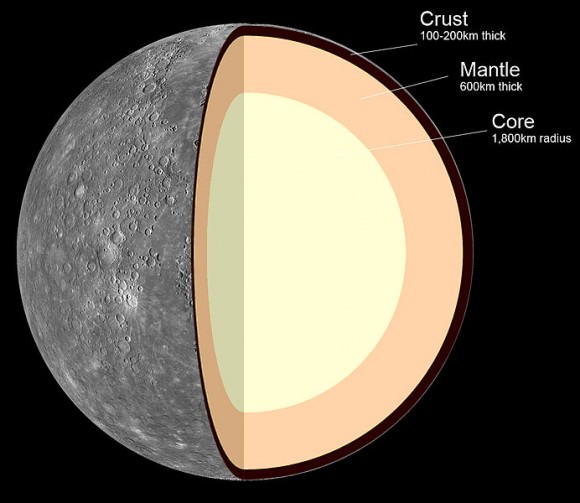
Forming Dense Metal Planets like Mercury is Probably Pretty Difficult and Rare in the Universe The planet Mercury, the closet planet to our Sun, is something of an exercise in extremes. It’s days last longer than it’s years and at any given time, it’s sun-facing side is scorching hot while its dark side is freezing cold. It is also one of the least understood planets in our Solar System. While it is a terrestrial (i.e. rocky) planet like Earth, Venus and Mars, it has a significantly higher iron-to-rock ratio than the others. For decades, the most widely-accepted theory for this was that Mercury experienced aRead More →

Estimating When Life Could Have Arisen on Earth The question how life began on Earth has always been a matter of profound interest to scientists. But just as important as how life emerged is the question of when it emerged. In addition to discerning how non-living elements came together to form the first living organisms (a process known as abiogenesis), scientists have also sought to determine when the first living organisms appeared on Earth. In a new study by a team of Canadian researchers, the question of when life emerged on Earth is constrained using two approaches. By combining astrophysical and geophysical evidence with biosignaturesRead More →

Carnival of Space #577 This week’s Carnival of Space is hosted by Zain Husain at the Brownspaceman.com blog. Click here to read Carnival of Space #577. And if you’re interested in looking back, here’s an archive to all the past Carnivals of Space. If you’ve got a space-related blog, you should really join the carnival. Just email an entry to susie@wshcrew.space, and the next host will link to it. It will help get awareness out there about your writing, help you meet others in the space community – and community is what blogging is all about. And if you really want to help out, sign up toRead More →

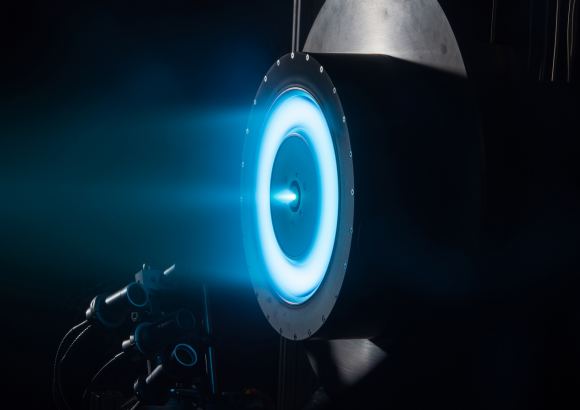
Aerojet Rocketdyne Tests Out its New Advanced Ion Engine System When it comes to the next generation of space exploration, a number of key technologies are being investigated. In addition to spacecraft and launchers that will be able to send astronauts farther into the Solar System, NASA and other space agencies are also looking into new means of propulsion. Compared to conventional rockets, the goal is to create systems that offer reliable thrust while ensuring fuel-efficiency. To this end, NASA has paired with Aerojet Rocketdyne, a California-based rocket and missile propulsion manufacturer, to develop a Solar Electric Propulsion (SEP) Hall Effect thruster. Known as theRead More →

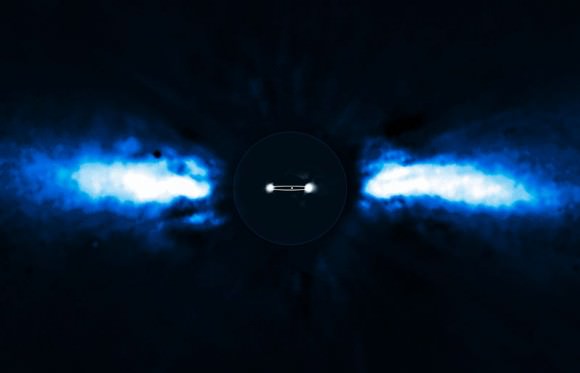
How the Next Generation of Ground-Based Super-Telescopes will Directly Observe Exoplanets Over the past few decades, the number of extra-solar planets that have been detected and confirmed has grown exponentially. At present, the existence of 3,778 exoplanets have been confirmed in 2,818 planetary systems, with an additional 2,737 candidates awaiting confirmation. With this volume of planets available for study, the focus of exoplanet research has started to shift from detection towards characterization. For example, scientists are increasingly interested in characterizing the atmospheres of exoplanets so that they can say with confidence that they have the right ingredients for life (i.e. nitrogen, carbon dioxide, etc). Unfortunately,Read More →

Telescope Pierces into One of the Biggest Nebulae in the Milky Way to Reveal its Newly Forming (and Nearly Dying) Stars Located about 7500 light-years from Earth, in the constellation of Carina, lies a star-forming region known as the Carina Nebula. This dynamic, evolving cloud of interstellar gas and dust measures about 300 light-years in diameter and is one of the Milky Way’s largest star-forming regions. It is also an exercise in contrasts, consisting of bright regions of gas illuminated by intense stellar radiation and dark pillars of dust that obscure star formation. While thousands of pictures have been taken of this scenic nebula, scientistsRead More →

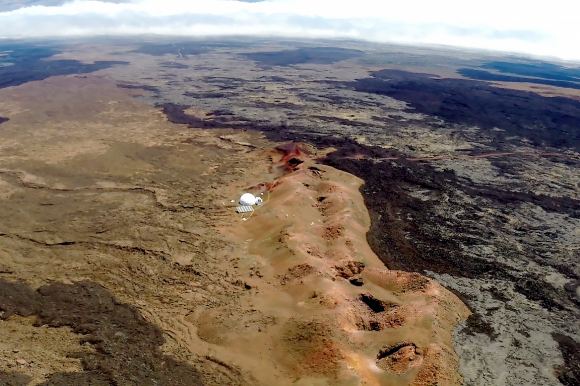
This is the Habitat in Hawaii Helping Astronauts Preparing to Explore Mars When it comes time to send astronauts to Mars, those who make the journey will need to be ready for a number of challenges. In addition to enduring about six-months in space both ways, the first astronauts to explore Mars will also need to be prepared to spend months living on the surface. This will consist of long periods spent in a pressurized habitat and regular forays to the surface wearing pressure suits. Preparing astronauts for this kind of living situation is the purpose behind the NASA-funded Hawai’i Space Exploration Analog and SimulationRead More →

Carnival of Space #576 This week’s Carnival of Space is hosted by Brian Wang at his Next Big Future blog. Click here to read Carnival of Space #576 And if you’re interested in looking back, here’s an archive to all the past Carnivals of Space. If you’ve got a space-related blog, you should really join the carnival. Just email an entry to susie@wshcrew.space, and the next host will link to it. It will help get awareness out there about your writing, help you meet others in the space community – and community is what blogging is all about. And if you really want to help out, sign upRead More →