SS John Glenn Stellar Space Station Launch – Photo/Video Gallery Orbital ATK’s seventh cargo delivery flight to the International Space Station -in tribute to John Glenn- launched at 11:11 a.m. EDT April 18, 2017, on a United Launch Alliance Atlas V rocket from Space Launch Complex 41 on Cape Canaveral Air Force Station in Florida. Credit: Ken Kremer/kenkremer.com KENNEDY SPACE CENTER, FL – This week’s blastoff of the ‘SS John Glenn’ Cygnus cargo freighter atop an Atlas V rocket on a critical mission delivering over 7000 pounds of science and gear to the International Space Station (ISS) yielded stellar imagery from all around the FloridaRead More →

SS John Glenn Arrives at Space Station with Science and Supplies #Canadarm2 on @Space_Station is positioning #Cygnus for berthing to Unity module on 22 April 2017. Credit: NASA TV KENNEDY SPACE CENTER, FL – The SS John Glenn commercial Cygnus resupply vessel arrived at the International Space Station early this morning, April 22, carrying nearly four tons of science and supplies crammed inside for the five person multinational Expedition 51 crew. After reaching the vicinity of the space station overnight Saturday, the commercial Cygnus cargo ship was successfully captured by astronaut crew members Thomas Pesquet of ESA (European Space Agency) and Expedition 51 Station CommanderRead More →

Exciting New Views Of Opportunity’s Remarkable Landing Site NASA’s eagle-eyed Mars Reconnaissance Orbiter (MRO) has captured orbital images of Opportunity’s Hole-In-One landing site, smack dab in the middle of Eagle Crater on the surface of Mars. Opportunity arrived at Mars on January 25th, 2005. It’s landing was slowed by parachute, and cushioned by airbags. Once it hit the surface, it bounced its way into “Eagle Crater“, a feature a mere 22 meters across. Not a bad shot! This is the first color image that the High Resolution Imaging Science Experiment (HiRise) has captured of Opportunity’s landing site. It shows the remarkable landing site inside theRead More →

First Detailed Image Of Accretion Disk Around A Young Star According to the Nebula Hypothesis, stars and their systems of planets form from giant clouds of dust and gas. After undergoing gravitational collapse at the center (which creates the star), the remaining matter then forms an accretion disk in orbit around it. Over time, this matter is fed to the star – allowing it to become more massive – and also leads to the creation of a system of planets. And until this week, the Nebula Hypothesis was just that. Given the distance involved, and the fact that the formation of star systems takes billionsRead More →

Are Drylanders The Minority On Habitable Worlds? If we want to send spacecraft to exoplanets to search for life, we better get good at building submarines. A new study by Dr. Fergus Simpson, of the Institute of Cosmos Sciences at the University of Barcelona, shows that our assumptions about exo-planets may be wrong. We kind of assume that exoplanets will have land masses, even though we don’t know that. Dr. Simpson’s study suggests that we can expect lots of oceans on the habitable worlds that we might discover. In fact, ocean coverage of 90% may be the norm. At the heart of this study isRead More →

Weekly Space Hangout – April 21, 2017: Dr. David Grinspoon Host: Fraser Cain (@fcain) Special Guest:David Grinspoon is an astrobiologist, award-winning science communicator (“Dr. FunkySpoon”), and prize-winning author. He has a new book EARTH IN HUMAN HANDS. He is a Senior Scientist at the Planetary Science Institute and Adjunct Professor of Astrophysical and Planetary Science at the University of Colorado. His research focuses on climate evolution on Earth-like planets and potential conditions for life elsewhere in the universe. He is involved with several interplanetary spacecraft missions for NASA, the European Space Agency and the Japanese Space Agency. You can follow him on Twitter at @DrFunkySpoon,Read More →

Earth Beams From Between Saturn’s Rings in New Cassini Image NASA’s Cassini spacecraft captured the view on April 13, 2017 at 12:41 a.m. CDT. The probe was 870 million miles (1.4 billion km) away from Earth when the image was taken. The part of Earth facing toward Cassini at the time was the southern Atlantic Ocean. Look closely to the left of Earth; that pinprick of light is the Moon. Credit: NASA/JPL Caltech Look at us. Packed into a gleaming dot. The entire planet nothing more than a point of light between the icy rings of Saturn. The rings visible here are the A ringRead More →

Is This The Exoplanet Where Life Will First Be Found? It is good time to be an exoplanet hunter… or just an exoplanet enthusiast for that matter! Every few weeks, it seems, new discoveries are being announced which present more exciting opportunities for scientific research. But even more exciting is the fact that every new find increases the likelihood of locating a potentially habitable planet (and hence, life) outside of our Solar System. And with the discovery of LHS 1140b – a super-Earth located approximately 39 light years from Earth – exoplanet hunters think they have found the most likely candidate for habitability to date.Read More →

Opportunity Leaving ‘Tribulation’ Behind You’d have to be an intrepid explorer to investigate something named ‘Cape Tribulation’. Opportunity, NASA’s long-lived rover on Mars’ surface, has been just that. But Opportunity is now leaving Cape Tribulation behind, after being in that area since late 2014, or for about 30 months. Cape Tribulation is the name given to a segment of crater rim at Endeavour Crater, where Opportunity has been for over 5 1/2 years. During that time, Opportunity reached some important milestones. While there, it surpassed 26 miles in distance travelled, the length of a marathon race. It also reached its highest elevation yet, and inRead More →

Mars Missions Need To Be Neat Freaks At Key Sites One of the most common features of space exploration has been the use of disposable components to get missions to where they are going. Whether we are talking about multistage rockets (which fall away as soon as they are spent) or the hardware used to achieve Entry, Descent and Landing (EDL) onto a planet, the idea has been the same. Once the delivery mechanism is used up, it is cast away. However, in so doing, we could be creating a hazardous situation for future missions. Such is the conclusion reached by a new study fromRead More →

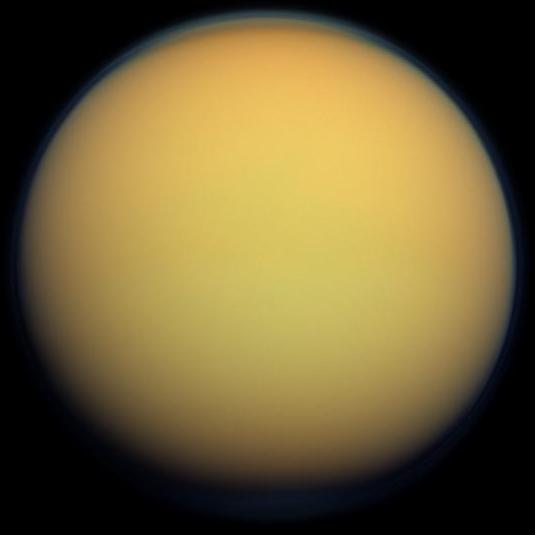
The Bubbly Streams Of Titan Saturn’s largest Moon, Titan, is the only other world in our Solar System that has stable liquid on its surface. That alone, and the fact that the liquid is composed of methane, ethane, and nitrogen, makes it an object of fascination. The bright spot features that Cassini observed in the methane seas that dot the polar regions only deepen the fascination. A new paper published in Nature Astronomy digs deeper into a phenomenon in Titan’s seas that has been puzzling scientists. In 2013, Cassini noticed a feature that wasn’t there on previous fly-bys of the same region. In subsequent images,Read More →

Soyuz Launches and Fast Track Docks to ISS with Russian-American Duo The Soyuz MS-04 rocket launches from the Baikonur Cosmodrome in Kazakhstan April 20, 2017, carrying Expedition 51 Soyuz Commander Fyodor Yurchikhin of Roscosmos and Flight Engineer Jack Fischer of NASA into orbit to begin their four and a half month mission on the International Space Station. Credits: NASA/Aubrey Gemignani KENNEDY SPACE CENTER, FL – A new Russian/American duo has arrived at the International Space Station this morning, April 20, after a six-hour flight following their successful launch aboard a Russian Soyuz capsule on a fast track trajectory to the orbiting outpost. The two personRead More →

In-Situ Technology for Exploring Venus In 2005, the Future In-Space Operations Working Group (FISOWG) was established with the help of NASA to assess how advances in spaceflight technologies could be used to facilitate missions back to the Moon and beyond. In 2006, the FISO Working Group also established the FISO Telecon Series to conduct outreach to the public and educate them on issues pertaining to spaceflight technology, engineering, and science. Every week, the Telecon Series holds a seminar where experts are able to share the latest news and developments from their respective fields. On Wednesday, April 19th, in a seminar titled “An Air-Breathing Metal-Combustion PowerRead More →

2014 JO25 Flies By Earth — See It Tonight This composite of 30 images of asteroid 2014 JO25 was generated with radar data collected using NASA’s Goldstone Solar System Radar in California’s Mojave Desert on Tuesday April 18. Credit: NASA/JPL-Caltech/GSSR Asteroid 2014 JO25, discovered in 2014 by the Catalina Sky Survey in Arizona, was in the spotlight today when it flew by Earth at just four times the distance of the Moon. Today’s encounter is the closest the object has come to the Earth in 400 years and will be its closest approach for at least the next 500 years. Lots of asteroids zip by our planet, andRead More →

Art History NASA Style To some, art and science are opposed to one another. Art is aesthetics, expression, and intuition, while science is all cold, hard, rational thought. But that’s a simplistic understanding. They’re both quintessential human endeavours, and they’re both part of the human spirit. Some at NASA have always understood this, and there’s actually an interesting, collaborative history between NASA and the art world, that reaches back several decades. Not the kind of art that you see hanging in elite galleries in the world’s large cities, but the kind of art that documents achievements in space exploration, and that helps us envision whatRead More →

CERN Declares War On The Standard Model Ever since the discovery of the Higgs Boson in 2012, the Large Hardon Collider has been dedicated to searching for the existence of physics that go beyond the Standard Model. To this end, the Large Hardon Collider beauty experiment (LHCb) was established in 2016, specifically for the purpose of exploring what happened after the Big Bang that allowed matter to survive and create the Universe as we know it. Since that time, the LHCb has been doing some rather amazing things. This includes discovering five new particles, uncovering evidence of a new manifestation of matter-antimatter asymmetry, and (mostRead More →

Cygnus Soars to Space on Atlas Carrying SS John Glenn on Course to Space Station Orbital ATK’s seventh cargo delivery flight to the International Space Station -in tribute to John Glenn- launched at 11:11 a.m. EDT April 18, 2017, on a United Launch Alliance Atlas V rocket from Space Launch Complex 41 on Cape Canaveral Air Force Station in Florida. Credit: Ken Kremer/kenkremer.com KENNEDY SPACE CENTER, FL – Orbital ATK’s Cygnus supply ship soared to space from the Florida Space Coast at lunchtime today, Tuesday, April 18, drenched in sunshine and carrying the ‘SS John Glenn’ loaded with over three and a half tons ofRead More →

Ride Shotgun Through the Solar System with Chris Hadfield It sounds like a space nerd’s dream come true: riding in a Tesla with former astronaut Chris Hadfield, doing a science version of Carpool Karaoke. And to top it off, you’re actually driving through the Solar System. A new film out called “Miniverse” via Curiosity Stream takes you on a ride through a scaled-down version of our Solar System. It’s similar to other scaled solar system models — which make the huge distances in our cosmic neighborhood a little less abstract — like the Voyage Scale Model Solar System in Washington, DC, the Sagan Planet WalkRead More →

Ceres Prank Lands Bart Simpson In Detention For Eternity Human-kind has a long history of looking up at the stars and seeing figures and faces. In fact, there’s a word for recognizing faces in natural objects: pareidolia. But this must be the first time someone has recognized Bart Simpson’s face on an object in space. Researchers studying landslides on the dwarf planet Ceres noticed a pattern that resembles the cartoon character. The researchers, from the Georgia Institute of Technology, are studying massive landslides that occur on the surface of the icy dwarf. Their findings are reinforcing the idea that Ceres has significant quantities of frozenRead More →

The Orbit of Neptune. How Long is a Year on Neptune? Here on Earth, a year lasts roughly 365.25 days, each of which lasts 24 hours long. During the course of a single year, our planet goes through some rather pronounced seasonal changes. This is the product of our orbital period, our rotational period, and our axial tilt. And when it comes to the other planets in our Solar System, much the same is true. Consider Neptune. As the eight and farthest planet from the Sun, Neptune has an extremely wide orbit and a comparatively slow orbital velocity. As a result, a year on NeptuneRead More →