The Sun shines from the heavens, seemingly calm and unvarying. In fact, it doesn’t always shine with uniform brightness, but shows dimmings and brightenings. Two phenomena alone are responsible for these fluctuations: the magnetic fields on the visible surface and gigantic plasma currents, bubbling up from the star’s interior. A team headed by the Max Planck Institute for Solar System Research in Göttingen reports this result in today’s issue of Nature Astronomy. For the first time, the scientists have managed to reconstruct fluctuations in brightness on all time scales observed to date – from minutes up to decades. These new insights are not only importantRead More →
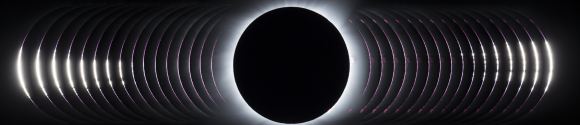
Incredible Solar Eclipse Images From Our Readers Holy moly, that was awesome! Incredible, fantastic, amazing…there just aren’t the words to describe what it is like to experience totality. While I’m trying to come down to Earth and figure out how to explain how wonderful this was, enjoy the beautiful images captured by our readers from across the US and those from across the world who traveled to capture one of nature’s most spectacular events: a total solar eclipse. The images from those seeing partial eclipses are wonderful, as well, and we’ll keep adding them as they come in (update, we just got some from EuropeRead More →

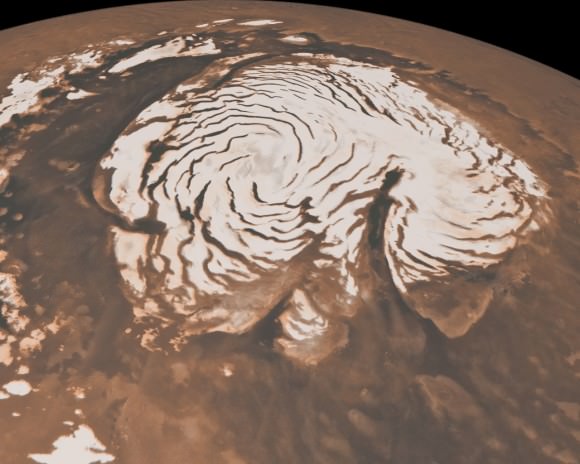
New Study Says that Martian Weather May Get Snowy Overnight For decades, scientists have tried to crack the mystery of Mars’ weather patterns. While the planet’s atmosphere is much thinner than our own – with less than 1% of the air pressure that exists on Earth at sea level – clouds have been seen periodically in the skies above the surface. In addition, periodic snowfalls has been spotted over the years, mainly in the form of carbon dioxide snow (i.e. dry ice). However, according to a new study by a team of French and American astronomers, Mars experiences snowfalls in the form of water-ice particles.Read More →

NASA Live-Broadcasting 2017 Solar Eclipse! Today, the NASA TV Public Channel is live-streaming their coverage of the totality of the 2017 Solar Eclipse as it covers a path reaching across the continental United States – from Oregon to South Carolina. The event, titled “Solar Eclipse: Through the Eyes of NASA“, begins at 1 p.m. EDT (11 am PDT). Be sure to check it out by following the link below: https://www.nasa.gov/eclipselive/#NASA+TV+Public+Channel Also, NASA has promised a plethora of information on this eclipse, which will include “images captured before, during and after the eclipse by 11 spacecraft, at least three NASA aircraft, more than 50 high-altitude balloons,Read More →

In an experiment designed to mimic the conditions deep inside the icy giant planets of our solar system, scientists were able to observe “diamond rain” for the first time as it formed in high-pressure conditions. Extremely high pressure squeezes hydrogen and carbon found in the interior of these planets to form solid diamonds that sink slowly down further into the interior. Powered by WPeMaticoRead More →

Gravity governs the movements of the cosmos. It draws flocks of galaxies together to form small groups and more massive galaxy clusters, and brings duos so close that they begin to tug at one another. This latter scenario can have extreme consequences, with members of interacting pairs of galaxies often being dramatically distorted, torn apart, or driven to smash into one another, abandoning their former identities and merging to form a single accumulation of gas, dust and stars. Powered by WPeMaticoRead More →

The origin of binary stars has long been one of the central problems of astronomy. One of the main questions is how stellar mass affects the tendency to be multiple. There have been numerous studies of young stars in molecular clouds to look for variations in binary frequency with stellar mass, but so many other effects can influence the result that the results have been inconclusive. These complicating factors include dynamical interactions between stars that can eject one member of a multiple system, or on the other hand might capture a passing star under the right circumstances. Some studies, for example, found that younger starsRead More →

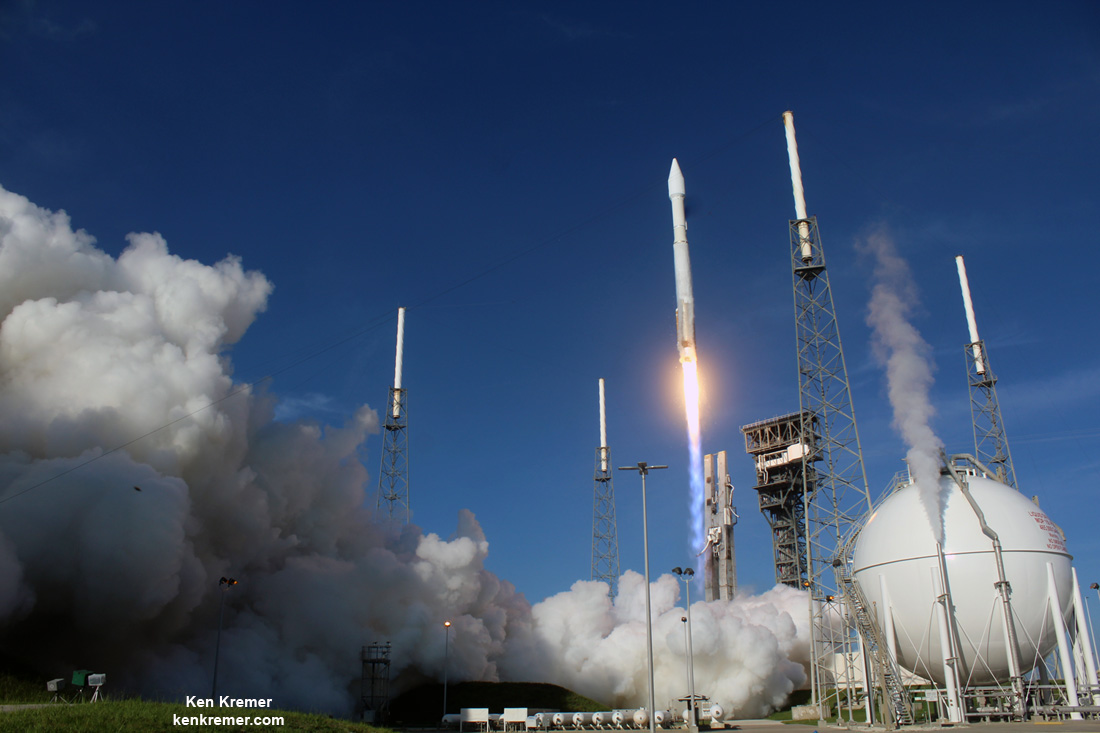
NASA Completes Vital Space Communications Network with Spectacular Launch of Final TDRS Science Relay Satellite NASA’s Tracking and Data Relay Satellite-M (TDRS-M), which is the third and final in a series of next generation science communications satellites, was successfully launched Aug. 18, 2017 at 8:29 a.m. EDT by a United Launch Alliance (ULA) Atlas V rocket from Space Launch Complex-41 on Cape Canaveral Air Force Station in Florida. TDRS-M has been placed into orbit following separation from the upper stage. Credit: Ken Kremer/kenkremer.com KENNEDY SPACE CENTER, FL – Today marked the end of an era for NASA as the last of the agency’s next generationRead More →

A University of Oklahoma astrophysicist, Mukremin Kilic, and his team have discovered two detached, eclipsing double white dwarf binaries with orbital periods of 40 and 46 minutes, respectively. White dwarfs are the remnants of Sun-like stars, many of which are found in pairs, or binaries. However, only a handful of white dwarf binaries are known with orbital periods less than one hour in the Milky Way—a galaxy made up of two hundred billion stars—and most have been discovered by Kilic and his colleagues. Powered by WPeMaticoRead More →

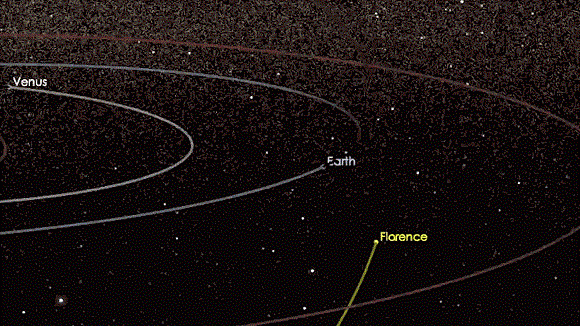
Large Near-Earth Asteroid Will Pass Earth by This September Within Earth’s orbit, there are literally thousands of what are known as Near-Earth Objects (NEOs), more than fourteen thousands of which are asteroids that periodically pass close to Earth. Since the 1980s, these objects have become a growing source of interest to astronomers, due to the threat they sometimes represent. But as ongoing studies and decades of tracking the larger asteroids has shown, they usually just pass Earth by. More importantly, it is only on very rare occasions (i.e. over the course of millions of years) that a larger asteroid will come close to colliding withRead More →

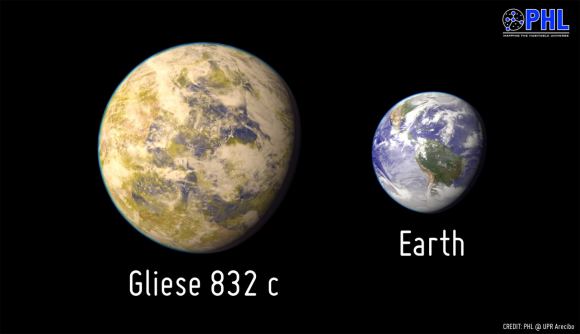
Another Nearby Red Dwarf Star System, Another Possible Exoplanet Discovered! In the past few years, there has been no shortages of extra-solar planets discoveries which orbit red dwarf stars. In 2016 and 2017 alone,  astronomers announced the discovery of a terrestrial (i.e. rocky) planet around Proxima Centauri (Proxima b), a seven-planet system orbiting TRAPPIST-1, and super-Earths orbiting the nearby stars of LHS 1140 (LHS 1140b), and GJ 625 (GJ 625b). In what could be the latest discovery, physicists at the University of Texas Arlington (UTA) recently announced the possible discovery of an Earth-like planet orbiting Gliese 832, a red dwarf star just 16 light yearsRead More →

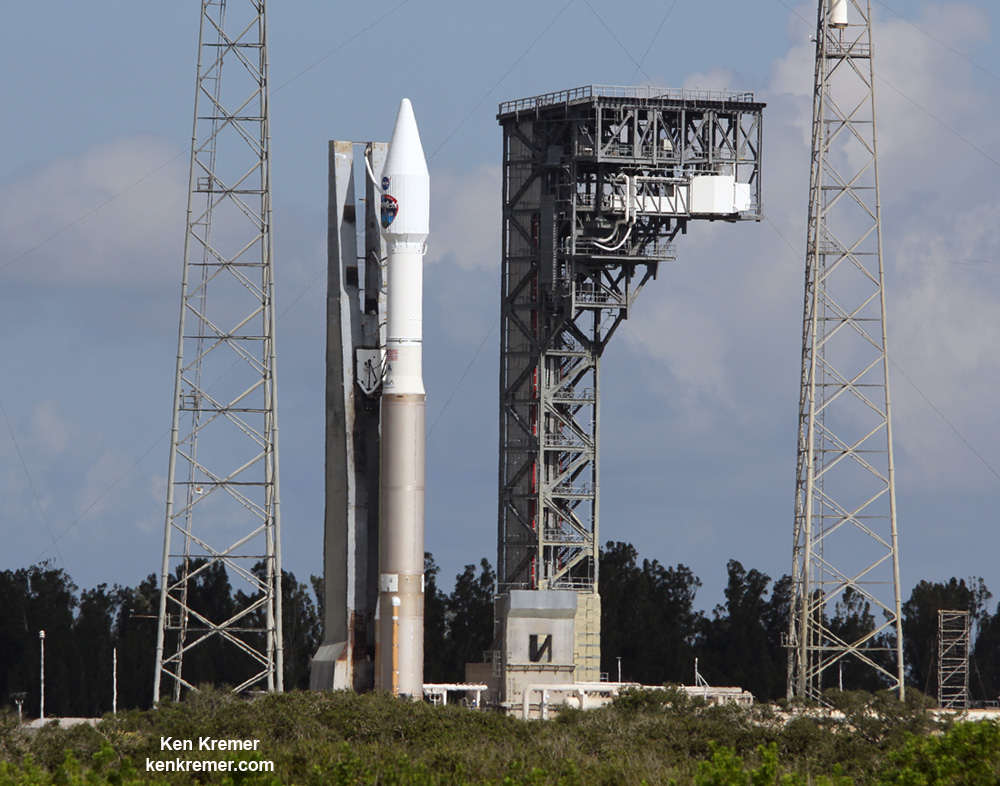
NASA’s Tracking Data Relay Satellite-M Vital for Science Relay Poised for Liftoff Aug. 18 – Watch Live The United Launch Alliance Atlas V rocket carrying NASA’s Tracking and Data Relay Satellite-M (TDRS-M) stands on the launch pad at Space Launch Complex 41 on Cape Canaveral Air Force Station poised for liftoff on Aug. 18, 2017. The rocket rolled out to the pad two days earlier on Aug. 16. Credit: Ken Kremer/kenkremer.com KENNEDY SPACE CENTER, FL – The last of NASA’s next generation Tracking and Data Relay Satellites (TRDS) that looks like a giant alien fish or cocooned creature but actually plays an absolutely vital roleRead More →

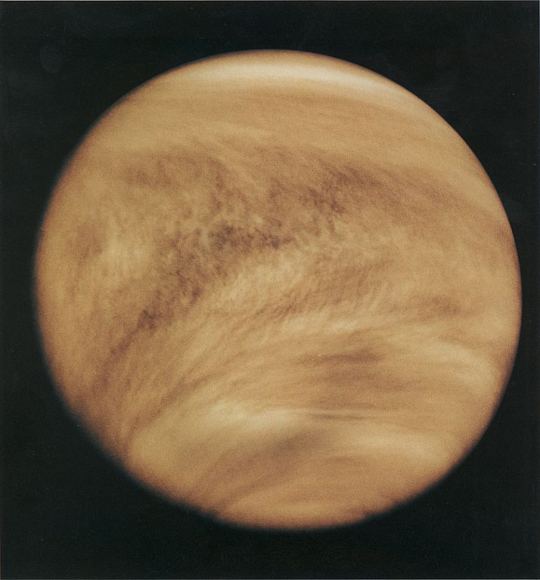
NASA Plans to Send CubeSat To Venus to Unlock Atmospheric Mystery From space, Venus looks like a big, opaque ball. Thanks to its extremely dense atmosphere, which is primarily composed of carbon dioxide and nitrogen, it is impossible to view the surface using conventional methods. As a result, little was learned about its surface until the 20th century, thanks to development of radar, spectroscopic and ultraviolet survey techniques. Interestingly enough, when viewed in the ultraviolet band, Venus looks like a striped ball, with dark and light areas mingling next to one another. For decades, scientists have theorized that this is due to the presence ofRead More →

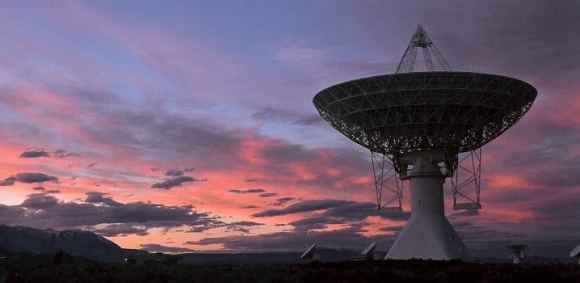
Gravitational Lensing Provides Rare Glimpse Into Interiors of Black Holes The observable Universe is an extremely big place, measuring an estimated 91 billion light-years in diameter. As a result, astronomers are forced to rely on powerful instruments to see faraway objects. But even these are sometimes limited, and must be paired with a technique known as gravitational lensing. This involves relying on a large distribution of matter (a galaxy or star) to magnify the light coming from a distant object. Using this technique, an international team led by researchers from the California Institute of Technology’s (Caltech) Owens Valley Radio Observatory (OVRO) were able to observeRead More →

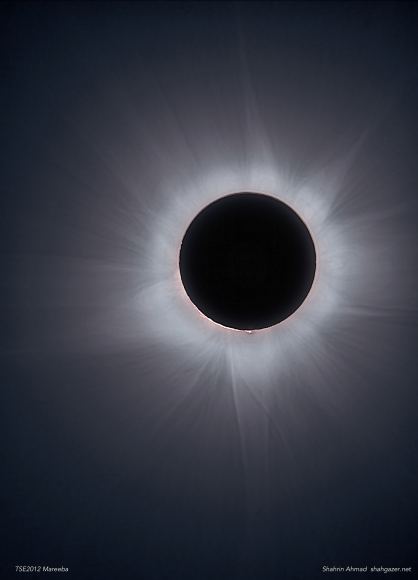
Prelude to Totality: A Final Look at the Total Solar Eclipse Totality! The view during the November 2012 total solar eclipse. Image credit and copyright: Sharin Ahmad (@Shahgazer) It’s hard to believe: we’re now just one short weekend away from the big ticket astronomical event for 2017, as a total solar eclipse is set to cross over the contiguous United States on Monday, August 21st. Celestial mechanics is a sure thing in this Universe, a certainty along with death and taxes that you can bet on. But there are still a few key question marks leading up to eclipse day, things that we can nowRead More →

Can Astronauts See Stars From the Space Station? I’ve often been asked the question, “Can the astronauts on the Space Station see the stars?” Astronaut Jack Fischer provides an unequivocal answer of “yes!” with a recent post on Twitter of a timelapse he took from the ISS. Fischer captured the arc of the Milky Way in all its glory, saying it “paints the heavens in a thick coat of awesome-sauce!” Can you see stars from up here? Oh yeah baby! Check out the Milky Way as it spins & paints the heavens in a thick coat of awesome-sauce! pic.twitter.com/MsXeNHPxLF — Jack Fischer (@Astro2fish) August 16,Read More →

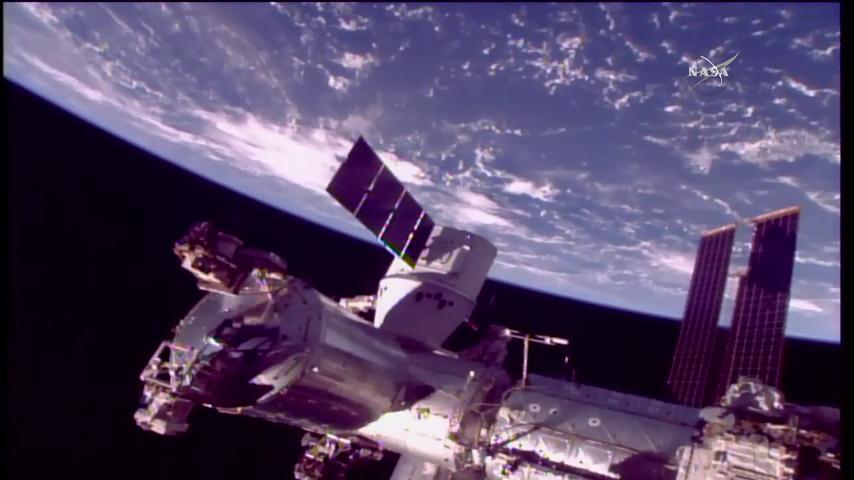
Station Crew Grapples SpaceX Dragon Delivering Tons of Science After Thunderous Liftoff: Launch & Landing Gallery The SpaceX Dragon CRS-12 cargo craft is now attached to the International Space Station after arriving on Aug. 16, 2017. It delivered over 3 tons of science and supplies to the six person Expedition 52 crew. Credit: NASA TV KENNEDY SPACE CENTER, FL – Following a two day orbital chase and ballet of carefully choreographed thruster firings, the SpaceX Dragon cargo capsule launched at lunchtime on Monday Aug. 14 with tons of science and supplies arrived in the vicinity of the International Space Station (ISS) this morning, Wednesday, AugRead More →

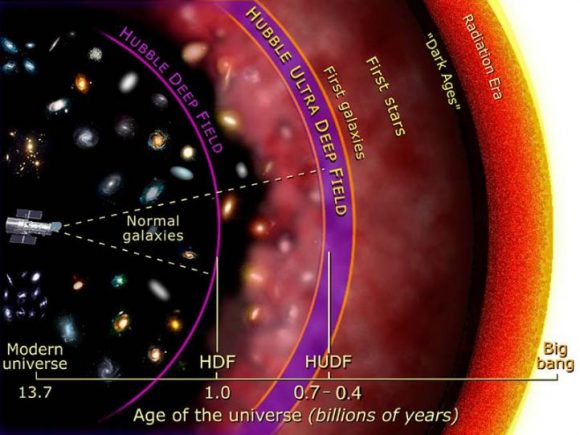
The Most Distant Galaxy Observed to Date Provides Insight into the Early Universe In their pursuit of learning how our Universe came to be, scientists have probed very deep into space (and hence, very far back in time). Ultimately, their goal is to determine when the first galaxies in our Universe formed and what effect they had on cosmic evolution. Recent efforts to locate these earliest formations have probed to distances of up to 13 billion light-years from Earth – i.e. about 1 billion years after the Big Bang. From this, scientist are now able to study how early galaxies affected matter around them –Read More →