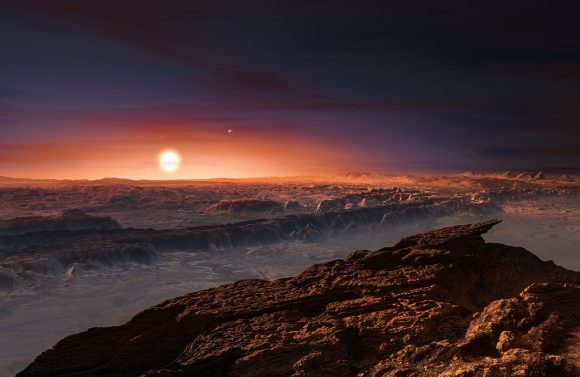
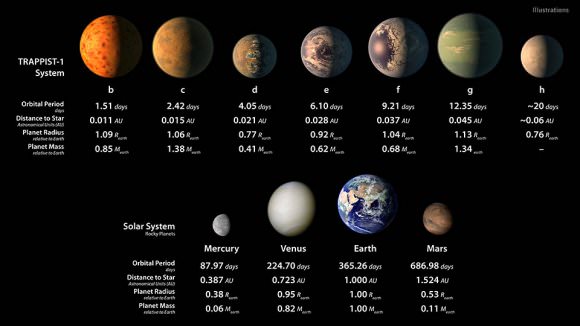
New work from a team of Carnegie scientists (and one Carnegie alumnus) asked whether any gas giant planets could potentially orbit TRAPPIST-1 at distances greater than that of the star’s seven known planets. If gas giant planets are found in this system’s outer edges, it could help scientists understand how our own Solar System’s gas giants like Jupiter and Saturn formed. Powered by WPeMaticoRead More →
Carnival of Space #525 It’s that time again! This week’s Carnival of Space is hosted by Pamela Hoffman at the Everyday Spacer blog. Click here to read Carnival of Space #525. And if you’re interested in looking back, here’s an archive to the past Carnivals of Space. If you’ve got a space-related blog, you should really join the carnival. Just email an entry to carnivalofspace@gmail.com, and the next host will link to it. It will help get awareness out there about your writing, help you meet others in the space community – and community is what blogging is all about. And if you really wantRead More →

It’s easy to picture a black hole as a kind of all-powerful cosmic drain, a sinkhole of super-strong gravity that snags and swallows passing nebulae or stars. While it is true we can’t observe matter once it crosses a black hole’s event horizon, scientists are zeroing in on what happens in the margins, where molecular clouds release vast amounts of energy as it circles the plughole. Powered by WPeMaticoRead More →

(Phys.org)—A team of researchers with Keio University in Japan has found evidence of a mid-sized black hole near the center of the Milky Way galaxy. In their paper published in the journal Nature Astronomy, the group describes their study of a gas cloud cluster near the center of our galaxy and why they believe it offers evidence of a mid-sized black hole. Powered by WPeMaticoRead More →

(Phys.org)—Using the Large Binocular Telescope (LBT), a group of astronomers has found that the star-forming galaxy (SFG) J0811+4730 is the most metal-poor dwarf SFG known to date. The finding is detailed in a paper published online on Sept. 1 on the arXiv pre-print repository. Powered by WPeMaticoRead More →

(Phys.org)—A group of Chinese astronomers led by Yang Huang of the Yunnan University in Kunming, China, has detected two new unbound hypervelocity stars located over 70,000 light years away. The discovery, described in a paper published Aug. 29 on the arXiv pre-print server, could help scientists better understand the nature of these rare, peculiar stars. Powered by WPeMaticoRead More →

Gaia, ESA’s billion-star surveyor, is detecting stars and measuring their properties in order to build up the most precise 3-D map of the Milky Way. By accurately measuring the motion of each star, astronomers will be able to peer back in time to understand the Milky Way’s history, its evolution and its destiny. Powered by WPeMaticoRead More →

Researchers at DESY have compiled an extensive catalogue of variable sources of cosmic gamma radiation. For his doctoral thesis, Matteo Giomi, working at DESY in Zeuthen, analysed almost 7.5 years of observational data from NASA’s “Fermi” space telescope. Over that period, the “Large Area Telescope” (LAT) on board the satellite registered a total of 4547 bursts of gamma radiation, known as flares. Thanks to improved analytical methods, Giomi was able to assign these flares to 518 variable sources. The “Fermi All-Sky Variability Analysis” (FAVA) also lists 77 unknown sources, whose identity has not yet been determined. The “Fermi” scientists are presenting their catalogue in theRead More →

The origin of cosmic rays, high-energy particles from outer space constantly impacting on Earth, is among the most challenging open questions in astrophysics. Now new research published in the journal Monthly Notices of the Royal Astronomical Society sheds new light on the origin of those energetic particles. Powered by WPeMaticoRead More →

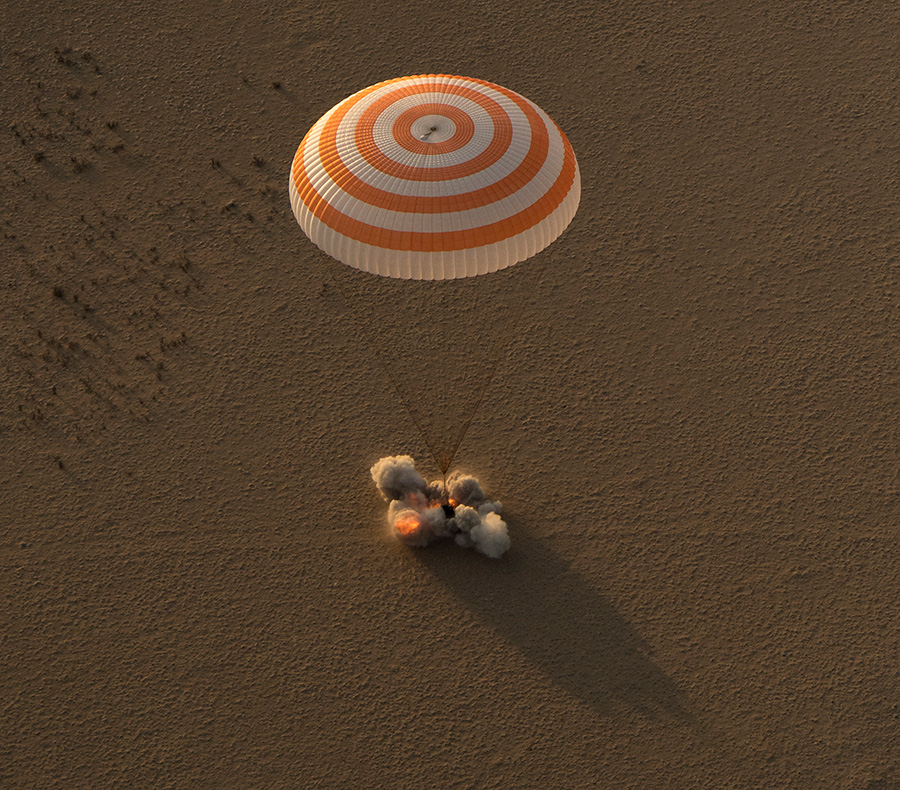
NASA’s Peggy Whitson Safely Returns Home in Soyuz from Record Breaking Stay in Space The Soyuz MS-04 vehicle is pictured the moment it touches down with the Expedition 52 crew inside comprising NASA astronauts Peggy Whitson and Jack Fisher and Commander Fyodor Yurchikhin of Roscosmos on Sept. 3, 2017, Kazakhstan time. Credit: NASA/Bill Ingalls NASA’s Peggy Whitson, America’s most experienced astronaut, returned to Earth safely and smiling Sunday morning on the steppes of Kazahsstan, concluding her record-breaking stay in space aboard the International Space Station along with Soyuz crewmates Jack Fischer of NASA and Commander Fyodor Yurchikhin of Roscosmos. The multinational trio touched down softlyRead More →

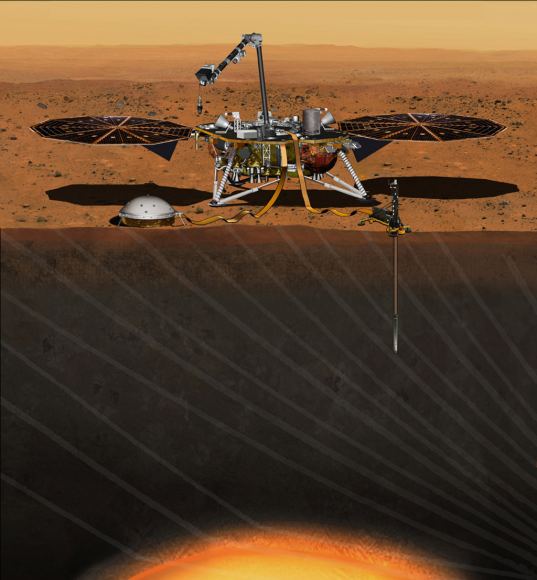
Preparations for Deployment of InSight Lander to Mars are Rampting Up! This summer has been a busy time for NASA. At present, the agency is making the final preparations for the Cassini mission‘s plunge into Saturn’s atmosphere, monitoring the large Near-Earth Asteroid that recently made a flyby of Earth, marking the 40th anniversary of the historic Voyager missions, and hosting the Summer of Mars at the Kennedy Space Center. In addition to all that, engineers at the Jet Propulsion Laboratory in Pasadena, California, are busy preparing the Interior Exploration using Seismic Investigations, Geodesy and Heat Transport (InSight) Lander for its scheduled launch in 2018. OnceRead More →

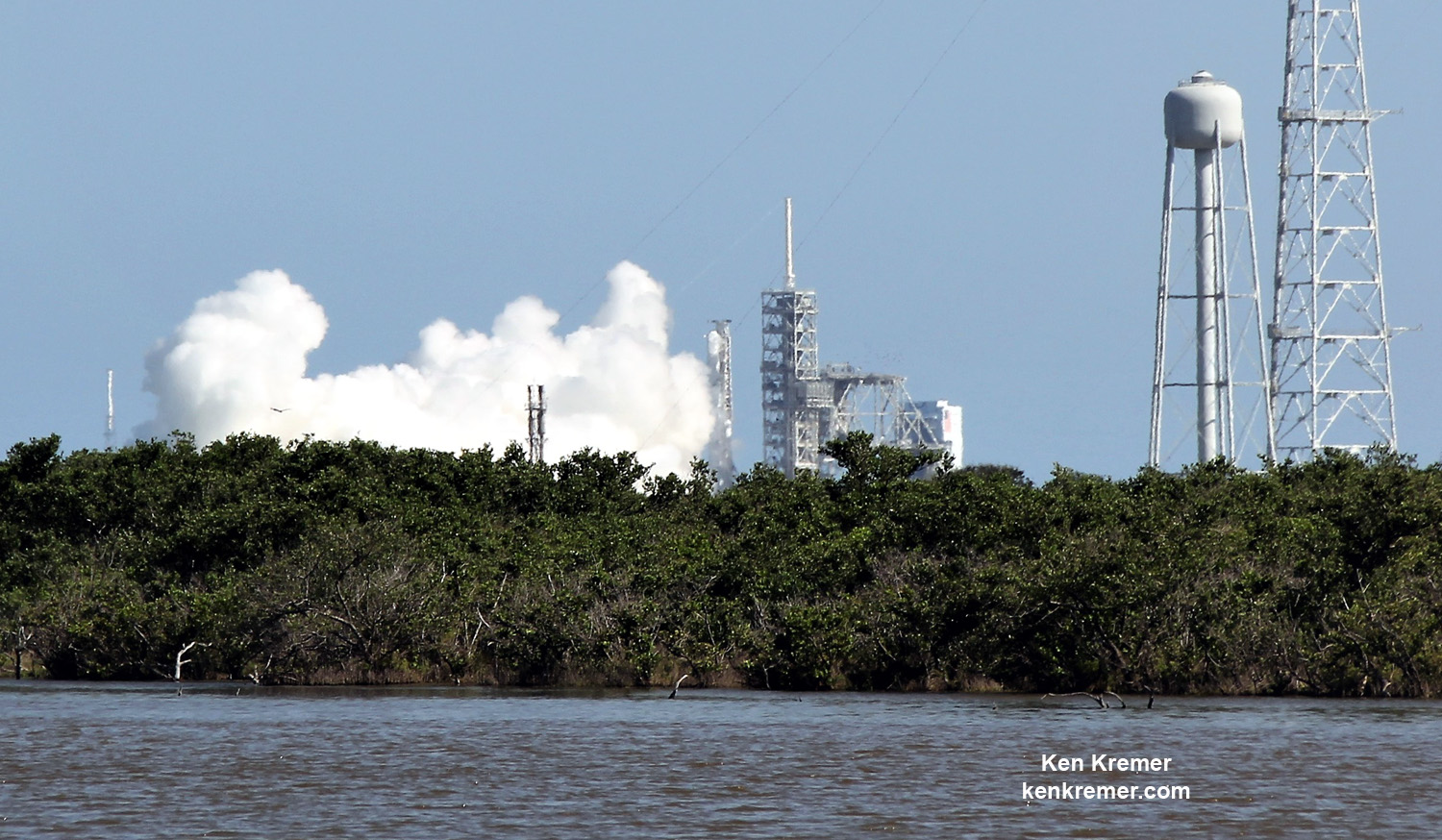
Successful Static Fire Test Sets SpaceX on Target for Post Labor Day Launch of USAF X-37B Mini-Shuttle Sept. 7 SpaceX conducts successful static fire test of the Falcon 9 first stage rocket at 4:30 p.m. EDT on Aug. 31, 2017 on Launch Complex 39A on NASA’s Kennedy Space Center, Fl., as seen from nearby Playalinda causeway. Liftoff of the USAF X-37B OTV-5 mini-shuttle mission is scheduled for Sept. 7, 2017. Credit: Ken Kremer/kenkremer.com PLAYALINDA BEACH/KENNEDY SPACE CENTER, FL – Following a successful engine test firing of the Falcon 9 first stage late Thursday afternoon (Aug. 30), SpaceX is targeting a post Labor Day launch ofRead More →

Ultraviolet Light Could Point the Way To Life Throughout the Universe Ultraviolet light is what you might call a controversial type of radiation. On the one hand, overexposure can lead to sunburn, an increased risk of skin cancer, and damage to a person’s eyesight and immune system. On the other hand, it also has some tremendous health benefits, which includes promoting stress relief and stimulating the body’s natural production of vitamin D, seratonin, and melanin. And according to a new study from a team from Harvard University and the Harvard-Smithsonian Center for Astrophysics (CfA), ultraviolet radiation may even have played a critical role in the emergenceRead More →

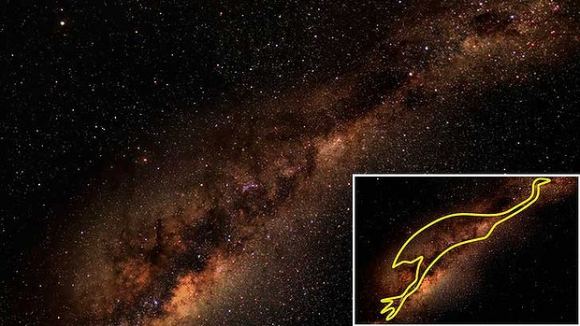
The Crux Constellation Welcome to another edition of Constellation Friday! Today, in honor of the late and great Tammy Plotner, we take a look at the “Southern Cross” – the Crux constellation. Enjoy! In the 2nd century CE, Greek-Egyptian astronomer Claudius Ptolemaeus (aka. Ptolemy) compiled a list of all the then-known 48 constellations. This treatise, known as the Almagest, would be used by medieval European and Islamic scholars for over a thousand years to come, effectively becoming astrological and astronomical canon until the early Modern Age. One of these constellations is known as Crux, a small constellation located in the southern skies. Despite its size,Read More →

Developed and built by the University of Geneva (UNIGE), Switzerland, and the University of Montreal, NIRPS (Near Infra Red Planet Searcher) is an infrared spectrograph designed to detect Earth-like rocky planets around the coolest stars. The formal agreement to add NIRPS to the suite of instruments on ESO telescopes was signed on June 7th, 2017 by ESO’s Director General Tim de Zeeuw, Michel Oris, Vice-rector at the UNIGE .Marie-Josée Hébert, Vice-rector for Research, Discovery, Creation and Innovation at the University of Montreal and by both co-directors of the project, Professor François Bouchy from UNIGE and Professor René Doyon from the University of Montreal. Powered byRead More →

Xavier Barcons Starts as New ESO Director General On 1 September 2017, Xavier Barcons became ESO’s eighth Director General, succeeding Tim de Zeeuw who has served since 2007. Barcons begins his tenure at an exciting time for ESO. Construction of the Extremely Large Telescope is progressing rapidly and it is set to see first light in 2024. ESO News Feed Go to Source Powered by WPeMaticoRead More →

Hubble Spots First Indications of Water on TRAPPIST-1s Planets In February of 2017, astronomers from the European Southern Observatory (ESO) announced the discovery of seven rocky planets around the nearby star of TRAPPIST-1. Not only was this the largest number of Earth-like planets discovered in a single star system to date, the news was also bolstered by the fact that three of these planets were found to orbit within the star’s habitable zone. Since that time, multiple studies have been conducted to ascertain the likelihood that these planets are actually habitable. Thanks to an international team of scientists who used the Hubble Space Telescope toRead More →