A dark cloud when observed with optical telescopes, the Chamaeleon I region reveals itself as an active hub of star formation in this far-infrared image from ESA’s Herschel space observatory. Only around 550 light-years away in the southern constellation of Chamaeleon, it is one of the closest areas where stars are bursting into life. Powered by WPeMaticoRead More →
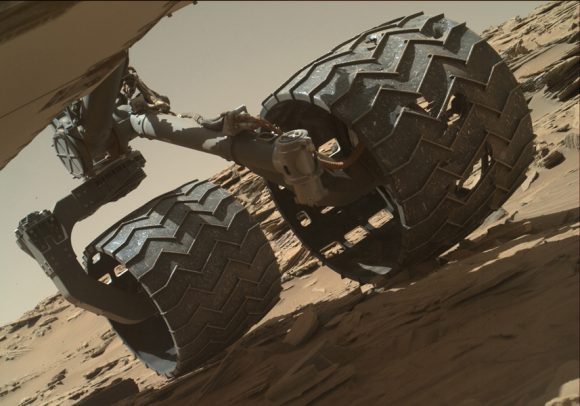
The Next Mars Rover’s Wheels Won’t Get Torn Apart by the Red Planet The Curiosity Rover has made some incredible discoveries during the five years it has been operating on the surface of Mars. And in the course of conducting its research, the rover has also accrued some serious mileage. However, it certainly came as a surprise when during a routine examinations in 2013, members of the Curiosity science team noted that its wheels had suffered rips in their treads (followed by breaks reported in 2017). Looking to the future, researchers at NASA’s Glenn Research Center hope to equip next-generation rovers with a new wheel.Read More →

Project Lyra, a Mission to Chase Down that Interstellar Asteroid Back in October, the announcement that the first interstellar asteroid triggered a flurry of excitement. Since that time, astronomers have conducted follow-up observations of the object known as 1I/2017 U1 (aka. `Oumuamua) and noted some rather interesting things about it. For example, from rapid changes in its brightness, it has been determined that the asteroid is rocky and metallic, and rather oddly-shaped. Observations of the asteroid’s orbit have also revealed that it made its closest pass to our Sun back in September of 2017, and it is currently on its way back to interstellar space.Read More →

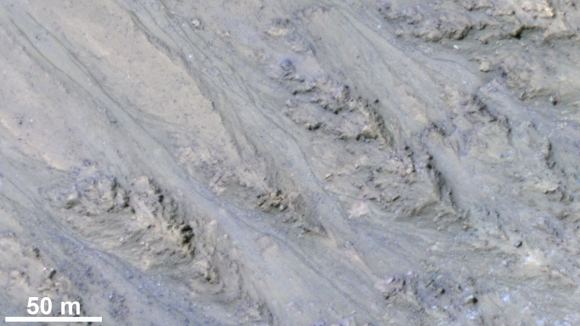
These Streaks on Mars Could be Flowing Sand, not Water When robotic missions first began to land on the surface of Mars in the 1970s, they revealed a harsh, cold and desiccated landscape. This effectively put an end generations of speculation about “Martian canals” and the possibility of life on Mars. But as our efforts to explore the Red Planet have continued, scientists have found ample evidence that the planet once had flowing water on its surface. In addition, scientists have been encouraged by the appearance of Recurring Slope Lineae (RSL), which were believed to be signs of seasonal water flows. Unfortunately, a new studyRead More →

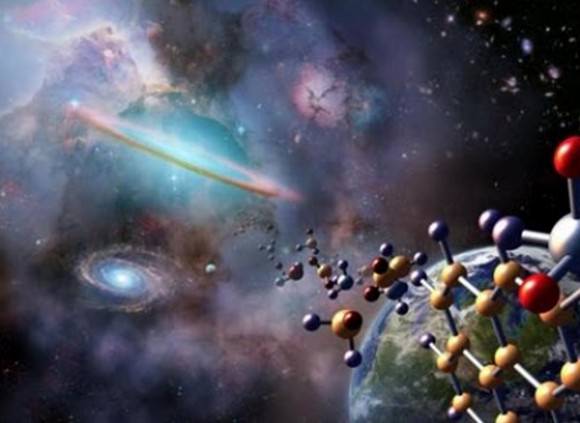
Galactic Panspermia: Interstellar Dust Could Transport Life from Star to Star The theory of Panspermia states that life exists through the cosmos, and is distributed between planets, stars and even galaxies by asteroids, comets, meteors and planetoids. In this respect, life began on Earth about 4 billion years ago after microorganisms hitching a ride on space rocks landed on the surface. Over the years, considerable research has been devoted towards demonstrating that the various aspects of this theory work. The latest comes from the University of Edinburgh, where Professor Arjun Berera offers another possible method for the transport of life-bearing molecules. According to his recentRead More →

Researchers have hypothesized that the universe contains “dark matter.” They have also posited the existence of “dark energy.” These two hypotheses account for the movement of stars in galaxies and for the accelerating expansion of the universe. But according to a researcher at UNIGE, these concepts may be no longer valid, as universal phenomena can be demonstrated without them. This research exploits a new theoretical model based on the scale invariance of empty space. This research is reported in The Astrophysical Journal. Powered by WPeMaticoRead More →
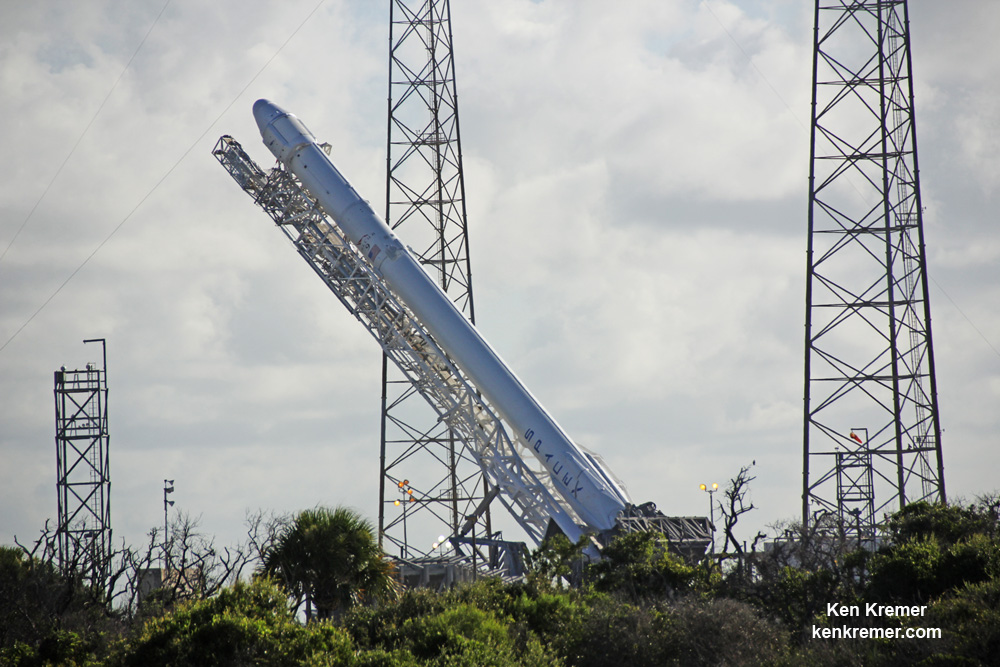
SpaceX Resuming Launches from Damaged Pad 40 on Dec. 4 with Station Resupply Flight for NASA; Covert Zuma Remains on Hold SpaceX Dragon CRS-9 was the last International Space Station resupply mission to lift off successfully from pad 40 on July 18, 2016, prior to the Cape Canaveral, FL, launch pad explosion with the Amos-6 payload that heavily damaged the pad and infrastructure on Sept. 1, 2016. Cargo launches for NASA will resume with Dragon CRS-13 in December 2017. Credit: Ken Kremer/kenkremer.com KENNEDY SPACE CENTER, FL – After postponing last week’s liftoff of the covert ‘Zuma’ spy satellite due to last minute concerns about theRead More →

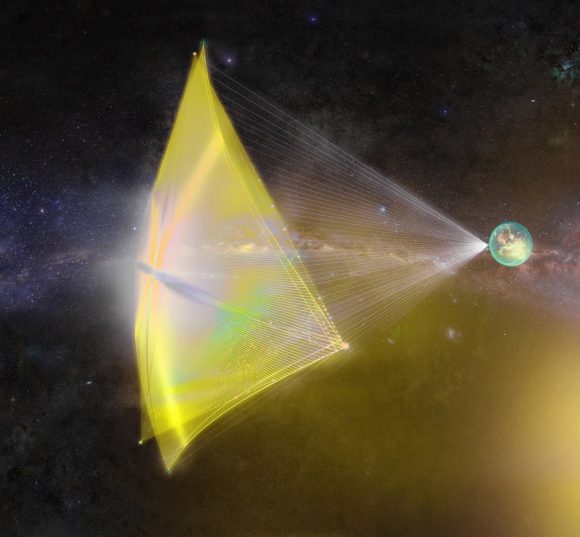
Could Magnetic Sails Slow an Interstellar Spacecraft Enough? The number of confirmed extra-solar planets has increased by leaps and bounds in recent years. With every new discovery, the question of when we might be able to explore these planets directly naturally arises. There have been several suggestions so far, ranging from laser-sail driven nanocraft that would travel to Alpha Centauri in just 20 years (Breakthrough Starshot) to slower-moving microcraft equipped with a gene laboratories (The Genesis Project). But when it comes to braking these craft so that they can slow down and study distant stars and orbit planets, things become a bit more complicated. AccordingRead More →

Book Review: Cosmology for the Curious What will Curious George grow up to be? Being curious, then George will ask a lot of questions. And if lucky then physics will be George’s destiny, for physics seems to have so many answers. From the biggest to the smallest, that’s its purview. And for Delia Perlov and Alex Vilenkin in their book “Cosmology for the Curious” aim to answer a great many of those questions. Or at least those questions pertaining to mankind’s place in space. Cosmology is all about space and time. Which means that this book begins by traveling back in time. Traveling to theRead More →

Using the Subaru Telescope atop Maunakea, researchers have identified 11 dwarf galaxies and two star-containing halos in the outer region of a large spiral galaxy 25 million light-years away from Earth. The findings, published in The Astrophysical Journal, provide new insight into how these ‘tidal stellar streams’ form around galaxies. Powered by WPeMaticoRead More →
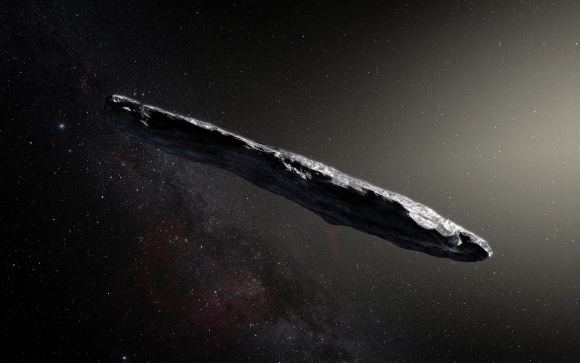
That Interstellar Asteroid is Probably Pretty Strange Looking On October 19th, 2017, the Panoramic Survey Telescope and Rapid Response System-1 (Pan-STARRS-1) telescope in Hawaii picked up the first interstellar asteroid, named 1I/2017 U1 (aka. `Oumuamua). After originally being mistaken for a comet, observations performed by the European Southern Observatory (ESO) and other astronomers indicated that it was actually an asteroid that measures about 400 meters (1312 ft) long. Thanks to data obtained by the ESO’s Very Large Telescope (VLT) at the Paranal Observatory in Chile, the brightness, color and orbit of this asteroid have been precisely determined. And according to a new study led byRead More →

Carnival of Space #536 This week’s Carnival of Space is hosted by Brian Wang at his Next Big Future blog. Click here to read Carnival of Space #536 And if you’re interested in looking back, here’s an archive to all the past Carnivals of Space. If you’ve got a space-related blog, you should really join the carnival. Just email an entry to carnivalofspace@gmail.com, and the next host will link to it. It will help get awareness out there about your writing, help you meet others in the space community – and community is what blogging is all about. And if you really want to help out, sign upRead More →

Weekly Space Hangout – Nov. 22, 2017: Andy Weir and ARTEMIS Hosts: Fraser Cain (universetoday.com / @fcain) Dr. Paul M. Sutter (pmsutter.com / @PaulMattSutter) Dr. Kimberly Cartier (KimberlyCartier.org / @AstroKimCartier ) Dr. Morgan Rehnberg (MorganRehnberg.com / @MorganRehnberg ChartYourWorld.org) Special Guests: This week, we are SUPER excited to welcome author Andy Weir (The Martian), back to the show to chat with us about his new book, Artemis. Viewers who have seen Andy’s first appearance on our show on January 9, 2015, will remember just how awesome he is as a guest – and why we can’t wait to catch up with him this week. Andy beganRead More →

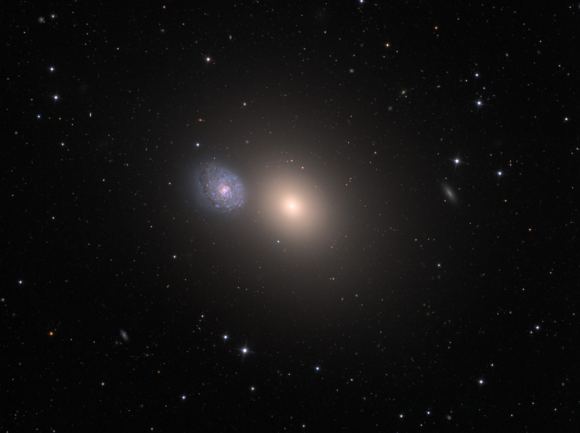
Messier 60 – the NGC 4649 Galaxy Welcome back to Messier Monday! Today, we continue in our tribute to our dear friend, Tammy Plotner, by looking at the elliptical galaxy known as Messier 60. In the 18th century, while searching the night sky for comets, French astronomer Charles Messier kept noting the presence of fixed, diffuse objects he initially mistook for comets. In time, he would come to compile a list of approximately 100 of these objects, hoping to prevent other astronomers from making the same mistake. This list – known as the Messier Catalog – would go on to become one of the mostRead More →

ESO Observations Show First Interstellar Asteroid is Like Nothing Seen Before For the first time ever astronomers have studied an asteroid that has entered the Solar System from interstellar space. Observations from ESO’s Very Large Telescope in Chile and other observatories around the world show that this unique object was traveling through space for millions of years before its chance encounter with our star system. It appears to be a dark, reddish, highly-elongated rocky or high-metal-content object. The new results appear in the journal Nature on 20 November 2017. ESO News Feed Go to Source Powered by WPeMaticoRead More →