An expanding universe and distant stars—tips on how to experience cosmology from your backyard
2018-05-22
For people like me, light years, the expanding universe and the Big Bang are part of daily language. Powered by WPeMaticoRead More →
For people like me, light years, the expanding universe and the Big Bang are part of daily language. Powered by WPeMaticoRead More →
The Australian National University (ANU) invites citizen scientists to join the University’s search for exploding stars called supernovae, which help astronomers to measure the Universe. Powered by WPeMaticoRead More →
Carnival of Space #562 This week’s Carnival of Space is hosted by me at the CosmoQuest blog. Click here to read Carnival of Space #562 And if you’re interested in looking back, here’s an archive to all the past Carnivals of Space. If you’ve got a space-related blog, you should really join the carnival. Just email an entry to susie@wshcrew.space, and the next host will link to it. It will help get awareness out there about your writing, help you meet others in the space community – and community is what blogging is all about. And if you really want to help out, sign up to beRead More →
Astronomers have detected two new bright quasars at a redshift of about 5.0. The newly found quasi-stellar objects (QSOs) are among the brightest high-redshift quasars known to date. The finding was presented May 9 in a paper published on the arXiv pre-print repository. Powered by WPeMaticoRead More →
Stellar nurseries are cloudy and dusty places that shine brightly in infrared light. The G305 star-forming complex is no exception. It features a number of bright, intricate gas clouds heated by infant stars in their midst. In this spectacular image by ESA’s Herschel space observatory, these star-forming hotspots stand out in a blue tone that contrasts with the red-brownish colour of cooler regions. Powered by WPeMaticoRead More →
A large international team of researchers has found what they are describing as more evidence of the existence of Planet Nine. In their paper posted on the arXiv preprint server, the group describes the behavior of a newly discovered distant object as suggestive of an influence of a large planet. Powered by WPeMaticoRead More →
A new study has discovered the first known permanent immigrant to our Solar System. The asteroid, currently nestling in Jupiter’s orbit, is the first known asteroid to have been captured from another star system. The work is published in Monthly Notices of the Royal Astronomical Society: Letters. Powered by WPeMaticoRead More →
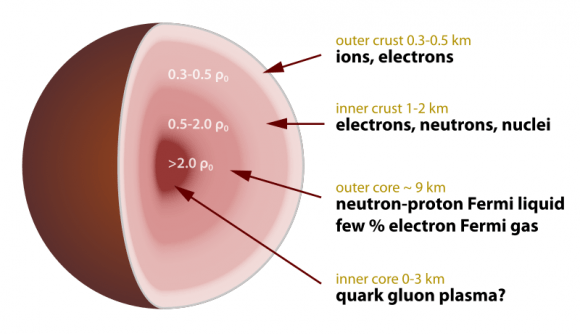
The Pressure Inside Every Proton is 10x That Inside Neutron Stars Neutron stars are famous for combining a very high-density with a very small radius. As the remnants of massive stars that have undergone gravitational collapse, the interior of a neutron star is compressed to the point where they have similar pressure conditions to atomic nuclei. Basically, they become so dense that they experience the same amount of internal pressure as the equivalent of 2.6 to 4.1 quadrillion Suns! In spite of that, neutron stars have nothing on protons, according to a recent study by scientists at the Department of Energy’s Thomas Jefferson National AcceleratorRead More →
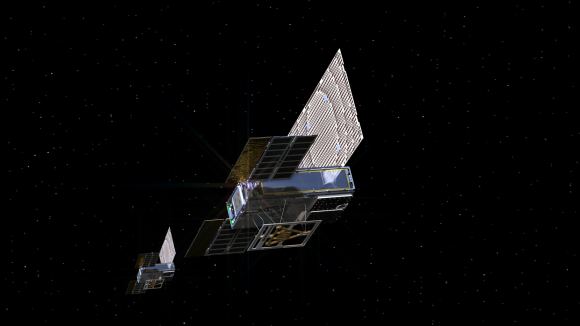
NASA Cubesat Takes a Picture of the Earth and Moon In 1990, the Voyager 1 spaceprobe took a picture of Earth when it was about 6.4 billion km (4 billion mi) away. In this image, known as the “pale blue dot“, Earth and the Moon appeared as mere points of light because of the sheer distance involved. Nevertheless, it remains an iconic photo that not only showed our world from space, but also set long-distance record. As it turns out, NASA set another long-distance record for CubeSats last week (on May. 8th, 2018) when a pair of small satellites called Mars Cube One (MarCO) reached aRead More →
Two nearby supernovae that exploded about 2.5 and eight million years ago could have resulted in a staggered depletion of Earth’s ozone layer, leading to a variety of repercussions for life on Earth. Powered by WPeMaticoRead More →
On 21 May 2018, the Chinese space agency will launch the relay satellite Chang’e 4 to an orbit behind the Moon. On board will be a Dutch radio antenna, the Netherlands Chinese Low-Frequency Explorer (NCLE). The radio antenna is the first Dutch-made scientific instrument to be sent on a Chinese space mission, and it will open up a new chapter in radio astronomy. The is instrument developed and built by engineers from ASTRON, the Netherlands Institute for Radio Astronomy in Dwingeloo, the Radboud Radio Lab of Radboud University in Nijmegen, and the Delft-based company ISIS. With the instrument, astronomers want to measure radio waves originatingRead More →
Scientists at Kourovka Astronomical Observatory of Ural Federal University have discovered a new exoplanet. Powered by WPeMaticoRead More →
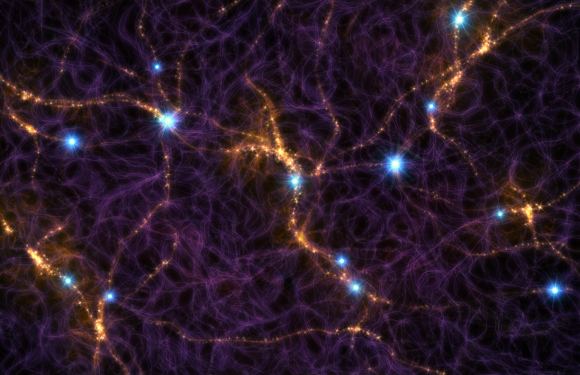
Are Mysterious Fast Radio Bursts Coming From the Collapse of Strange Star Crusts? Fast Radio Bursts (FBRs) have fascinated astronomers ever since the first one was detected in 2007. This event was named the “Lorimer Burst” after it discoverer, Duncan Lorimer from West Virginia University. In radio astronomy, this phenomenon refers to transient radio pulses coming from distant cosmological sources, which typically last a few milliseconds on average. Over two dozen events have been discovered since 2007 and scientists are still not sure what causes them – though theories range from exploding stars and black holes to pulsars and magnetars. However, according to a newRead More →
Capitalizing on the unparalleled sharpness and spectral range of NASA’s Hubble Space Telescope, an international team of astronomers is releasing the most comprehensive, high-resolution ultraviolet-light survey of nearby star-forming galaxies. Powered by WPeMaticoRead More →
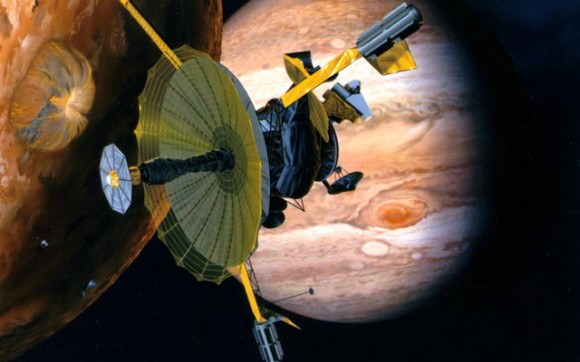
There was Evidence for Europa’s Geysers Hiding in Plain Sight in Old Spacecraft Data From 1997 Jupiter’s moon Europa continues to fascinate and amaze! In 1979, the Voyager missions provided the first indications that an interior ocean might exist beneath it’s icy surface. Between 1995 and 2003, the Galileo spaceprobe provided the most detailed information to date on Jupiter’s moons to date. This information bolstered theories about how life could exist in a warm water ocean located at the core-mantle boundary. Even though the Galileo mission ended when the probe crashed into Jupiter’s atmosphere, the spaceprobe is still providing vital information on Europa. After analyzingRead More →
In the western Utah desert, the Telescope Array sprawls across an area the size of New York City, waiting for cosmic rays. The facility detects the high-energy particles that collide with Earth’s atmosphere constantly; the cosmic rays trigger the 500-plus sensors once every few minutes. Powered by WPeMaticoRead More →
Astronomers have been keenly peering into M51, or the Whirlpool Galaxy, since the 1800s, its signature spiral structure informing the earliest debates over the nature of galaxies and the Cosmos at large. Powered by WPeMaticoRead More →
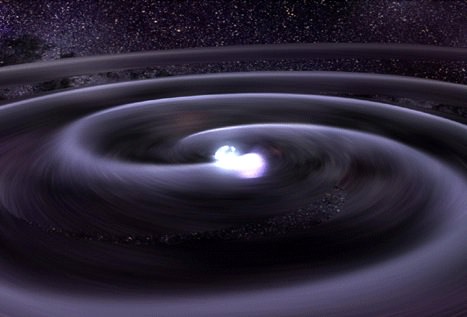
Gaia Turns Up 13,928 White Dwarfs Nearby the Sun, Including Several Formed Through Mergers In 2013, the European Space Agency (ESA) deployed the Gaia mission, a space observatory designed to measure the positions of movements of celestial bodies. For the past four years, Gaia has been studying distant stars, planets, comets, asteroids, quasars and other astronomical objects, and the data it has acquired will be used to construct the largest and most precise 3D space catalog ever made, totaling 1 billion objects. The second release of Gaia data, which took place on April 25th, 2018, has already resulted in a number of impressive discoveries. TheRead More →
Weekly Space Hangout: May 16, 2018: Ethan Siegel’s Treknology: The Science of Star Trek from Tricorders to Warp Drive Hosts: Fraser Cain (universetoday.com / @fcain) Dr. Paul M. Sutter (pmsutter.com / @PaulMattSutter) Dr. Kimberly Cartier (KimberlyCartier.org / @AstroKimCartier ) Dr. Morgan Rehnberg (MorganRehnberg.com / @MorganRehnberg & ChartYourWorld.org) Special Guests: Ethan Siegel is the author of the new book, Treknology: The Science of Star Trek from Tricorders to Warp Drive. In his book, Ethan examines over 25 items from the Star Trek universe, describes their underlying science, and lets his readers know how close we are to having many of these iconic items today. Ethan isRead More →
Two astronomers from Greece have managed to model the three-dimensional structure of an interstellar gas cloud, and found that it’s on the order of 10 times more spacious than it originally appeared. Powered by WPeMaticoRead More →

