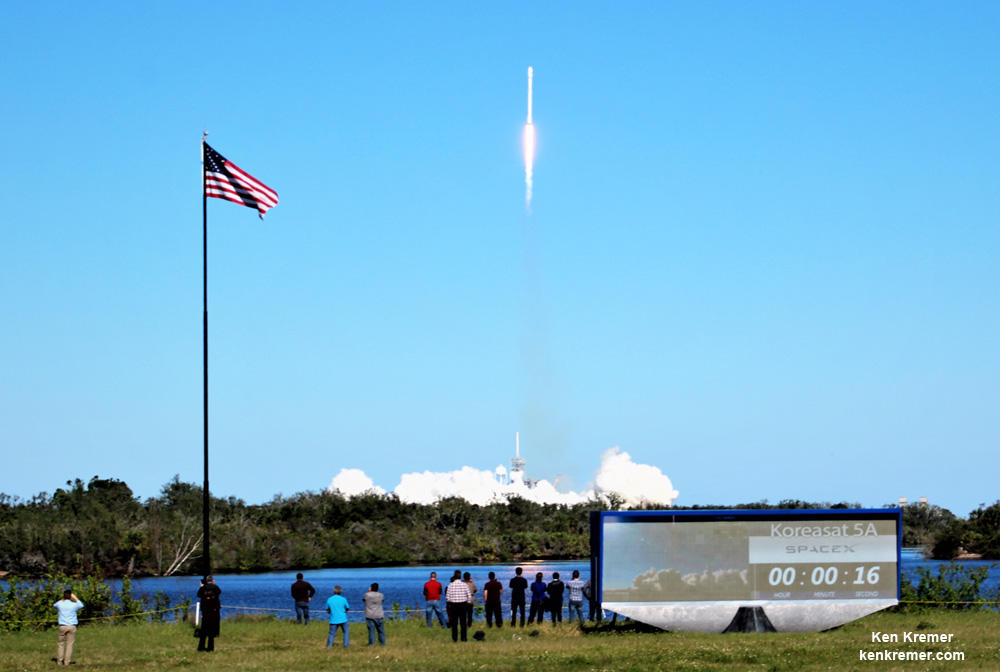
SpaceX Matches ULA Single Year Launch Record with KoreaSat, Record Breaker On Tap: Photo/Video Gallery SpaceX Falcon 9 soars to orbit with KoreaSat-5A TV comsat from Launch Complex 39A at the Kennedy Space Center, FL, on 30 Oct 2017. As seen from inside the pad perimeter. Credit: Ken Kremer/Kenkremer.com KENNEDY SPACE CENTER, FL – With the stunningly beautiful Halloween eve liftoff of the commercial KoreaSat-5A telecomsat payload from the Florida Space Coast, SpaceX matched competitor United Launch Alliance’s (ULA) single year launch record of 16 missions – and the blastoff record breaker is on tap in just 2 weeks time! In fact several additional FalconRead More →
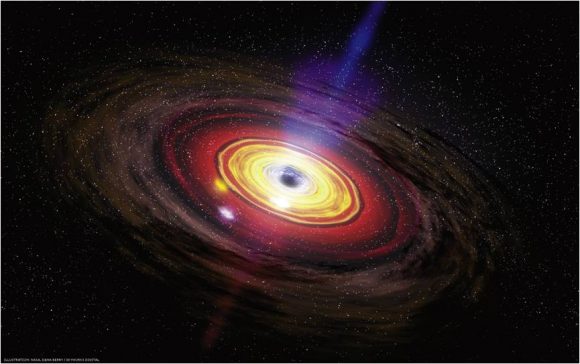
New Method for Researching Activity Around Quasars and Black Holes Ever since the discovery of Sagittarius A* at the center of our galaxy, astronomers have come to understand that most massive galaxies have a Supermassive Black Hole (SMBH) at their core. These are evidenced by the powerful electromagnetic emissions produced at the nuclei of these galaxies – which are known as “Active Galatic Nuclei” (AGN) – that are believed to be caused by gas and dust accreting onto the SMBH. For decades, astronomers have been studying the light coming from AGNs to determine how large and massive their black holes are. This has been difficult,Read More →

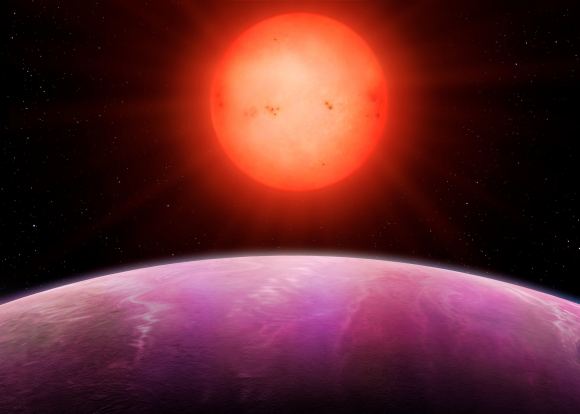
“Monster Planet” Discovered, Makes Scientists Rethink Theories of Planetary Formation When it comes to how and where planetary systems form, astronomers thought they had a pretty good handle on things. The predominant theory, known as the Nebular Hypothesis, states that stars and planets form from massive clouds of dust and gas (i.e. nebulae). Once this cloud experiences gravitational collapse at the center, its remaining dust and gas forms a protoplanetary disk that eventually accretes to form planets. However, when studying the distant star NGTS-1 – an M-type (red dwarf) located about 600 light-years away – an international team led by astronomers from the University ofRead More →

(Phys.org)—A large international team of researchers working with data sent back from NASA’s Kepler space telescope has found evidence of 20 previously unknown, promising exoplanets. In their paper uploaded to the arXiv preprint server, the team describes the exoplanets and highlights the ones that appear to be the most likely to fit into the Goldilocks category. Powered by WPeMaticoRead More →

Sirius is not a single star at all, but a binary system of two stars. Polaris, the north star, is actually a system of three stars. And Castor, in the constellation of Gemini, actually consists of a whopping six stars. Current models show stars forming by the fragmentation of massive interstellar gas clouds, spinning themselves by gravity into stardom, in isolation and unaffected by nearby stars. But the plethora of systems in our galaxy that consist of multiple stars now has astronomers wondering why stars so often come in groups. Powered by WPeMaticoRead More →

With the current state of scientific knowledge and equipment, understanding astrophysical black holes invariably requires detailed studies of the observable elements surrounding them. The STRONGGRAVITY project has developed novel analytical tools to do just that, with a focus on radiation. Powered by WPeMaticoRead More →

Hollywood films and science fiction literature fuel the belief that aliens are other-worldly, monster-like beings, who are very different to humans. But new research suggests that we could have more in common with our extra-terrestrial neighbours, than initially thought. Powered by WPeMaticoRead More →

That’s Strange. Jupiter’s Northern and Southern Auroras Pulse Independently In addition to being the largest and most massive planet in our Solar system, Jupiter is also one of it’s more mysterious bodies. This is certainly apparent when it comes to Jupiter’s powerful auroras, which are similar in some ways to those on Earth. In recent years, astronomers have sought to study patterns in Jupiter’s atmosphere and magnetosphere to explain how aurora activity on this planet works.. For instance, an international team led by researchers from University College London recently combined data from the Juno probe with X-ray observations to discern something interesting about Jupiter’s northernRead More →

Exoplanet-Hunting Survey Discovers Three More Giant Alien Worlds! The discovery of extra-solar planets has certainly heated up in the past few years. With the deployment of the Kepler mission in 2009, several thousands of exoplanet candidates have been discovered and over 2,500 have been confirmed. In many cases, these planets have been gas giants orbiting close to their respective stars (aka. “Hot Jupiters”), which has confounded some commonly-held notions of how and where planets form. Beyond these massive planets, astronomers also discovered a wide range of planets that range from massive terrestrial planets (“Super-Earths) to Neptune-sized giants. In a recent study, an international team astronomersRead More →

Although their existence is undeniable, astronomers across the world are still unsure of how supermassive black holes actually form. An EU-funded project has set out to answer this question by simulating the formation and growth of their seeds – black holes created when an extremely massive star collapses. Powered by WPeMaticoRead More →

A University of Wyoming researcher played a key role in a study that suggests a newly developed computer model can more accurately explain the diversity of quasar broad emission line regions, which are the clouds of hot, ionized gas that surround the supermassive black holes feeding in the centers of galaxies. Powered by WPeMaticoRead More →

The galaxy Messier 77 (M77) is famous for its super-active nucleus that releases enormous energy across the electromagnetic spectrum, ranging from x-ray to radio wavelengths. Yet, despite its highly active core, the galaxy looks like any normal quiet spiral. There’s no visual sign of what is causing its central region to radiate so extensively. It has long been a mystery why only the center of M77 is so active. Astronomers suspect a long-ago event involving a sinking black hole, which could have kicked the core into high gear. Powered by WPeMaticoRead More →

(Phys.org)—A team of Indian astronomers reports the discovery of a new giant radio galaxy (GRG) using the Giant Metrewave Radio Telescope (GMRT). With a linear size of more than 7 million light years, it is one of the largest GRGs known to date. The finding was presented October 17 in a research paper published on the arXiv pre-print repository. Powered by WPeMaticoRead More →

Spectacular SpaceX Falcon 9 KoreaSat Launch Lights Space Coast Sky with Halloween Eve Glow, Booster Lands at Sea SpaceX Falcon 9 blasts off with KoreaSat-5A commercial telecomsat atop Launch Complex 39A at the Kennedy Space Center, FL, on Halloween eve 30 Oct 2017. As seen from world famous countdown clock. Credit: Ken Kremer/Kenkremer.com KENNEDY SPACE CENTER, FL – SpaceX delivered a spectacular Halloween eve delight with today’s Falcon 9 launch of a Korean HDTV satellite that lit up the Florida Space Coast skies with a glow that delighted kids of all ages and ghouls alike and put an end at last for today to theRead More →

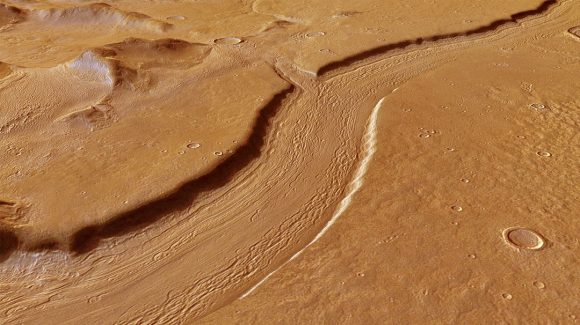
New Research Says “Levitating” Sands Explain how Mars Got its Landscape Mars modern landscape is something of a paradox. It’s many surface features are very similar to those on Earth that are caused by water-borne erosion. But for the life of them, scientists cannot imagine how water could have flown on Mars’ cold and desiccated surface for most of Mars’ history. Whereas Mars was once a warmer, wetter place, it has had a very thin atmosphere for billions of years now, which makes water flow and erosion highly unlikely. In fact, while the surface of Mars periodically becomes warm enough to allow for ice toRead More →