The NewSpace Revolution is About to Bring us Tiny Space Telescopes we can all Control One of the defining characteristics of the modern era of space exploration is the way the public and private aerospace companies (colloquially referred to as the NewSpace industry) and are taking part like never before. Thanks to cheaper launch services and the development of small satellites that can be built using off-the-shelf electronics (aka. CubeSats and microsats), universities and research institutions are also able to conduct research in space. Looking to the future, there are those who want to take public involvement in space exploration to a whole new level.Read More →

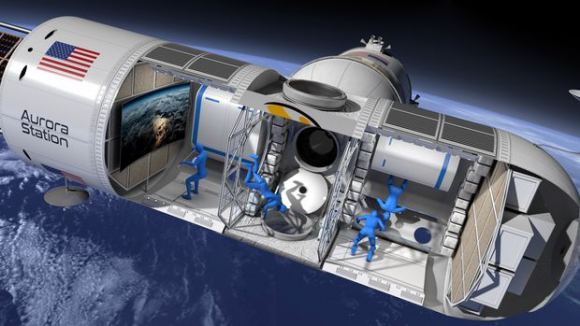
The Aurora Station Will be the First Luxury Hotel in Space Are you ready for a luxury hotel in space? We all knew it was coming, even though it seems impossibly futuristic. But this time it’s not just science fiction; somebody actually has a plan. The space hotel will be called “Aurora Station” and the company behind it is Orion Span, a Silicon Valley and Houston-based firm. Orion Span aims to deliver the astronaut experience to people, by delivering the people into space. The catch? “We developed Aurora Station to provide a turnkey destination in space. Upon launch, Aurora Station goes into service immediately, bringingRead More →

Carnival of Space #557 This week’s Carnival of Space is hosted by Gadi Eidelheit at his The Venus Transit blog. Click here to read Carnival of Space #557. And if you’re interested in looking back, here’s an archive to all the past Carnivals of Space. If you’ve got a space-related blog, you should really join the carnival. Just email an entry to susie@wshcrew.space, and the next host will link to it. It will help get awareness out there about your writing, help you meet others in the space community – and community is what blogging is all about. And if you really want to help out, signRead More →

Could We Detect an Ancient Industrial Civilization in the Geological Record? As a species, we humans tend to take it for granted that we are the only ones that live in sedentary communities, use tools, and alter our landscape to meet our needs. It is also a foregone conclusion that in the history of planet Earth, humans are the only species to develop machinery, automation, electricity, and mass communications – the hallmarks of industrial civilization. But what if another industrial civilization existed on Earth millions of years ago? Would we be able to find evidence of it within the geological record today? By examining theRead More →

Imagine if, many millions of years ago, dinosaurs drove cars through cities of mile-high buildings. A preposterous idea, right? Over the course of tens of millions of years, however, all of the direct evidence of a civilization—its artifacts and remains—gets ground to dust. How do we really know, then, that there weren’t previous industrial civilizations on Earth that rose and fell long before human beings appeared? Powered by WPeMaticoRead More →

University of Miami astrophysicist Nico Cappelluti studies the sky. An assistant professor in the Physics Department, Cappelluti is intrigued by the cosmic phenomena of super massive black holes, the nature of dark matter, and active galactic nuclei, which is the very bright light source found at the center of many galaxies. Powered by WPeMaticoRead More →
A “core-collapse” supernova occurs when the iron core of a massive star collapses under the force of gravity and then rebounds, generating pressure waves and shocks that propagate outward. A superluminous supernovae is a rare class of core collapse supernovae whose luminosity, equal to 10-1000 billion suns, is too high to be powered by the usual process that drives supernovae, the radioactive decay of nickel (there is not enough nickel present to do it). The source of the energetics has been hotly contested, with suggestions including shocks from the ejected material or pulsating instabilities interacting with surrounding material. The most favored model, however, is theRead More →

Using radial velocity method a group of Japanese astronomers has found that two evolved stars, namely 24 Booties and Gamma Librae, are orbited by gas giant planets. They discovered that 24 Booties hosts one planet, while Gamma Librae is circled by two alien worlds. The finding is detailed in a paper published April 11 on arXiv.org. Powered by WPeMaticoRead More →

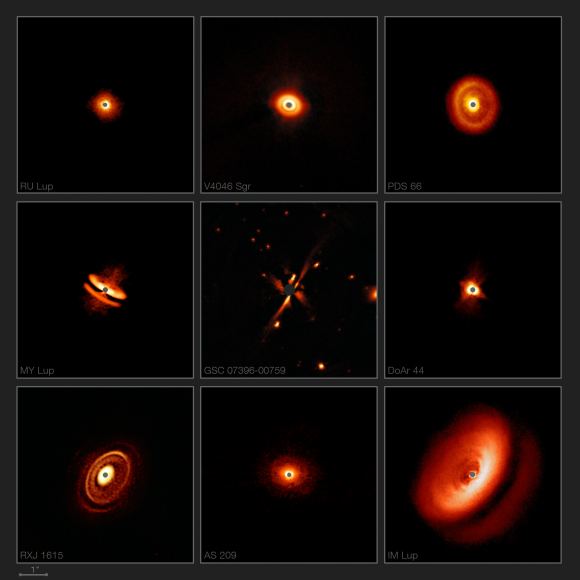
Look at This Fascinating Variety of Planet-Forming Disks Around Other Stars The European Southern Observatory (ESO) has released a stunning collection of images of the circumstellar discs that surround young stars. The images were captured with the SPHERE (Spectro-Polarimetric High-contrast Exoplanet REsearch) instrument on the ESO’s Very Large Telescope (VLT) in Chile. We’ve been looking at images of circumstellar disks for quite some time, but this collection reveals the fascinating variety of shapes an sizes that these disks can take. New images from the SPHERE instrument on ESO’s Very Large Telescope are revealing the dusty discs surrounding nearby young stars in greater detail than previouslyRead More →

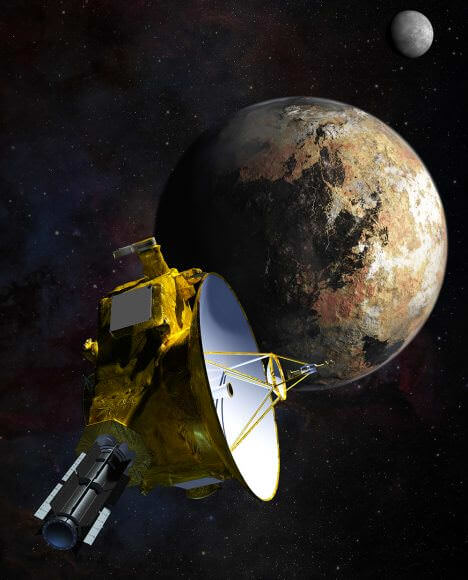
Pluto’s Charon Gets Mountains Named After Sci-Fi Authors Octavia Butler and Arthur C. Clarke, as Well as Many Others From History and Legend. I Approve! In 2015, the New Horizons mission made history by being the first spacecraft to conduct a flyby of Pluto. In addition to revealing things about the planet’s atmosphere, its geology and system of moons, the probe also provided the first clear images of the surface of Pluto and its largest moon, Charon. Because of this, scientists are now able to study Pluto and Charon’s many curious surface features and learn more about their evolution. Another interesting thing that has resultedRead More →

This NASA/ESA Hubble Space Telescope image shows a massive galaxy cluster glowing brightly in the darkness. Despite its beauty, this cluster bears the distinctly unpoetic name of PLCK G308.3-20.2. Powered by WPeMaticoRead More →

There are potentially thousands of planets that lie just outside our solar system—galactic neighbors that could be rocky worlds or more tenuous collections of gas and dust. Where are these closest exoplanets located? And which of them might we be able to probe for clues to their composition and even habitability? The Transiting Exoplanet Survey Satellite (TESS) will be the first to seek out these nearby worlds. Powered by WPeMaticoRead More →

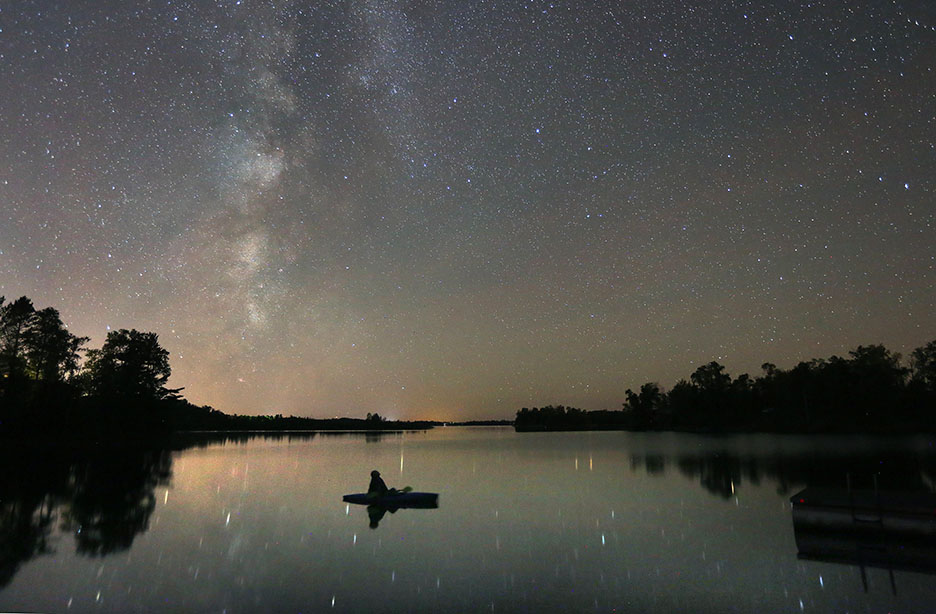
See The Finest Sights Before You Die With “Wonders of the Night Sky” Framed by stars reflected by water, a kayaker leans back to take in the grandeur of the night sky. The photo appears in my new book in the chapter titled “Stars on Water.” Credit: Bob King After months parked in front of a computer, I’m thrilled to announce the publication of my new book. The full title is — get ready for this — Wonders of the Night Sky You Must See Before You Die: The Guide to Extraordinary Curiosities of Our Universe. In a nutshell, it’s a bucket list of cosmicRead More →

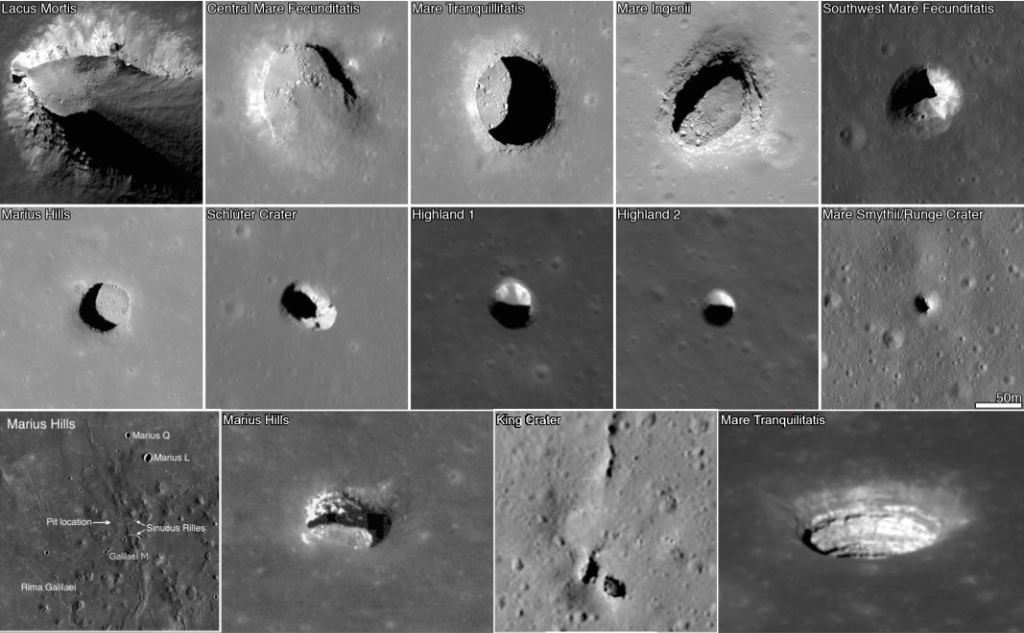
Living Underground on Other Worlds. Exploring Lava Tubes The Moon and Mars will probably be the first places in the Solar System that humanity will try to live after leaving the safety and security of Earth. But those worlds are still incredibly harsh environments, with no protection from radiation, little to no atmosphere, and extreme temperatures. Living on those worlds is going to be hard, it’s going to be dangerous. Fortunately, there are a few pockets on those worlds that’ll make it a tiny little bit easier to get a foothold in the Solar System: lava tubes. I’m going to show you some really coolRead More →

Dense Star Clusters Could be the Places Where Black Hole Mergers are Common In February of 2016, scientists working for the Laser Interferometer Gravitational-Wave Observatory (LIGO) made history when they announced the first-ever detection of gravitational waves. Not only did this discovery confirm a century-old prediction made by Einstein’s Theory of General Relativity, it also confirmed the existence of stellar binary black holes – which merged to produce the signal in the first place. And now, an international team led by MIT astrophysicist Carl Rodriguez has produced a study that suggests that  black holes may merge multiple times. According to their study, these “second-generation mergers”Read More →