An international team of scientists has used the NASA/ESA Hubble Space Telescope to study the atmosphere of the hot exoplanet WASP-39b. By combining this new data with older data they created the most complete study yet of an exoplanet atmosphere. The atmospheric composition of WASP-39b hints that the formation processes of exoplanets can be very different from those of our own Solar System giants. Powered by WPeMaticoRead More →

Space Catapult Startup SpinLaunch has Come Out of Stealth Mode. Space catapults? Yes Please Of all challenges presented by space exploration – and to be fair, there are many! – one of the greatest is the cost. When it comes right down to it, launching disposable rockets from Earth and getting them to the point where they can achieve escape velocity and reach space is expensive. In addition, these rockets need to be big, powerful, and be able to hold a lot of fuel in order to lift spacecraft or cargo. It is for this reason that so many efforts in the past few decadesRead More →

Planet and star formation starts with a lot of material collapsing, falling down onto itself because of gravity. In the middle of this, a protostar is being formed. This star will then start to get warm and eventually glow. “Around this forming star, there will be a round, circulating area. This area is called a disk and is full of a lot of material. We’re talking about a lot of gas, for example, CO2 and water. And then there are some small particles which we call dust: very tiny, almost sand grains that are not gas.” Powered by WPeMaticoRead More →

In 1929 Edwin Hubble surprised many people – including Albert Einstein – when he showed that the universe is expanding. Another bombshell came in 1998 when two teams of astronomers proved that cosmic expansion is actually speeding up due to a mysterious property of space called dark energy. This discovery provided the first evidence of what is now the reigning model of the universe: “Lambda-CDM,” which says that the cosmos is approximately 70 percent dark energy, 25 percent dark matter and 5 percent “normal” matter (everything we’ve ever observed). Powered by WPeMaticoRead More →

http://static.libsyn.com/p/assets/6/b/8/8/6b8813e3f0b38255/awesome-astronomy-logo-itunes-01.jpgAwesome Astronomy #69 – March 2018Ralph, Paul & Jeni The Discussion: Jeni and her Welsh brethren suffered an Earthquake and Ralph takes a look through listeners emails which prompts a discussion about the range of educational outreach that AweAst listeners undertake. The News: Rounding up the space and astronomy news this month we have: A new and pointless star ‘graces’ our night sky We wave goodbye to the concept of the Late Heavy Bombardment Astronomers publish results on the oldest supernova detection Astronomy Concept: We delve into the wide array of visual observation and astrophography filters in response to John Lonergan’s request. Q&A: Listeners’ questionsRead More →

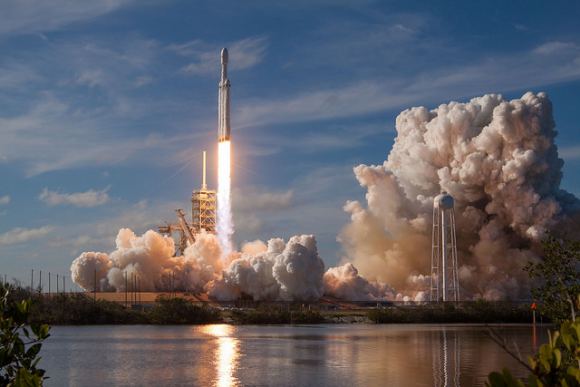
Bacteria Surviving On Musk’s Tesla Are Either A Bio-threat Or A Backup Copy Of Life On Earth A great celebratory eruption accompanied the successful launch of SpaceX’s Falcon Heavy rocket in early February. That launch was a big moment for people who are thoughtful about the long arc of humanity’s future. But the Tesla Roadster that was sent on a long voyage in space aboard that rocket is likely carrying some bacterial hitch-hikers. The Falcon Heavy’s first flight. Image: SpaceX A report from Purdue University suggests that, though unlikely, the Roadster may be carrying an unwelcome cargo of Earthly bacteria to any destination it reaches.Read More →

Weekly Space Hangout: Feb 28, 2018: Will Kalif’s “See It With A Small Telescope” Hosts: Fraser Cain (universetoday.com / @fcain) Dr. Paul M. Sutter (pmsutter.com / @PaulMattSutter) Dr. Kimberly Cartier (KimberlyCartier.org / @AstroKimCartier ) Dr. Morgan Rehnberg (MorganRehnberg.com / @MorganRehnberg & ChartYourWorld.org) Special Guests: Will Kalif is the author of the new amateur astronomy book titled See it With a Small Telescope. Announcements: If you would like to join the Weekly Space Hangout Crew, visit their site here and sign up. They’re a great team who can help you join our online discussions! We record the Weekly Space Hangout every Wednesday at 5:00 pm PacificRead More →

“Cosmologists are often wrong but never in doubt,” Russian physicist Lev Landau once said. In the early days, astronomers began by observing and modelling stars in different stages of evolution and comparing their findings with theoretical predictions. Stellar modelling uses well-tested physics, with concepts such as hydrostatic equilibrium, law of gravitation, thermodynamics, nuclear reactions etc. Yet in contrast, cosmology is based on a large number of untested physical assumptions, like nonbaryonic dark matter and dark energy whose physics has no proven link with the rest of physics. In a recent paper published in EPJ H, Jayant V. Narlikar, professor emeritus at the Inter-University Centre forRead More →

Compared to some other galaxies in our Universe, the Milky Way is a rather subtle character. In fact, there are galaxies that are a thousands times as luminous as the Milky Way, owing to the presence of warm gas in the galaxy’s Central Molecular Zone (CMZ). This gas is heated by massive bursts of star formation that surround the Supermassive Black Hole (SMBH) at the nucleus of the galaxy. Powered by WPeMaticoRead More →

Last year, ESA’s Gaia mission helped astronomers make unique observations of Neptune’s largest moon, Triton, as it passed in front of a distant star. This is a preview of the superb quality and versatility of the Gaia data that will be released in April. Powered by WPeMaticoRead More →

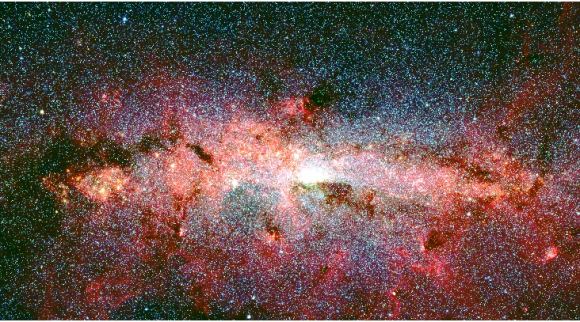
Amazing High Resolution Image of the Core of the Milky Way, a Region with Surprisingly Low Star Formation Compared to Other Galaxies Compared to some other galaxies in our Universe, the Milky Way is a rather subtle character. In fact, there are galaxies that are a thousands times as luminous as the Milky Way, owing to the presence of warm gas in the galaxy’s Central Molecular Zone (CMZ). This gas is heated by massive bursts of star formation that surround the Supermassive Black Hole (SMBH) at the nucleus of the galaxy. The core of the Milky Way also has a SMBH (Sagittarius A*) and allRead More →

Carnival of Space #550 This week’s Carnival of Space is hosted by Gadi Eidelheit at his The Venus Transit blog. Click here to read Carnival of Space #550. And if you’re interested in looking back, here’s an archive to all the past Carnivals of Space. If you’ve got a space-related blog, you should really join the carnival. Just email an entry to susie@wshcrew.space, and the next host will link to it. It will help get awareness out there about your writing, help you meet others in the space community – and community is what blogging is all about. And if you really want to help out, signRead More →

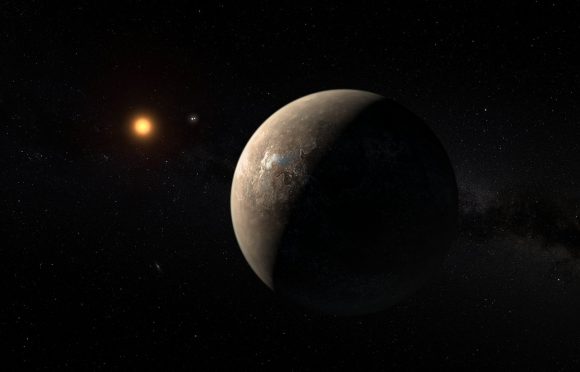
Proxima Centauri Just Released a Deadly Flare, so it’s Probably not a Great Place for Habitable Planets Since it’s discovery was announced in August of 2016, Proxima b has been an endless source of wonder and the target of many scientific studies. As the closest extra-solar planet to our Solar System – and a terrestrial planet that orbits within Proxima Centauri’s circumstellar habitable zone (aka. “Goldilocks Zone”) – scientists have naturally wondered whether or not this planet could be habitable. Unfortunately, many of these studies have emphasized the challenges that life on Proxima b would likely face, not the least of which is harmful radiationRead More →

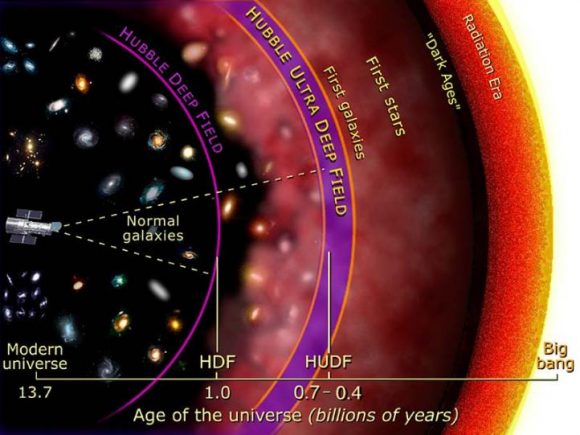
Precise New Measurements From Hubble Confirm the Accelerating Expansion of the Universe. Still no Idea Why it’s Happening In the 1920s, Edwin Hubble made the groundbreaking revelation that the Universe was in a state of expansion. Originally predicted as a consequence of Einstein’s Theory of General Relativity, this confirmation led to what came to be known as Hubble’s Constant. In the ensuring decades, and thanks to the deployment of next-generation telescopes – like the aptly-named Hubble Space Telescope (HST) – scientists have been forced to revise this law. In short, in the past few decades, the ability to see farther into space (and deeper intoRead More →

Brown dwarfs, the larger cousins of giant planets, undergo atmospheric changes from cloudy to cloudless as they age and cool. A team of astronomers led by Carnegie’s Jonathan Gagné measured for the first time the temperature at which this shift happens in young brown dwarfs. Their findings, published by the Astrophysical Journal Letters, may help them better understand how gas giant planets like our own Solar System’s Jupiter evolved. Powered by WPeMaticoRead More →