It Took a Century, but Astronomers Imaged Betelgeuse’s Companion
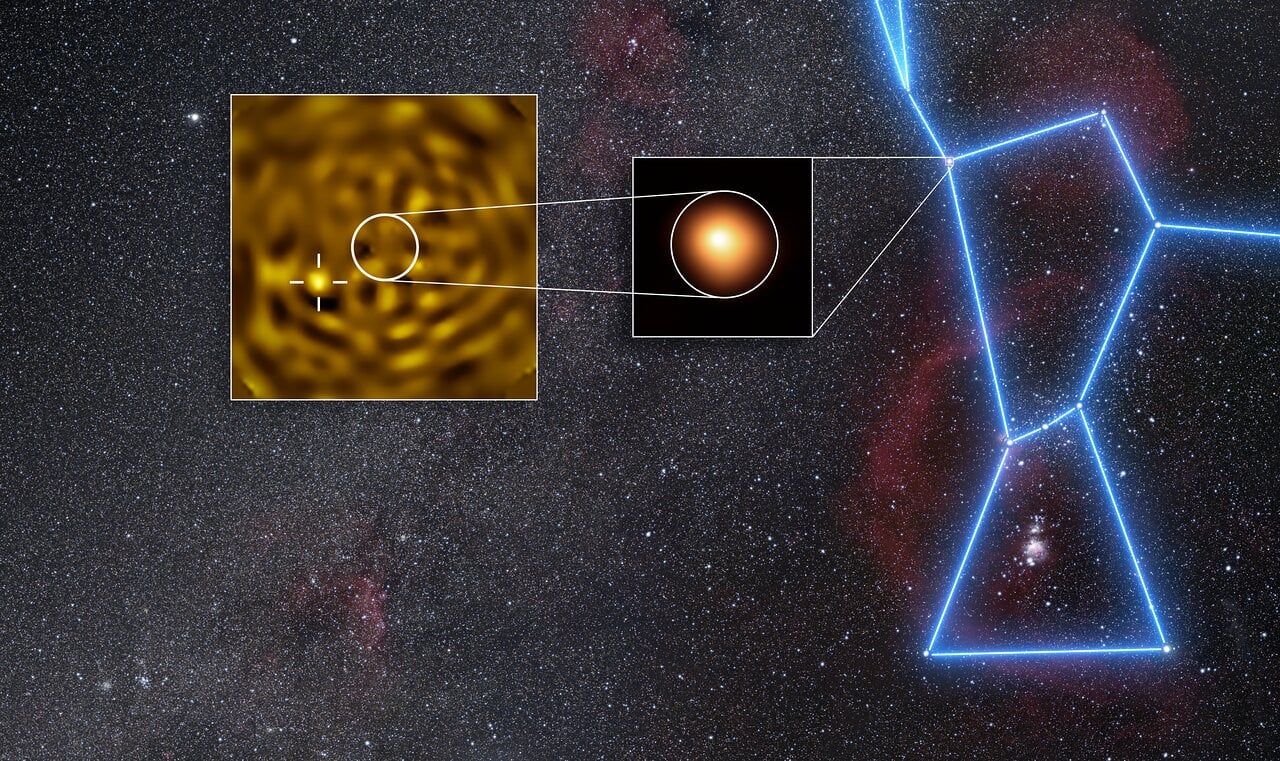
Most of us are familiar with Betelgeuse (also known as alpha Orionis), the bright shoulder star in the constellation Orion. It’s a red supergiant star that lies somewhere between 400 and 550 light-years away from us and is quite bright. Betelgeuse contains about 14 times the mass of the Sun and is a fairly young star compared to ours. It appears to be no more than 10 million years old, which means that it evolved rapidly from a protostar to the red giant we see today. That lifecycle means Betelgeuse will explode as a supernova sometime in the relatively near future — say within the next 100,000 years.
Universe Today
Go to Source


Comments are closed, but trackbacks and pingbacks are open.