Here’s Why So Many Massive Galaxies in the Early Universe Stop Forming Stars
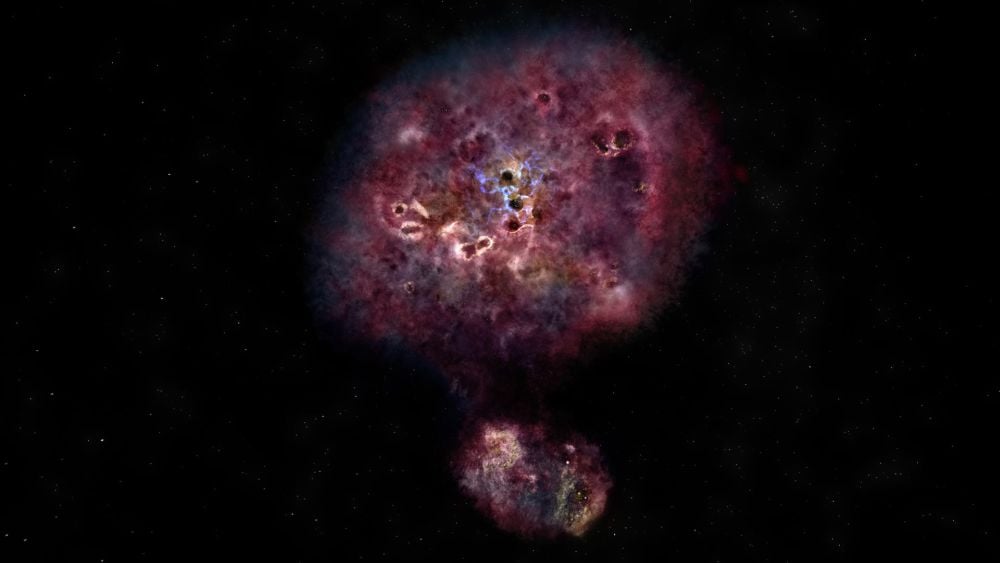
This is MAMBO-9, a pair of dusty star forming galaxies (DSFGs) in the process of merging. These types of galaxies are highly efficient at star formation, and they could help explain one of the early Universe's mysteries: massive quiescents (MQs). MQs are massive galaxies in the early Universe that have become quenched, and astronomers aren't sure why. New research uncovers a link between MQs and DSFGs, and how mergers provides an explanation. Image Credit: NRAO / AUI / NSF / B. Saxton.

The early Universe is full of massive galaxies that stopped forming stars very early. They’re called massive quenchers (MQ) and they’re challenging to explain. New research shows that another type of galaxy, dusty star-forming galaxies (DSFGs) can explain why. It’s all about mergers, starbursts, and AGN feedback.

Universe Today
Go to Source

Comments are closed, but trackbacks and pingbacks are open.