Extragalactic Archaeology: A New Method To Understand Galaxy Growth and Evolution
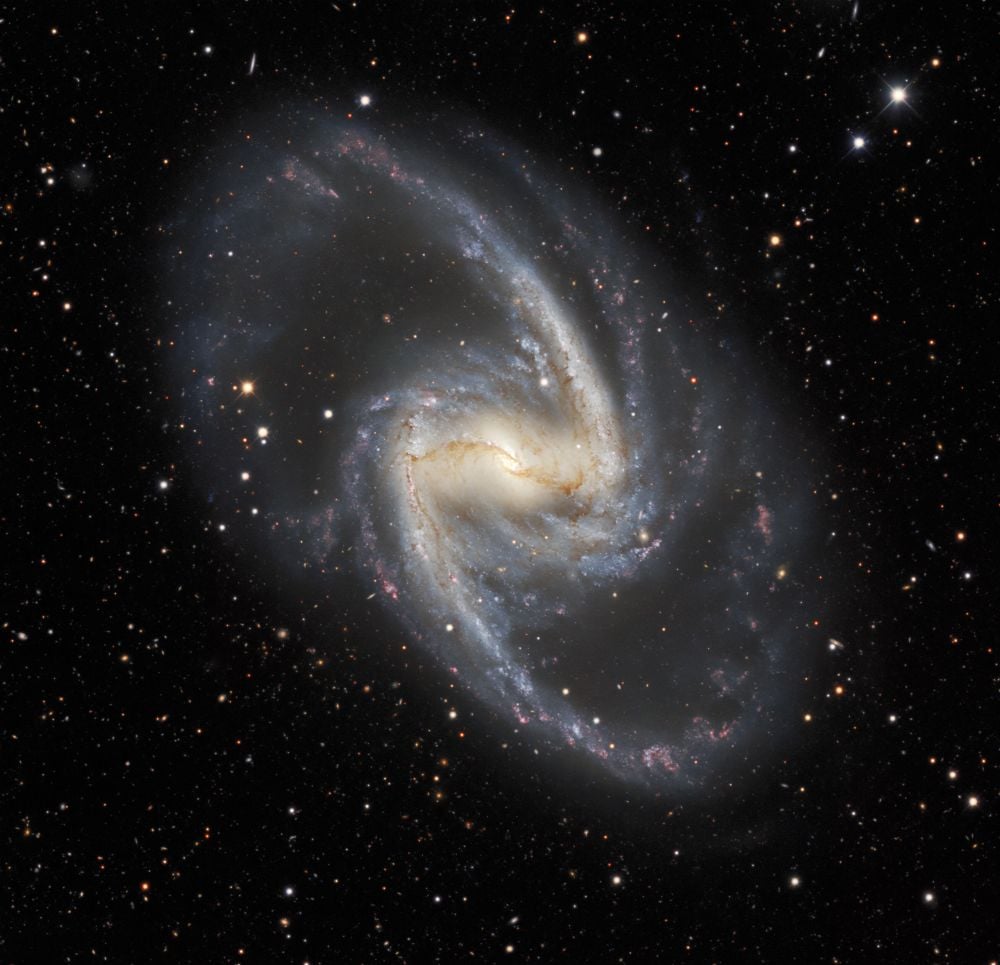
NGC 1365 is also known as the Great Barred Spiral Example. It's a stunning example of its galaxy type. It's about 56 million light-years away in the Fornax Cluster. Researchers have used chemical fingerprints based on oxygen to map out its history. Image Credit: By Dark Energy Survey/DOE/FNAL/DECam/CTIO/NOIRLab/NSF/AURAImage processing: Travis Rector (University of Alaska Anchorage/NSF’s NOIRLab), Jen Miller (Gemini Observatory/NSF’s NOIRLab), Mahdi Zamani & Davide de Martin (NSF’s NOIRLab) - https://noirlab.edu/public/images/iotw2127a/, CC BY 4.0, https://commons.wikimedia.org/w/index.php?curid=107557546

Galactic archaeology uses chemical fingerprints in the Milky Way to trace its formation and evolution. Now a team of researchers led by the Center for Astrophysics | Harvard and Smithsonian have employed it for the first time in a distant galaxy. This is the first example of extragalactic archaeology, and it relies on help from the powerful Illustris TNG simulations.

Universe Today
Go to Source

Comments are closed, but trackbacks and pingbacks are open.