Calvin College professor of astronomy Larry Molnar made a bold announcement in 2017—he and his team had identified a binary star in the constellation Cygnus, the Swan, that was a strong candidate to merge and explode in the near future. Known by its Kepler mission number, KIC 9832227, the pair of stars is about 1800 light years from Earth and has an orbit so close that it takes just 11 hours to go around once. That first-of-its-kind prediction caught the attention of an international audience, creating excitement within the scientific community and among the general public. Powered by WPeMaticoRead More →

What is the Cosmic Microwave Background? For thousands of years, human being have been contemplating the Universe and seeking to determine its true extent. And whereas ancient philosophers believed that the world consisted of a disk, a ziggurat or a cube surrounded by celestial oceans or some kind of ether, the development of modern astronomy opened their eyes to new frontiers. … Continue reading “What is the Cosmic Microwave Background?” The post What is the Cosmic Microwave Background? appeared first on Universe Today. Universe Today Go to Source Powered by WPeMaticoRead More →

Japanese Startup is Working on a Reusable Rocketplane to Carry Passengers to Space, as Early as 2023 The Japanese startup PD Aerospace is developing a reusable space plane that will use a combination of jet engines and a rocket motor to take customers to space by as early as 2023. The post Japanese Startup is Working on a Reusable Rocketplane to Carry Passengers to Space, as Early as 2023 appeared first on Universe Today. Universe Today Go to Source Powered by WPeMaticoRead More →

Cassini Data Has Revealed a Towering Hexagonal Storm at Saturn’s Northern Pole Data from the Cassini mission has revealed a massive hexagonal shaped storm high in the stratosphere of Saturn’s north pole. The post Cassini Data Has Revealed a Towering Hexagonal Storm at Saturn’s Northern Pole appeared first on Universe Today. Universe Today Go to Source Powered by WPeMaticoRead More →

Apart from a billion Milky Way stars, ESA’s Gaia spacecraft also observes extragalactic objects. Its automated alert system notifies astronomers whenever Gaia spots a transient event. A team of astronomers have found out that by tweaking the existing automated system, Gaia can be used to detect hundreds of peculiar transients in the centres of galaxies. They found about 480 transients over a period of about a year. Their new method will be implemented in the system as soon as possible allowing astronomers to determine the nature of these events. The findings will be published in the November issue of the Monthly Notices of the RoyalRead More →

Phosphorus, which is vital to life but somewhat rare, condensed inside asteroids in the outer Solar System before moving back towards the sun, where some of it ended up on Earth, according to new research. Powered by WPeMaticoRead More →

The Transiting Exoplanet Survey Satellite (TESS), launched on April 18, has as its core mission goal to discover small transiting exoplanets orbiting nearby bright stars, and to do so it will conduct a nearly all-sky photometric survey over the next two years. For 27.4 days at a time TESS will look at one region of the sky while its 64-million-pixel camera reads out once every 30 minutes in an effort to spot the slight dips in starlight that signal the transit of a planet across the face of a distant star. (Several hundred thousand of the pixels will read out in a two minute cadenceRead More →

This is the Exact Spot that ESA’s SMART-1 Crashed Into the Moon in 2006 Thanks to images taken by the Lunar Reconnaissance Orbiter, it is now known exactly where the ESA’s SMART-1 mission landed on the Moon. The post This is the Exact Spot that ESA’s SMART-1 Crashed Into the Moon in 2006 appeared first on Universe Today. Universe Today Go to Source Powered by WPeMaticoRead More →

For the first time, a powerful “wind” of molecules has been detected in a galaxy located 12 billion light-years away. Probing a time when the universe was less than 10 percent of its current age, University of Texas at Austin astronomer Justin Spilker’s research sheds light on how the earliest galaxies regulated the birth of stars to keep from blowing themselves apart. The research will appear in the Sept. 7 issue of the journal Science. Powered by WPeMaticoRead More →

To answer significant questions about planetary systems, such as whether our solar system is a rare phenomenon or if life exists on planets other than Earth, NASA should lead a large direct imaging mission – an advanced space telescope – capable of studying Earth-like exoplanets orbiting stars similar to the sun, says a new congressionally mandated report by the National Academies of Sciences, Engineering, and Medicine. Powered by WPeMaticoRead More →

Exploring the Ice Giants: Neptune and Uranus at Opposition for 2018 Have you seen all of the planets for yourself? This week is a good time to check off the most difficult of the major planets off of your life list, as Neptune reaches opposition for 2018 on Friday, September 7th at at ~18:00 Universal Time (UT)/2:00 PM EDT. The post Exploring the Ice Giants: Neptune and Uranus at Opposition for 2018 appeared first on Universe Today. Universe Today Go to Source Powered by WPeMaticoRead More →

Europan Space Whales Anyone? Planets Covered by Deep Oceans Can Still Have Life on Them In recent decades, astronomers have discovered many planets that they believe are “Earth-like” in nature, meaning that they appear to be terrestrial (i.e. rocky) and orbit their stars at the right distance to support the existence of liquid water on their surfaces. Unfortunately, recent research has indicated that many of these planets may in fact be “water worlds“, where water makes up a significant proportion of the planet’s mass. To the scientific community, this seemed to indicate that these worlds could not remain habitable for very long  since they wouldRead More →

Wolf 503b, an exoplanet twice the size of Earth, has been discovered by an international team of Canadian, American and German researchers using data from NASA’s Kepler Space Telescope. The find is described in a new study whose lead author is Merrin Peterson, an Institute for research on exoplanets (iREx) graduate student who started her master’s degree at Université de Montréal (UdeM) in May. Powered by WPeMaticoRead More →

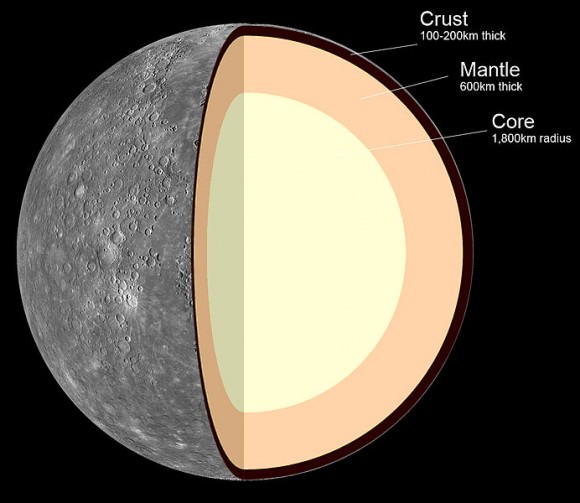
Forming Dense Metal Planets like Mercury is Probably Pretty Difficult and Rare in the Universe The planet Mercury, the closet planet to our Sun, is something of an exercise in extremes. It’s days last longer than it’s years and at any given time, it’s sun-facing side is scorching hot while its dark side is freezing cold. It is also one of the least understood planets in our Solar System. While it is a terrestrial (i.e. rocky) planet like Earth, Venus and Mars, it has a significantly higher iron-to-rock ratio than the others. For decades, the most widely-accepted theory for this was that Mercury experienced aRead More →

Estimating When Life Could Have Arisen on Earth The question how life began on Earth has always been a matter of profound interest to scientists. But just as important as how life emerged is the question of when it emerged. In addition to discerning how non-living elements came together to form the first living organisms (a process known as abiogenesis), scientists have also sought to determine when the first living organisms appeared on Earth. In a new study by a team of Canadian researchers, the question of when life emerged on Earth is constrained using two approaches. By combining astrophysical and geophysical evidence with biosignaturesRead More →

Precise measurement using a continent-wide collection of National Science Foundation (NSF) radio telescopes has revealed that a narrow jet of particles moving at nearly the speed of light broke out into interstellar space after a pair of neutron stars merged in a galaxy 130 million light-years from Earth. The merger, which occurred in August of 2017, sent gravitational waves rippling through space. It was the first event ever to be detected both by gravitational waves and electromagnetic waves, including gamma rays, X-rays, visible light, and radio waves. Powered by WPeMaticoRead More →

€17 Million Fund to Power European Detection and Imaging Innovation The pioneering ATTRACT initiative couples world-class research laboratories and business management experts to create a European innovation ecosystem that will accelerate the development of disruptive technologies and their progress to market. The initiative, in which ESO is a partner, will fund 170 breakthrough detection and imaging ideas with market potential, and aims to create products, services, companies and jobs based on new detection and imaging technologies. ESO News Feed Go to Source Powered by WPeMaticoRead More →