Weekly Space Hangout -Sept 20, 2017: ANU Citizen Science Project for Supernovae Hosts: Fraser Cain (universetoday.com / @fcain) Dr. Paul M. Sutter (pmsutter.com / @PaulMattSutter) Dr. Kimberly Cartier ( KimberlyCartier.org / @AstroKimCartier ) Dr. Morgan Rehnberg (MorganRehnberg.com / @MorganRehnberg ChartYourWorld.org) Special Guest: This week’s guests are Dr Brad Tucker and Dr Anais Möller of ANU Citizen Science Project for Supernovae. Brad is an Astrophysicist/Cosmologist, and currently a Research Fellow at the Research School of Astronomy and Astrophysics, Mt. Stromlo Observatory at the Australian National University. Anais is a cosmologist based in the Australian National University with an expertise in type Ia supernova cosmology. She hasRead More →
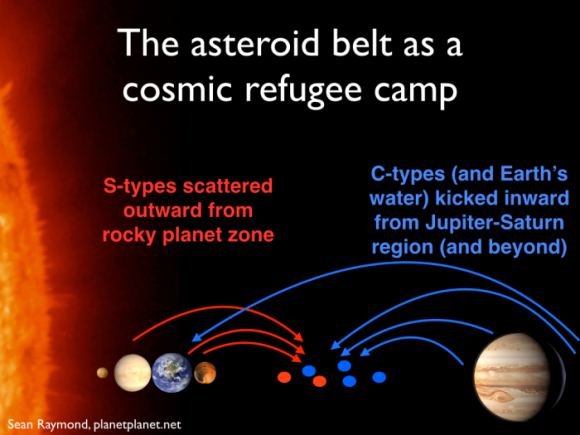
New Study Says Primordial Asteroid Belt was Empty Between the orbits of Mars and Jupiter lies a disk of rocks, small bodies and planetoids known as the Main Asteroid Belt. The existence of this Belt was first theorized in the 18th century, based on observations that indicated a regular pattern in the orbits of Solar planets. By the following century, regular discoveries began to be made in the space between Mars and Jupiter, prompting astronomers to theorize where the Belt came from. For a long time, scientists debated whether the Belt was the remains of a planet that broke up, or remnants left over fromRead More →

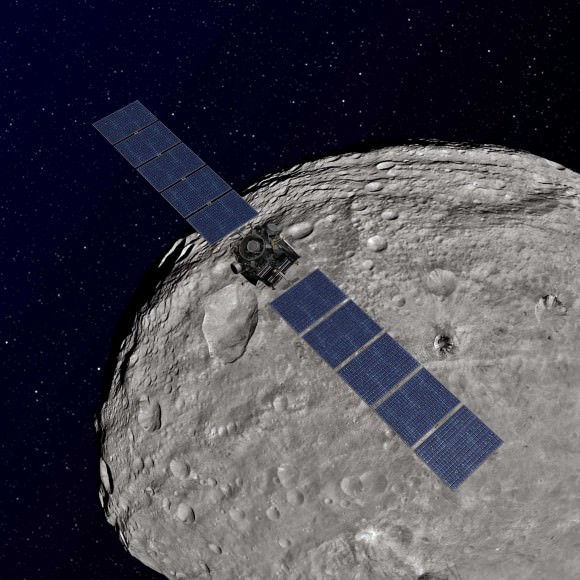
Dawn Probe Finds Evidence of Subsurface Ice on Vesta In 2011, NASA’s Dawn spacecraft established orbit around the large asteroid (aka. planetoid) known as Vesta. Over the course of the next 14 months, the probe conducted detailed studies of Vesta’s surface with its suite of scientific instruments. These findings revealed much about the planetoid’s history, its surface features, and its structure – which is believed to be differentiated, like the rocky planets. In addition, the probe collected vital information on Vesta’s ice content. After spending the past three years sifting through the probe’s data, a team of scientists has produced a new study that indicatesRead More →

Ageing Star Blows Off Smoky Bubble Astronomers have used ALMA to capture a strikingly beautiful view of a delicate bubble of expelled material around the exotic red star U Antliae. These observations will help astronomers to better understand how stars evolve during the later stages of their life-cycles. ESO News Feed Go to Source Powered by WPeMaticoRead More →

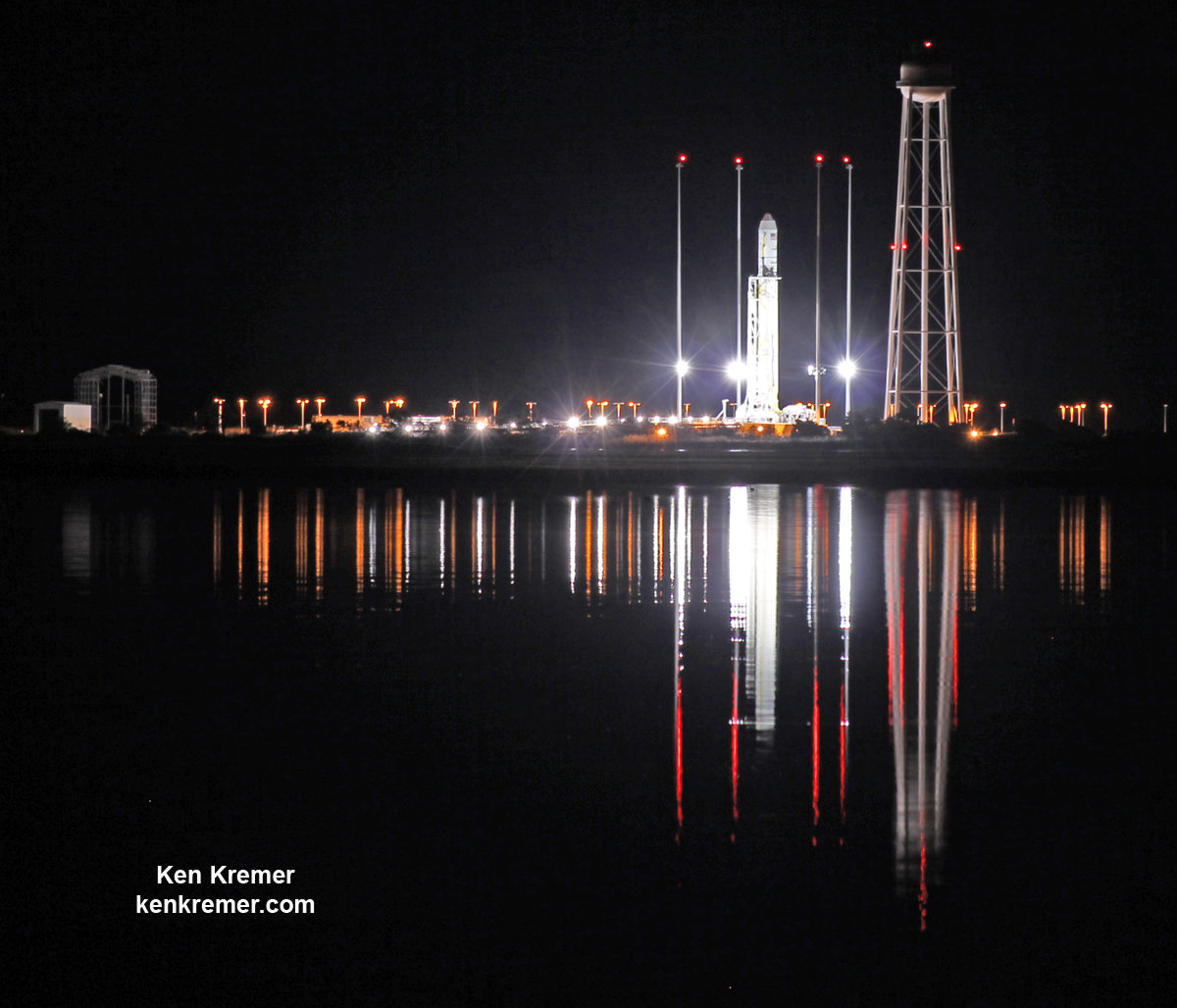
Northrop Grumman Acquires Orbital ATK for $9.2 Billion Antares rocket stands erect, reflecting off the calm waters the night before a launch from NASA’s Wallops Flight Facility, VA, on Oct. 28, 2014. Credit: Ken Kremer/kenkremer.com Aerospace giant Northrop Grumman will acquire Orbital ATK for approximately $9.2 billion, in a deal the companies announced Monday and they say will “expand capability” is largely “complementary” and involves “little overlap.” Orbital ATK specializes in a wide variety of launch vehicles, missiles and munitions that Northrup believes will significantly enhance capabilities it lacks while offering Orbital significantly more technical and financial resources to grow sales and business opportunities. UnderRead More →

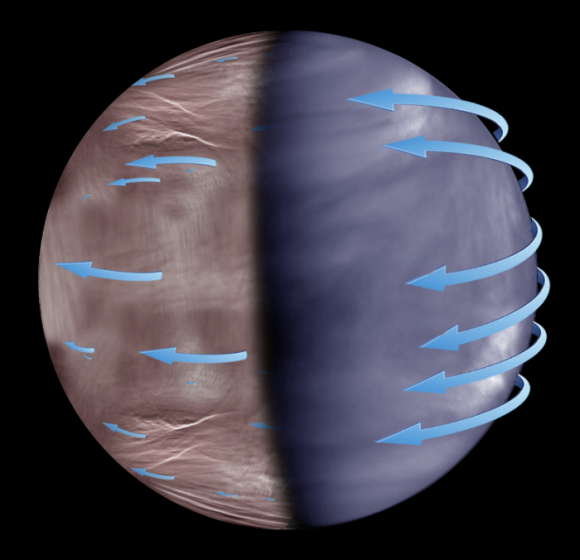
Venus Express Probe Reveals the Planet’s Mysterious Night Side Venus’ atmosphere is as mysterious as it is dense and scorching. For generations, scientists have sought to study it using ground-based telescopes, orbital missions, and the occasional atmospheric probe. And in 2006, the ESA’s Venus Express mission became the first probe to conduct long-term observations of the planet’s atmosphere, which revealed much about its dynamics. Using this data, a team of international scientists – led by researchers from the Japan Aerospace and Exploration Agency (JAXA) – recently conducted a study that characterized the wind and upper cloud patterns on the night side of Venus. In additionRead More →

Carnival of Space #527 This week’s Carnival of Space is hosted by Brad Rogers at The Evolving Planet blog. Click here to read Carnival of Space #527. And if you’re interested in looking back, here’s an archive to all the past Carnivals of Space. If you’ve got a space-related blog, you should really join the carnival. Just email an entry to carnivalofspace@gmail.com, and the next host will link to it. It will help get awareness out there about your writing, help you meet others in the space community – and community is what blogging is all about. And if you really want to help out,Read More →

During almost four years of observing the cosmos, the Herschel Space Observatory traced out the presence of water. With its unprecedented sensitivity and spectral resolution at key wavelengths, Herschel revealed this crucial molecule in star-forming molecular clouds, detected it for the first time in the seeds of future stars and planets, and identified the delivery of water from interplanetary debris to planets in our solar system. Powered by WPeMaticoRead More →

A group analysis of 30 exoplanets orbiting distant stars suggests that size, not mass, is a key factor in whether a planet’s atmosphere can be detected. The largest population-study of exoplanets to date successfully detected atmospheres around 16 ‘hot Jupiters’, and found that water vapour was present in every case. Powered by WPeMaticoRead More →

(Phys.org)—A team of astronomers led by Jacob M. Robertson of the Austin Peay State University in Clarksville, Tennessee has detected a new quasi-stellar object (QSO). They found the new quasar, designated SDSS J022155.26-064916.6, as a result of an analysis of available spectroscopic data. The finding is reported in a paper published Sept. 10 on the arXiv pre-print server. Powered by WPeMaticoRead More →

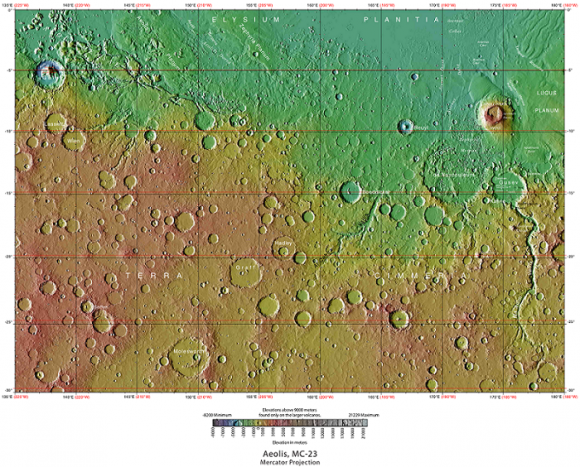
Study of Martian Sedimentary Layers Reveals More About the Planet’s Past As of 2016, Mars became the permanent residence of no less than eight robotic missions, a combination of orbiters, rovers and landers. Between extensive studies of the Martian atmosphere and surface, scientists have learned a great deal about the planet’s history and evolution. In particular, they have uncovered voluminous amounts of evidence that Mars once had flowing water on its surface. The most recent evidence to this effect from the University of Texas at Austin, where researchers have produced a study detailing how water deposited sediment in Mars’ Aeolis Dorsa region. According to theirRead More →

For decades, astronomers have known about irregular outbursts from the double star system V745 Sco, which is located about 25,000 light years from Earth. Astronomers were caught by surprise when previous outbursts from this system were seen in 1937 and 1989. When the system erupted on February 6, 2014, however, scientists were ready to observe the event with a suite of telescopes including NASA’s Chandra X-ray Observatory. Powered by WPeMaticoRead More →

Astronomers have embarked on the largest observing project in the more than four-decade history of the National Science Foundation’s Karl G. Jansky Very Large Array (VLA)—a huge survey of the sky that promises a rich scientific payoff over many years. Powered by WPeMaticoRead More →

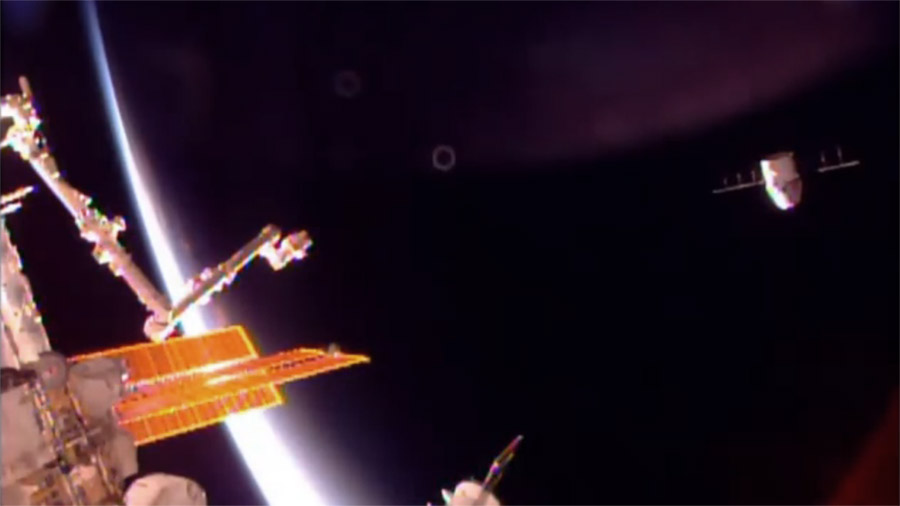
SpaceX Dragon Splashes Down in Pacific with 2 Tons of NASA Space Station Science The SpaceX Dragon (far right) begins its departure from the International Space Station after being released from the grips of the Canadarm2 robotic arm on Sept. 17, 2017. Credit: NASA TV KENNEDY SPACE CENTER, FL – Concluding a month long stay at the International Space Station (ISS) a SpaceX Dragon cargo freighter loaded with some two tons of NASA research samples, hardware and micestonauts returned home to make a successful splashdown in the Pacific on Sunday, Sept. 17. The SpaceX Dragon CRS-12 resupply ship successfully splashed down in the Pacific OceanRead More →

Surveying the sky for almost four years to observe the glow of cold cosmic dust embedded in interstellar clouds of gas, the Herschel Space Observatory has provided astronomers with an unprecedented glimpse into the stellar cradles of our Galaxy. As a result, giant strides have been taken in our understanding of the physical processes that lead to the birth of stars and their planetary systems. Powered by WPeMaticoRead More →

(Phys.org)—Using the JEM-X telescope onboard the INTEGRAL space observatory, astronomers have discovered a new X-ray burst in the galactic bulge. The X-ray burst was detected from the faint unidentified transient source know as IGR J17445-2747. The discovery is reported in a paper published Sept. 8 on arXiv.org. Powered by WPeMaticoRead More →