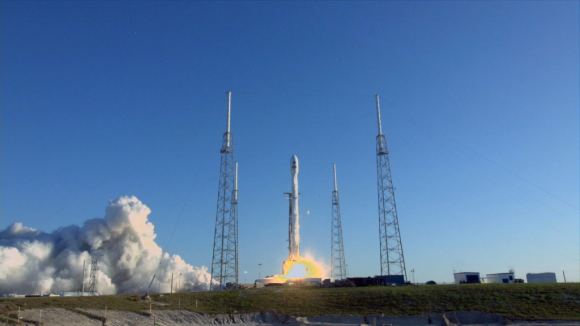
How Many Planets is TESS Going to Find? The Transiting Exoplanet Survey Satellite (TESS), NASA’s latest exoplanet-hunting space telescope, was launched into space on Wednesday, April 18th, 2018. As the name suggests, this telescope will use the Transit Method to detect terrestrial-mass planets (i.e. rocky) orbiting distant stars. Alongside other next-generation telescopes like the James Webb Space Telescope (JWST), TESS will effectively pick up where telescopes like Hubble and Kepler left off. But just how many planets is TESS expected to find? That was the subject of a new study by a team researchers who attempted to estimate just how many planets TESS is likelyRead More →
Ancient Galaxy Megamergers The ALMA and APEX telescopes have peered deep into space — back to the time when the Universe was one tenth of its current age — and witnessed the beginnings of gargantuan cosmic pileups: the impending collisions of young, starburst galaxies. Astronomers thought that these events occurred around three billion years after the Big Bang, so they were surprised when the new observations revealed them happening when the Universe was only half that age! These ancient systems of galaxies are thought to be building the most massive structures in the known Universe: galaxy clusters. ESO News Feed Go to Source Powered byRead More →

Peering deep into space—an astounding 90 percent of the way across the observable universe—astronomers have witnessed the beginnings of a gargantuan cosmic pileup, the impending collision of 14 young, starbursting galaxies. Powered by WPeMaticoRead More →

One year ago, I wrote an article about the remarkable discovery of the TRAPPIST-1 planetary system, a system of seven temperate terrestrial planets orbiting an ultra-cool red dwarf star. This was an enormous astronomical discovery because these low-mass stars are the most numerous ones in our galaxy, and the discovery of potentially habitable planets around one of them led many people to speculate about the existence of life there and elsewhere in our galaxy around similar stars. Powered by WPeMaticoRead More →

An international team of astronomers reports the finding of ASASSN-18di—a powerful white-light superflare on a previously undetected, mid-type M-dwarf star. The discovery is detailed in a paper published April 12 on the arXiv pre-print repository. Powered by WPeMaticoRead More →

Weekly Space Hangout: April 25, 2018: Carolyn Collins Petersen discusses “Space Exploration: Past, Present, Future” Hosts: Fraser Cain (universetoday.com / @fcain) Dr. Paul M. Sutter (pmsutter.com / @PaulMattSutter) Dr. Kimberly Cartier (KimberlyCartier.org / @AstroKimCartier ) Dr. Morgan Rehnberg (MorganRehnberg.com / @MorganRehnberg & ChartYourWorld.org) Special Guests: Carolyn Collins Petersen is no stranger to the Weekly Space Hangout, having been a regular journalist during previous seasons. We are excited to welcome Carolyn back to the show this week, this time as our Special Guest, to discuss her newest book, Space Exploration: Past, Present, Future, which was released in the US on April 1. In it, Carolyn discussesRead More →

I Can’t Stop Watching This Amazing Animation from Comet 67P The European Space Agency’s Rosetta mission was an ambitious one. As the first-ever space probe to rendezvous with and then orbit a comet, Rosetta and its lander (Philae) revealed a great deal about the comet 67p/Churyumov-Gerasimenko. In addition to the learning things about the comet’s shape, composition and tail, the mission also captured some incredible images of the comet’s surface before it ended. For instance, Rosetta took a series of images on June 1st, 2016, that showed what looks like a blizzard on the comet’s surface. Using these raw images (which were posted on MarchRead More →

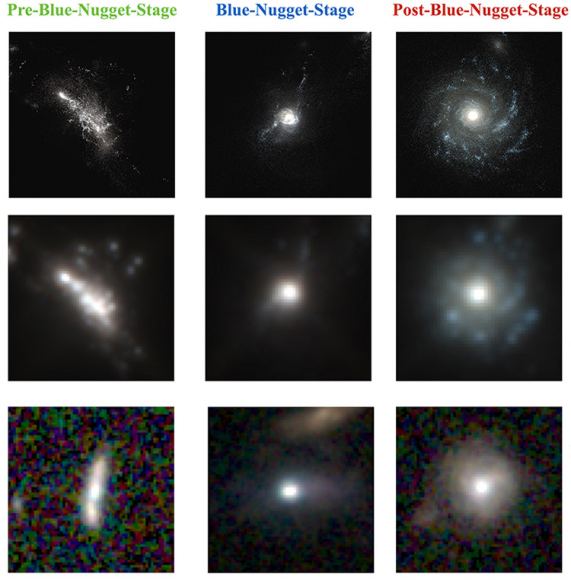
Facial Recognition Deep Learning Software is Surprisingly Good at Identifying Galaxies Too A lot of attention has been dedicated to the machine learning technique known as “deep learning”, where computers are capable of discerning patterns in data without being specifically programmed to do so. In recent years, this technique has been applied to a number of applications, which include voice and facial recognition for social media platforms like Facebook. However, astronomers are also benefiting from deep learning, which is helping them to analyze images of galaxies and understand how they form and evolve. In a new study, a team of international researchers used a deepRead More →

Young scientists from ITMO University have explained how neutron stars generate intense directed radio emission. They developed a model based on the transitions of particles between gravitational states, i.e. quantum states in a gravitational field. The researchers were the first to describe such states for electrons on the surface of neutron stars. Physical parameters obtained with the developed model are consistent with real experimental observations. The results are published in The Astrophysical Journal. Powered by WPeMaticoRead More →

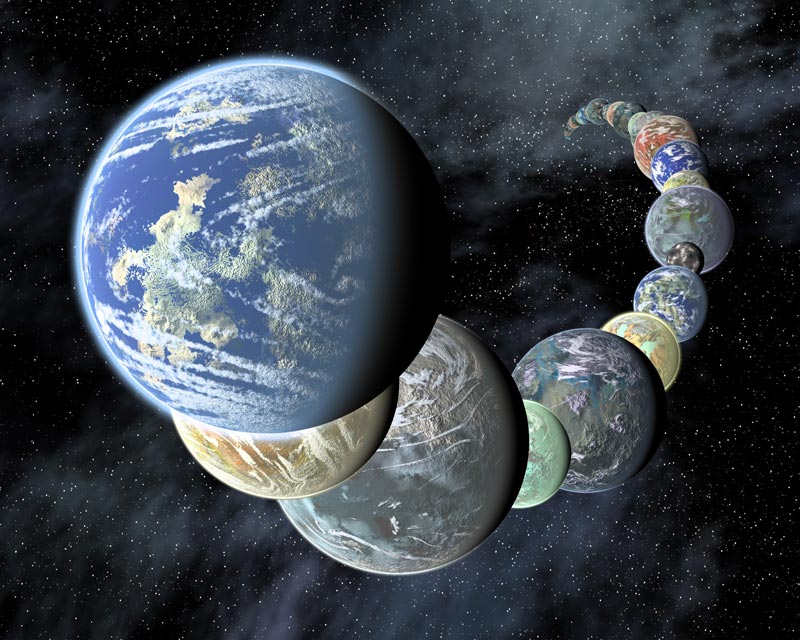
If We’re Searching for Earth 2.0, Would We Know It When We Find It? In the past few decades, there has been an explosion in the number of extra-solar planets that have been discovered. As of April 1st, 2018, a total of 3,758 exoplanets have been confirmed in 2,808 systems, with 627 systems having more than one planet. In addition to expanding our knowledge of the Universe, the purpose of this search has been to find evidence of life beyond our Solar System. In the course of looking for habitable planets, astronomers have used Earth as a guiding example. But would we recognize a trulyRead More →

Carnival of Space #558 Welcome to the 558th Carnival of Space! The Carnival is a community of space science and astronomy writers and bloggers, who submit their best work each week for your benefit. We have a fantastic roundup today, so now, on to this week’s stories! First up, over at Blasting News, we learn that as the Google Lunar XPrize ends Israel is still shooting for the moon! Israel’s SpaceIL is still planning to land on the Moon by the end of 2018! Best of luck! Then, we visit The Hill, where we learn why Why NASA’s James Webb Space Telescope is such aRead More →

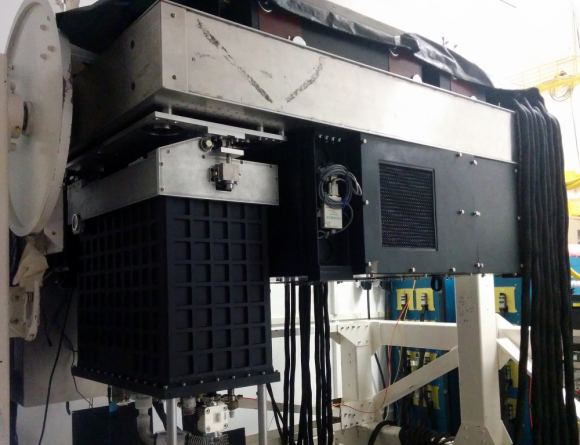
The DARKNESS Instrument Will Block Stars and Reveal Their Planets. 100 Million Times Fainter than the Star The hunt for planets beyond our Solar System has led to the discovery of thousands of candidates in the past few decades. Most of these have been gas giants that range in size from being Super-Jupiters to Neptune-sized planets. However, several have also been determined to be “Earth-like” in nature, meaning that they are rocky and orbit within their stars’ respective habitable zones. Unfortunately, determining what conditions might be like on their surfaces is difficult, since astronomers are unable to study these planets directly. Luckily, an international teamRead More →

Hydrogen sulfide, the gas that gives rotten eggs their distinctive odor, permeates the upper atmosphere of the planet Uranus – as has been long debated, but never definitively proven. Based on sensitive spectroscopic observations with the Gemini North telescope, astronomers uncovered the noxious gas swirling high in the giant planet’s cloud tops. This result resolves a stubborn, long-standing mystery of one of our neighbors in space. Powered by WPeMaticoRead More →