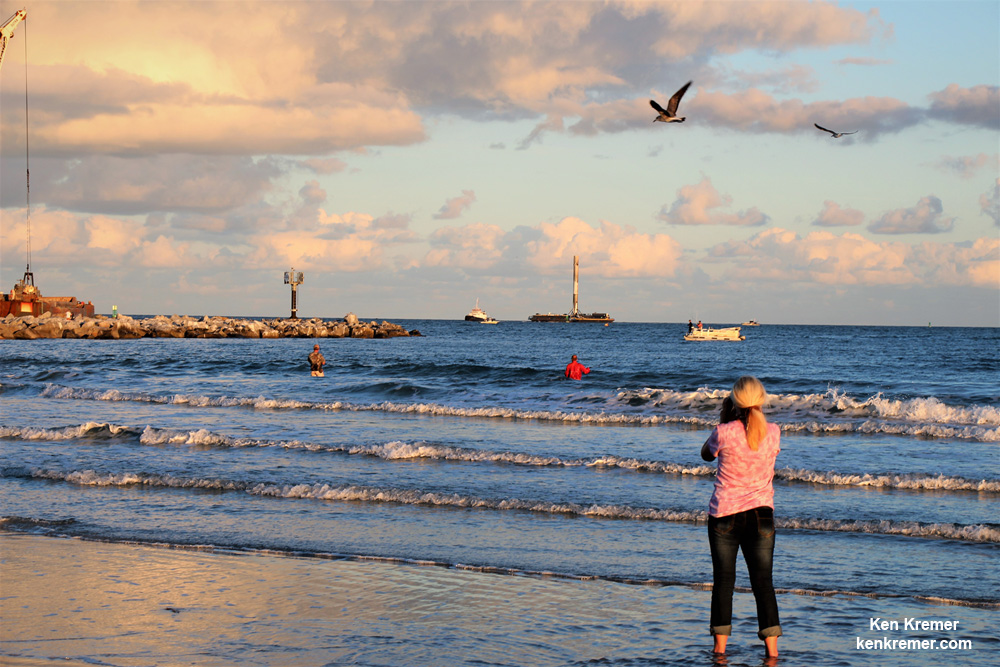
The SpaceX Booster is Back in Town, Legs Quickly Detached: Photo/Video Gallery Recovered SpaceX first stage booster from KoreaSat-5A launch is towed into the mouth of Port Canaveral, FL atop OCISLY droneship to flocks of birds and onlookers as Atlantic Ocean waves crash onshore at sunset Nov. 2, 2017. Credit: Ken Kremer/Kenkremer.com PORT CANAVERAL/KENNEDY SPACE CENTER, FL – ‘The SpaceX boosters back in town! The boosters back in town!’ paraphrasing the popular lyrics of the hit single from Irish hard rock band Thin Lizzy – its what comes to mind with the speedy cadence of ‘launch, land and relaunch’ firmly established by CEO Elon Musk’sRead More →
Carnival of Space #533 This week’s Carnival of Space is hosted by Brian Wang at his Next Big Future blog. Click here to read Carnival of Space #533 And if you’re interested in looking back, here’s an archive to all the past Carnivals of Space. If you’ve got a space-related blog, you should really join the carnival. Just email an entry to carnivalofspace@gmail.com, and the next host will link to it. It will help get awareness out there about your writing, help you meet others in the space community – and community is what blogging is all about. And if you really want to help out, sign upRead More →

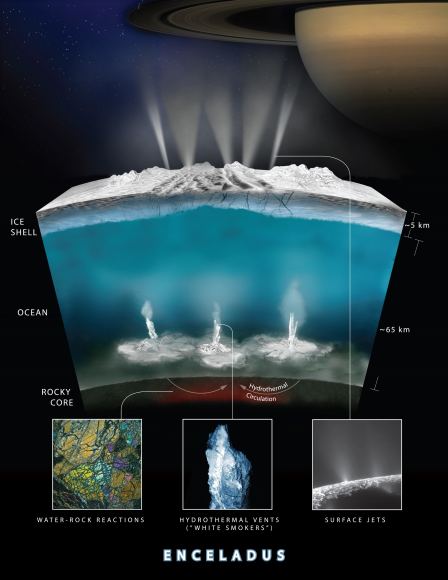
Check Out NASA’s New Instrument that will Look for Life on Enceladus Ever since the Cassini mission entered the Saturn system and began studying its moons, Enceladus has become a major source of interest. Once the probe detected plumes of water and organic molecules erupting from the moon’s southern polar region, scientists began to speculate that Enceladus may possess a warm-water ocean in its interior – much like Jupiter’s moon Europa and other bodies in our Solar System. In the future, NASA hopes to send another mission to this system to further explore these plumes and the interior of Enceladus. This mission will likely include aRead More →

The most ancient spiral galaxy discovered to date is revealing its secrets to a team of astronomers at Swinburne University of Technology and The Australian National University (ANU), part of the Australian Research Council Centre of Excellence in All Sky Astrophysics in 3-D (ASTRO 3-D). Powered by WPeMaticoRead More →

An international team of researchers from multiple institutions, including INRS, is shedding light on the mystery of matter accretion in young stars. Published in the November 1, 2017 Science Advances online journal, their discovery helps explain how matter accumulates on the surface of a young star and reconciles the theory behind and observations on the accretion process—a matter of debate among astrophysicists because of the limited number of theoretical models and actual observations. Powered by WPeMaticoRead More →

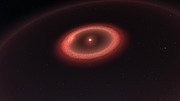
ESOcast 136 Light: ALMA Discovers Cold Dust Around Nearest Star (4K UHD) The ALMA Observatory in Chile has detected dust around the closest star to the Solar System, Proxima Centauri. These new observations reveal the glow coming from cold dust in a region between one to four times as far from Proxima Centauri as the Earth is from the Sun. Powered by WPeMaticoRead More →

ALMA Discovers Cold Dust Around Nearest Star The ALMA Observatory in Chile has detected dust around the closest star to the Solar System, Proxima Centauri. These new observations reveal the glow coming from cold dust in a region between one to four times as far from Proxima Centauri as the Earth is from the Sun. The data also hint at the presence of an even cooler outer dust belt and may indicate the presence of an elaborate planetary system. These structures are similar to the much larger belts in the Solar System and are also expected to be made from particles of rock and iceRead More →

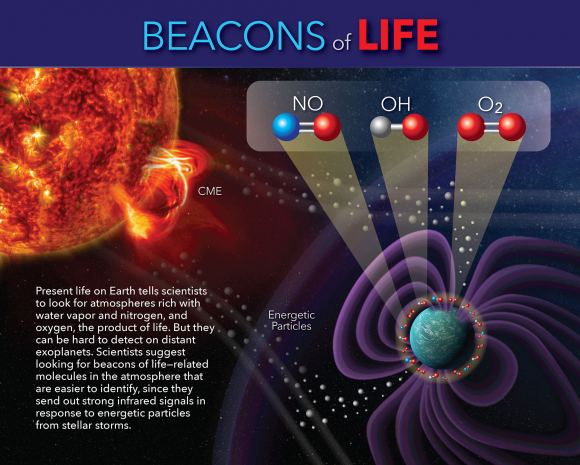
Using Atmospheric Beacons to Search for Signs of Extra-Terrestrial Life Despite the thousands of exoplanets that have been discovered by astronomers in recent years, determining whether or not any of them are habitable is a major challenge. Since we cannot study these planets directly, scientists are forced to look for indirect indications. These are known as biosignatures, which consist of the chemical byproducts we associate with organic life showing up in a planet’s atmosphere. A new study by a team of NASA scientists proposes a new method to search for potential signs of life beyond our Solar System. The key, they recommend, is to takesRead More →

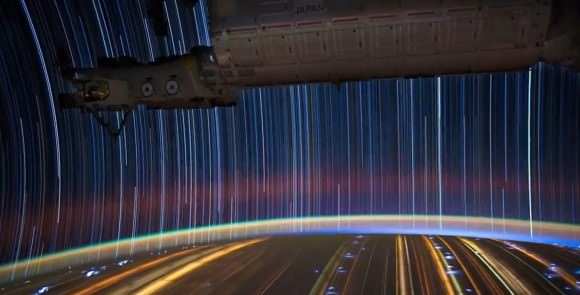
I Still ♥ the ISS: More Reasons to Love the International Space Station Back in 2008, I professed my feelings, bared my soul and told all about how I absolutely was in love the International Space Station. Nine and a half years ago when I wrote that article, titled “I ‘Heart’ the ISS: Ten Reasons to Love the International Space Station,” the ISS was still under construction, only three astronauts/cosmonauts at a time could live on board, and scientific research was sparse. Some people routinely questioned the cost and utility of what some people called an expensive erector set or orbiting white elephant. But now,Read More →

Some exoplanets shine brighter than others in the search for life beyond the solar system. New NASA research proposes a novel approach to sniffing out exoplanet atmospheres. It takes advantage of frequent stellar storms—which hurl huge clouds of stellar material and radiation into space—from cool, young dwarf stars to highlight signs of habitable exoplanets. Powered by WPeMaticoRead More →

(Phys.org)—A team of researchers affiliated with several institutions in Japan has found evidence showing that condensed aluminum oxide dust surrounding the star W Hydrae plays a key role in accelerating the stellar wind. In their paper published on the open access site Science Advances, the team describes their study of the star and the gases that surround it. Powered by WPeMaticoRead More →

On Aug. 17, the Laser Interferometry Gravitational-Wave Observatory (LIGO) detected the fifth fingerprint of a massive disturbance in spacetime since LIGO began operations in September 2015. Unlike the first four sets of ripples, which reflected collisions between two black holes, the shape of these spacetime distortions suggested a collision between two neutron stars. Powered by WPeMaticoRead More →

ESOcast 135: ​ALMA​ ​is​ ​a​ ​timemachine! How can astrophysicists study the story of the Universe? Billions of years ago, when the Big Bang happened, there was no Milky Way Galaxy, no Solar System, no planet Earth and, especially, no human beings to witness these and all the events that followed. So, how would they know about this stuff? Powered by WPeMaticoRead More →

Beneath an elegant office building with a Spanish-style red tiled roof in Pasadena, California, three timeworn storerooms safeguard more than a century of astronomy. Down the stairs and to the right is a basement of wonder. There are countless wooden drawers and boxes, stacked floor to ceiling, with telescope plates, sunspot drawings and other records. A faint ammonia-like smell, reminiscent of old film, fills the air. Powered by WPeMaticoRead More →