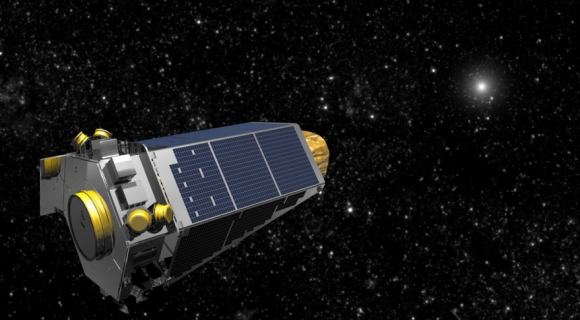
Kepler’s Almost Out of Fuel. It’ll Make its Last Observation in a Few Months Since its deployment in March of 2009, the Kepler space telescope has been a boon for exoplanet-hunters. As of March 8th, 2018, a total of 3,743 exoplanets have been confirmed, 2,649 of which were discovered by Kepler alone. At the same time, the telescope has suffered its share of technical challenges. These include the failure of two reaction wheels, which severely hampered the telescope’s ability to conduct its original mission. Nevertheless, the Kepler team was able to return the telescope to a stable configuration by using small amounts of thruster fuelRead More →

Measuring the mass of a celestial body is one of the most challenging tasks in observational astronomy. The most successful method uses binary systems because the orbital parameters of the system depend on the two masses. In the case of black holes, neutron stars, and white dwarfs, the end states of stellar evolution, many are isolated objects, and most of them are also very faint. As a result, astronomers still do not know the distribution of their masses. They are of great interest, however, because they participate in dramatic events like the accretion of material and emission of energetic radiation, or in mergers that canRead More →

Using NASA’s prolonged Kepler mission, known as K2, astronomers have identified two new gas giant exoplanets. The newly found alien worlds, designated HD 89345 b and HD 286123 b, are warm, low-density sub-Jovian planets circling bright stars. The finding is detailed in a paper published March 9 on arXiv.org. Powered by WPeMaticoRead More →

On Nov. 11, 2014, a global network of telescopes picked up signals from 300 million light years away that were created by a tidal disruption flare—an explosion of electromagnetic energy that occurs when a black hole rips apart a passing star. Since this discovery, astronomers have trained other telescopes on this very rare event to learn more about how black holes devour matter and regulate the growth of galaxies. Powered by WPeMaticoRead More →

The First SpaceX BFR Should Make Orbital Launches by 2020 Elon Musk has a reputation for pushing the envelop and making bold declarations. In 2002, he founded SpaceX with the intention of making spaceflight affordable through entirely reusable rockets. In April of 2014, his company achieved success with the first successful recovery of a Falcon 9 first stage. And in February of this year, his company successfully launched its Falcon Heavy and managed to recover two of the three boosters. But above and beyond Musk’s commitment to reusability, there is also his longer-term plans to use his proposed Big Falcon Rocket (BFR) to explore and colonizeRead More →

Mathematical physicist and cosmologist Stephen Hawking was best known for his work exploring the relationship between black holes and quantum physics. A black hole is the remnant of a dying supermassive star that’s fallen into itself; these remnants contract to such a small size that gravity is so strong even light cannot escape from them. Black holes loom large in the popular imagination – schoolchildren ponder why the whole universe doesn’t collapse into one. But Hawking’s careful theoretical work filled in some of the holes in physicists’ knowledge about black holes. Powered by WPeMaticoRead More →

This Bizarre Image is a 3D Scan of a Cave Network in Spain. This Technology Could be Used to Map Out Lava Tubes on the Moon and Mars For some time, scientists have known that the Moon and Mars have some fascinating similarities to Earth. In addition to being similar in composition, there is ample evidence that both bodies had active geological pasts. This includes stable lava tubes which are very similar to those that exist here on Earth. And in the future, these tubes could be an ideal location for outposts and colonies. However, before we can begin choosing where to settle, these locationsRead More →

Astronomy Cast now available via Amazon’s Alexa! You can now enable the Amazon Astronomy Cast skill on your Alexa enabled device (in the US now, Canada soon)! You just log into your Alexa dashboard, go to the Skills, and look for “Astronomy Cast.” Or, even easier than that, just say “Alexa, enable Astronomy Cast!” You can tell Alexa to skip episodes, back up or jump forward within the same podcast for a certain number of minutes, and many other commands. Here’s a video from another podcast, The School of Podcasting, that shows you how it works! The post Astronomy Cast now available via Amazon’s Alexa!Read More →

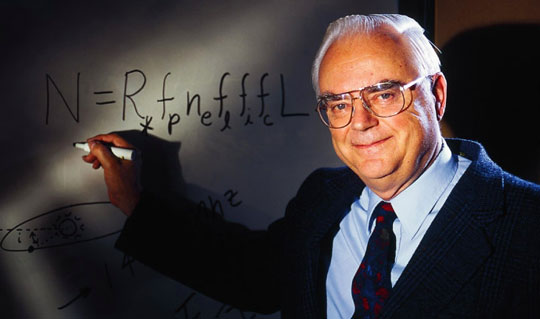
If We Do Hear Signals From Aliens, They’re Probably Long Gone In 1961, famed astrophysics Frank Drake proposed a formula that came to be known as the Drake Equation. Based a series of factors, this equation sought to estimate the number of extra-terrestrial intelligences (ETIs) that would exist within our galaxy at any given time. Since that time, multiple efforts have been launched to find evidence of alien civilizations, which are collectively known as the search for extra-terrestial intelligence (SETI). The most well-known of these is the SETI Institute, which has spent the past few decades searching the cosmos for signs of extra-terrestrial radio communications.Read More →

Weekly Space Hangout: March 14, 2018: Ethan Good, Visiting Vehicles Officer at JSC Hosts: Fraser Cain (universetoday.com / @fcain) Dr. Paul M. Sutter (pmsutter.com / @PaulMattSutter) Dr. Kimberly Cartier (KimberlyCartier.org / @AstroKimCartier ) Dr. Morgan Rehnberg (MorganRehnberg.com / @MorganRehnberg & ChartYourWorld.org) Special Guests: In his current position as Visiting Vehicles Officer in Mission Control at JSC, Ethan Good supports cargo and (eventually) commercial crew flights to/from the International Space Station. Previously, Ethan completed three summer-winter contracts as a Research Scientist at Amundsen-Scott South Pole Station, as well as served as commander of a four-person crew during a two-week HERA study in 2015. Announcements: If youRead More →

Stephen Hawking has passed away at age 76 Dr. Stephen Hawking, the famed British theoretical physicist, science communicator, author and luminary, passed away in the early hours on Wednesday, March 14th. According to a statement from his family, the renowned scientist died peacefully in his home at Cambridge. He was 76 years old, and is survived by his first wife, Jane Wilde, and their three children – Lucy, Robert and Tim. Dr. Hawking spent the past 50 years living with a terminal illness that slowly deprived him of his speech and the use of much of his body. He also leaves behind an unparalleled scientificRead More →

Next year marks the 20th anniversary of NASA’s Chandra X-ray Observatory launch into space. The Crab Nebula was one of the first objects that Chandra examined with its sharp X-ray vision, and it has been a frequent target of the telescope ever since. Powered by WPeMaticoRead More →

European astronomers have detected eight new “hot Jupiter” exoplanets as part of the WASP-South transit survey. The newly discovered gas giants have short orbital periods and masses ranging from 0.42 to 5.2 Jupiter masses. The finding is detailed in a paper published March 6 on arXiv.org. Powered by WPeMaticoRead More →

A team of researchers at the Parkes Observatory in NSW Australia has reported recording the brightest fast radio burst (FRB) yet on March 9 of this year. They describe it as having a high signal-to-noise ratio with an “orientation not very favorable for a detection of any gamma ray transient with INTEGRAL all-sky detectors.” Powered by WPeMaticoRead More →