The “Shadow Blaster” Galaxy’s Role in High-energy Cosmic Neutrinos
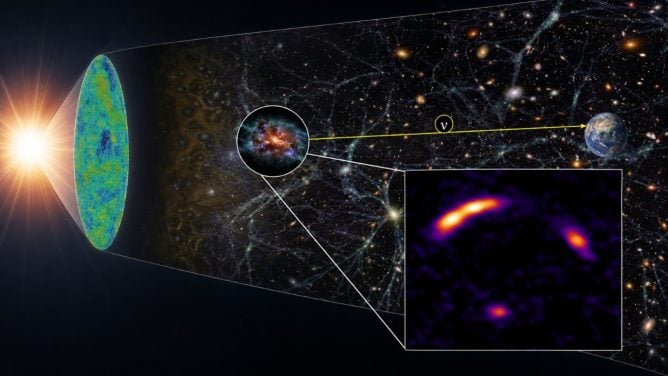
On September 22, 2021, the IceCube Neutrino Detector in Antarctica caught a blast of neutrinos as it passed through the solar system. These neutrinos were remarkably high-energy and came from a galaxy 11 billion light-years away. That’s a period of the Universe’s history known as “Cosmic Noon”. It’s when star formation in galaxies was at its most active and that provided an interesting clue to their origin. The source of the neutrinos was nicknamed “Shadow Blaster” because the event that created the neutrinos was hidden by a dense cloud of dust, which made it invisible to optical observations.
Universe Today
Go to Source


Comments are closed, but trackbacks and pingbacks are open.