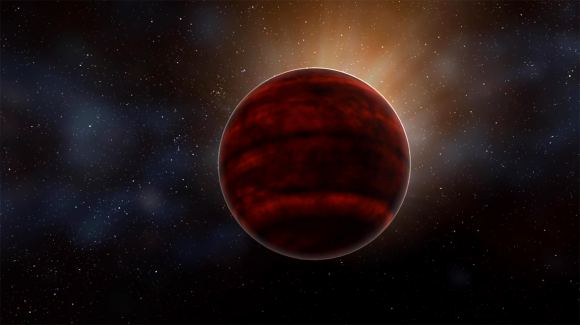
Proxima Centauri Just Released a Flare so Powerful it was Visible to the Unaided Eye. Planets There Would Get Scorched Since it’s discovery was announced in August of 2016, Proxima b has been an endless source of wonder and the target of many scientific studies. In addition to being the closest extra-solar planet to our Solar System, this terrestrial planet also orbits within Proxima Centauri’s circumstellar habitable zone (aka. “Goldilocks Zone”). As a result, scientists have naturally sought to determine if this planet could actually be home to extra-terrestial life. Many of these studies have been focused on whether or not Proxima b could retainRead More →

What If New York City Had No Light Pollution? I grew up on a small island off the West Coast of Canada, with the darkest skies you could hope for. Although I live in a small town now, with some light pollution, I can still see the Milky Way from my backyard. But for the people living in some of the biggest cities in the world, like New York City, the sky is so much worse – the light pollution is ever present. You can see the few brightest stars and some of the planets, but mostly the sky is just a dull yellow glowingRead More →

This is the COOLEST! Everything that’s Orbiting the Earth Right Now Okay, if you’ve got some spare time, check out this amazing website called Stuff in Space. It’s a simulation of every satellite (alive or dead), space station, and large piece of space junk orbiting the Earth right now. You can zoom in and out, rotate the Earth and its satellites around. Pick any one object and discover more information about it. Or just leave it running and watch all the objects buzz around in real time. Humans have been busy launching a lot of stuff, and it’s only going to increase. The simulation wasRead More →

A Magnetar Just Woke Up After Three Years of Silence When stars reach the end of their main sequence, they undergo a gravitational collapse, ejecting their outermost layers in a supernova explosion. What remains afterward is a dense, spinning core primarily made up of neutrons (aka. a neutron star), of which only 3000 are known to exist in the Milky Way Galaxy. An even rarer subset of neutron stars are magnetars, only two dozen of which are known in our galaxy. These stars are especially mysterious, having extremely powerful magnetic fields that are almost powerful enough to rip them apart. And thanks to a newRead More →

Launching Rockets from Balloons is About to be a Thing, But We Need a Better Name than “Rockoons” One of the technological hurdles of our age is to get people and equipment into space more cheaply. SpaceX gets a lot of the headlines around that, with their reusable rockets. And so does Blue Origin, to some degree. Now a small start-up affiliated with Purdue University is tackling the problem and making some headway. The company is called Leo Aerospace LLC and they’re using balloons to lower the cost of putting micro-satellites into orbit, rather than reusable rockets. The balloons will be reusable, but the rocketsRead More →

Astronomers Just Found 72 Stellar Explosions, but Don’t Know What’s Causing Them A supernova is one of the most impressive natural phenomena in the Universe. Unfortunately, such events are often brief and transient, temporarily becoming as bright as an entire galaxy and then fading away. But given what these bright explosions – which occur when a star reaches the end of its life cycle – can teach us about the Universe, scientists are naturally very interested in studying them. Using data from the Dark Energy Survey Supernova (DES-SN) program, a team of astronomers recently detected 72 supernovae, the largest number of events discovered to date.Read More →

NASA Begins Construction of its New Quiet Supersonic Plane NASA has a lot of experience when it comes to developing supersonic aircraft. In fact, testing supersonic craft was how NASA got its start, back when it still known as the National Advisory Committee for Aeronautics (NACA). Beginning with the Bell X-1, the tradition of using X-planes and other experimental aircraft continues, and has progressed to hypersonic scramjets and spaceplanes (like the X-37). And now, for the first time in decades, NASA is looking to develop a new supersonic aircraft. But whereas previous aircraft were developed for the sake of breaking speed records, the purpose ofRead More →

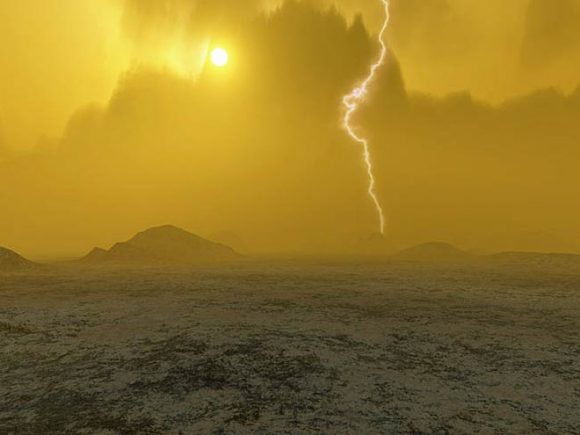
Could There Be Life in the Cloudtops of Venus? In the search for life beyond Earth, scientists have turned up some very interesting possibilities and clues. On Mars, there are currently eight functioning robotic missions on the surface of or in orbit investigating the possibility of past (and possibly present) microbial life. Multiple missions are also being planned to explore moons like Titan, Europa, and Enceladus for signs of methanogenic or extreme life. But what about Earth’s closest neighboring planet, Venus? While conditions on its surface are far too hostile for life as we know it there are those who think it could exist inRead More →

The Most Distant Star Ever Seen, Only 4.4 Billion Years After the Big Bang In 1990, the Hubble Space Telescope was placed into Low Earth Orbit. Since then, Hubble has gone on to become the most well-known space observatory and has revealed some never-before-seen things about our Universe. Despite the subsequent deployment of several flagship telescopes – like the Kepler Space Telescope, the Chandra X-ray Observatory and the Spitzer Space Telescope – Hubble is still accomplishing some amazing feats. For instance, a team of astronomers recently used Hubble to locate the most distant star ever discovered. This hot blue star, which was located in aRead More →

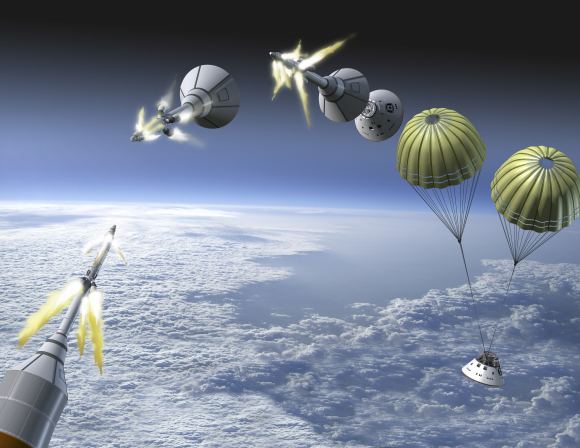
NASA Simulates Their Orion Abort System. Now That Would be a Crazy Ride When it comes time for NASA to send astronauts back to the Moon and on to Mars, a number of new spacecraft systems will come into play. These include the Space Launch System (SLS), the most powerful rocket ever built, and the Orion Multi-Purpose Crew Vehicle (MPCV) – a next-generation spacecraft that will carry crews beyond Low Earth Orbit (LEO). Naturally, before either of these systems can conduct missions, extensive testing needs to be conducted to ensure they are safe and will perform well. In this spirit, NASA Advanced Supercomputing (NAS) researchRead More →

Simulated View of a Newly Forming Planetary System with Rings and Gaps When searching for extra-solar planets, astronomers most often rely on a number of indirect techniques. Of these, the Transit Method (aka. Transit Photometry) and the Radial Velocity Method (aka. Doppler Spectroscopy) are the two most effective and reliable (especially when used in combination). Unfortunately, direct imaging is rare since it is very difficult to spot a faint exoplanet amidst the glare of its host star. However, improvements in radio interferometers and near-infrared imaging has allowed astronomers to image protoplanetary discs and infer the orbits of exoplanets. Using this method, an international team ofRead More →

Weekly Space Hangout: April 4, 2018: Mathew Anderson’s “Habitable Exoplanets” Hosts: Fraser Cain (universetoday.com / @fcain) Dr. Paul M. Sutter (pmsutter.com / @PaulMattSutter) Dr. Kimberly Cartier (KimberlyCartier.org / @AstroKimCartier ) Dr. Morgan Rehnberg (MorganRehnberg.com / @MorganRehnberg & ChartYourWorld.org) Special Guests: Mathew Anderson, author and good friend of the Weekly Space Hangout, joins us again this week to discuss his newest book, Habitable Exoplanets: Red Dwarf Systems Like TRAPPIST-1, in which he focuses on exoplanet properties and the chances for habitable planets around Red Dwarf stars. As he did with his two prior books, Our Cosmic Story and its followup Is Anyone Out There, Mathew willRead More →

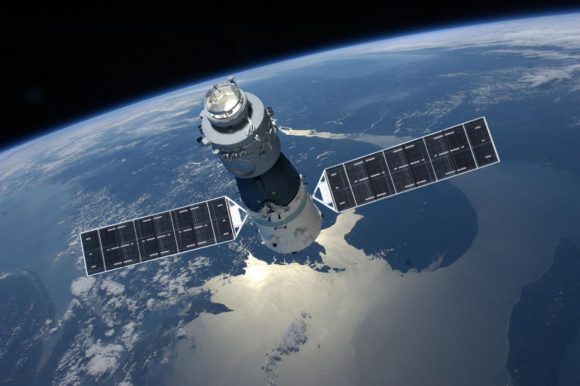
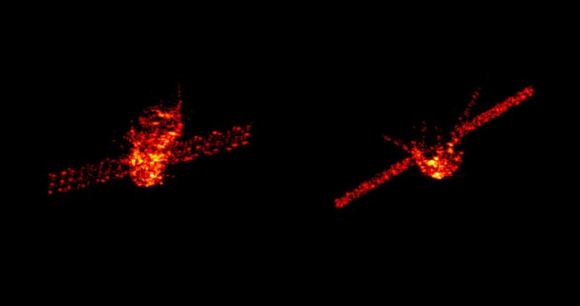
Tiangong-1 Splashes Down in the Pacific Ocean Over the weekend, multiple space agencies’ had their instruments fixed on the skies as they waited for the Tiangong-1 space station to reenter our atmosphere. For the sake of tracking the station’s reentry, the ESA hosted the 2018 Inter Agency Space Debris Coordination Committee, an annual exercise that consists of experts from 13 space agencies taking part in a joint tracking exercise. And on April 2nd, 02:16 CEST (April 1st, 17:16 PST), the US Air Force confirmed the reentry of the Tiangong-1 over the Pacific Ocean. As hoped, the station crashed down close to the South Pacific OceanRead More →

Did You Know That a Satellite Crashes Back to Earth About Once a Week, on Average? This past weekend, a lot of attention was focused on the Tiangong-1 space station. For some time, space agencies and satellite trackers from around the world had been predicting when this station would fall to Earth. And now that it has safely landed in the Pacific Ocean, many people are breathing a sigh of relief. While there was very little chance that any debris would fall to Earth, the mere possibility that some might caused its share of anxiety. Interestingly enough, concerns about how and when Tiangong-1 would fallRead More →

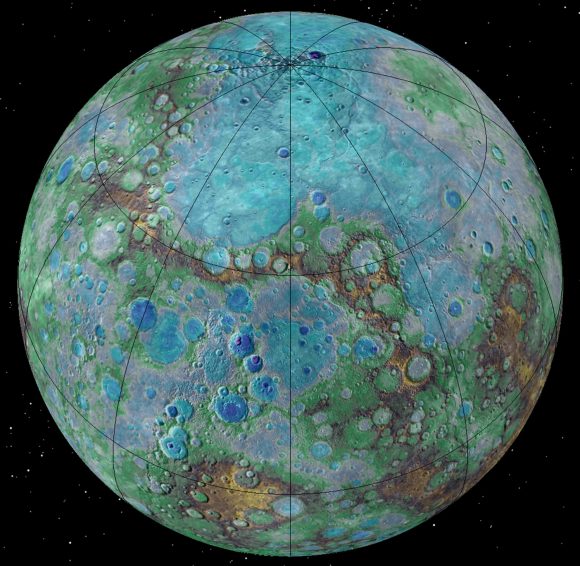
A New Extrasolar Planet is as Hot and Dense as Mercury, but 2.5 Times the Mass of Earth In the course of searching for planets beyond our Solar System – aka. extra-solar planets – some truly interesting cases have been discovered. In addition to planets that are several times the size of the Solar System’s largest planet (Super-Jupiters), astronomers have also found a plethora of terrestrial (i.e rocky) planets that are several times the size of Earth (Super-Earths). This is certainly true of K2-229b, a rocky planet that was recently discovered by an international team of astronomers. Located 339 light years away, this hot, metallicRead More →

Hubble Finds a Galaxy with Almost no Dark Matter Since the 1960s, astrophysicists have postulated that in addition to all the matter that we can see, the Universe is also filled with a mysterious, invisible mass. Known as “Dark Matter”, it’s existence was proposed to explain the “missing mass” of the Universe, and is now considered a fundamental part of it. Not only is it theorized to account for 26.8% of the Universe’s mass, it is also believed to have played a vital role in the formation and evolution of galaxies. However, a recent finding may throw this entire cosmological perspective sideways. Based on observationsRead More →

Tabby’s Star is Dipping Again! In September of 2015, the star KIC 8462852 (aka. Tabby’s Star) captured the world’s attention when it was found to be experiencing a mysterious drop in brightness. In the years since then, multiple studies have been conducted that have tried to offer a natural explanation for this behavior – and even an unnatural one (i.e. the “alien megastructure” theory). At the same time, multiple observatories have been tracking the star regularly for further dimming. Well, it seems that Tabby’s Star is at it again! On Friday, March 16th, Tabetha Boyajian (the astronomer who was responsible for discovering the star’s variationsRead More →

Here’s How to Follow the De-Orbit of Tiangong-1, now Estimated to Happen Between March 30 and April 2 China’s Tiangong-1 space station has been the focus of a lot of international attention lately. In 2016, after four and half years in orbit, this prototype space station officially ended its mission. By September of 2017, the Agency acknowledged that the station’s orbit was decaying and that it would fall to Earth later in the year. Since then, estimates on when it will enter out atmosphere have been extended a few times. According to satellite trackers, it was predicted that the station would fall to Earth inRead More →

Tiangong 1 Falls, Blue Moon Rises and Mars Takes Aim At Saturn A couple watches the Moon rise from the icy shore of Lake Superior in Duluth earlier this month on March 1. Credit: Bob King I apologize for the end-of-the-world title, but everything in it is true. And the world will still be here after it’s all done. On Friday (March 31) at 7:36 a.m. Central Time, the Moon will be full for the second time this month, which will make it a Blue Moon according to popular culture. I look forward to every full Moon. Watching a moonrise we get to see allRead More →

Weekly Space Hangout: March 28, 2018: Austin Wintory & Anthony Lund – “A Light In The Void” Hosts: Fraser Cain (universetoday.com / @fcain) Dr. Paul M. Sutter (pmsutter.com / @PaulMattSutter) Dr. Kimberly Cartier (KimberlyCartier.org / @AstroKimCartier ) Dr. Morgan Rehnberg (MorganRehnberg.com / @MorganRehnberg & ChartYourWorld.org) Special Guests: This week, we are excited to welcome Austin Wintory and Anthony Lund to discuss their new collaborative Kickstarter campaign, “A Light in the Void,” a live concert experience that will tell the story of science through live music, scientists’ live presentations, video, animations, and more. Austin Wintory is a Grammy-nominated and two-time BAFTA-winning composer who has scored almostRead More →