Researchers from the Institute of Cosmos Sciences of the University of Barcelona (ICCUB) and the University of Jaén have described, for the first time, the structure of a Z-shaped galactic microquasar. This astronomical object is considered to be a small-scale version of a winged radio galaxy, so far considered among the distant potential emitters of gravitational waves. The main conclusion of the study, published in Nature Communications, is that not all winged radio galaxies are sources of gravitational waves. Powered by WPeMaticoRead More →
Every Time Lightning Strikes, Matter-Antimatter Annihilation Happens too Lighting has always been a source of awe and mystery for us lowly mortals. In ancient times, people associated it with Gods like Zeus and Thor, the fathers of the Greek and Norse pantheons. With the birth of modern science and meteorology, lighting is no longer considered the province of the divine. However, this does not mean that the sense of mystery it carries has diminished one bit. For example, scientists have found that lightning occurs in the atmospheres of other planets, like the gas giant Jupiter (appropriately!) and the hellish world of Venus. And according toRead More →

Messier 61- the NGC 4303 Welcome back to Messier Monday! Today, we continue in our tribute to our dear friend, Tammy Plotner, by looking at the barred spiral galaxy known as Messier 61. In the 18th century, while searching the night sky for comets, French astronomer Charles Messier kept noting the presence of fixed, diffuse objects he initially mistook for comets. In time, he would come to compile a list of approximately 100 of these objects, hoping to prevent other astronomers from making the same mistake. This list – known as the Messier Catalog – would go on to become one of the most influentialRead More →

What to look out, and up, for in December.   Ralph, Paul & Jen pick their highlights for this month’s skies; starting with the solar system objects on offer to observers and imagers: The Geminid meteor showers peaking on 13/14th December Uranus sitting in the constellation Pisces Mars & Jupiter lunar conjunctions   Next up, we take a deep sky pick from our list of favourites for this time of year. Ralph – A binary star, a planetary nebula and 4 open clusters in Gemini Jen  – The Pleiades open cluster in Taurus Paul – The Crab Nebula supernova remnant also in Taurus   And we finish this skyRead More →

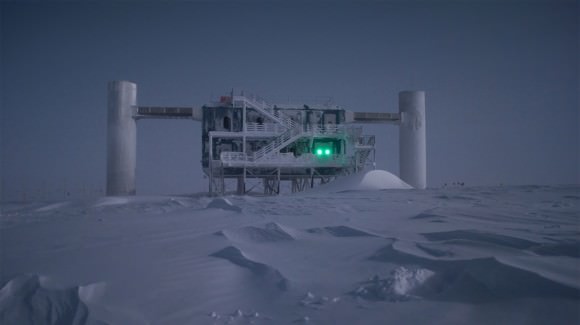
The Earth Does Stop the Occasional Neutrino At the Amundsen–Scott South Pole Station in Antarctica lies the IceCube Neutrino Observatory – a facility dedicated to the study of elementary particles known as neutrino. This array consists of 5,160 spherical optical sensors – Digital Optical Modules (DOMs) – buried within a cubic kilometer of clear ice. At present, this observatory is the largest neutrino detector in the world and has spent the past seven years studying how these particles behave and interact. The most recent study released by the IceCube collaboration, with the assistance of physicists from Pennsylvania State University, has measured the Earth’s ability toRead More →

A team of astronomers used data from both the NASA/ESA Hubble Space Telescope and ESA’s Gaia satellite to directly measure the 3D motions of individual stars in a nearby galaxy. The achieved accuracy is better than anything previously measured for a galaxy beyond the Milky Way. The motions provide a field test of the currently-accepted cosmological model and also measure the trajectory of the galaxy through space. The results are published in Nature Astronomy. Powered by WPeMaticoRead More →
Since astronomers first measured the size of an extrasolar planet seventeen years ago, they have struggled to answer the question: how did the largest planets get to be so large? Thanks to the recent discovery of twin planets by a University of Hawaii Institute for Astronomy team lead by graduate student Samuel Grunblatt, we are getting closer to an answer. Powered by WPeMaticoRead More →
A dark cloud when observed with optical telescopes, the Chamaeleon I region reveals itself as an active hub of star formation in this far-infrared image from ESA’s Herschel space observatory. Only around 550 light-years away in the southern constellation of Chamaeleon, it is one of the closest areas where stars are bursting into life. Powered by WPeMaticoRead More →
ESOcast 139: ALMA​ ​and​ ​the​ ​Cold​ ​Interstellar Clouds Your home and the Universe have at least one thing in common: they can be very dusty places! When you get back after a very long vacation, it may happen that the windows in your home are so full of dust that you can’t see through them anymore. Surprisingly, astronomers have a similar problem! Powered by WPeMaticoRead More →
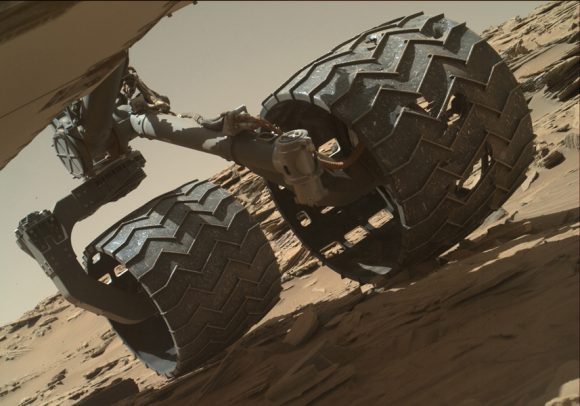
The Next Mars Rover’s Wheels Won’t Get Torn Apart by the Red Planet The Curiosity Rover has made some incredible discoveries during the five years it has been operating on the surface of Mars. And in the course of conducting its research, the rover has also accrued some serious mileage. However, it certainly came as a surprise when during a routine examinations in 2013, members of the Curiosity science team noted that its wheels had suffered rips in their treads (followed by breaks reported in 2017). Looking to the future, researchers at NASA’s Glenn Research Center hope to equip next-generation rovers with a new wheel.Read More →

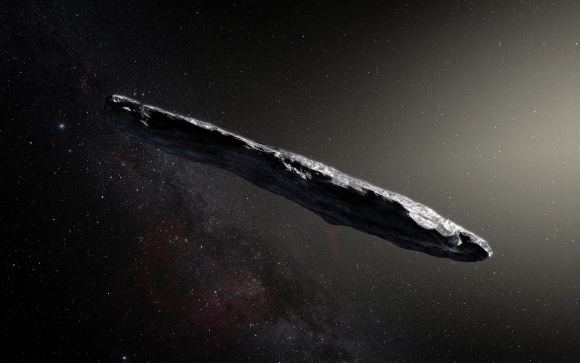
Project Lyra, a Mission to Chase Down that Interstellar Asteroid Back in October, the announcement that the first interstellar asteroid triggered a flurry of excitement. Since that time, astronomers have conducted follow-up observations of the object known as 1I/2017 U1 (aka. `Oumuamua) and noted some rather interesting things about it. For example, from rapid changes in its brightness, it has been determined that the asteroid is rocky and metallic, and rather oddly-shaped. Observations of the asteroid’s orbit have also revealed that it made its closest pass to our Sun back in September of 2017, and it is currently on its way back to interstellar space.Read More →

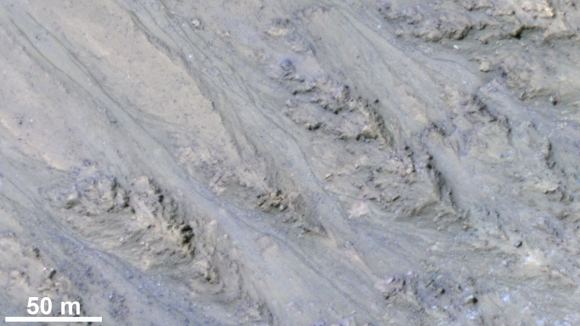
These Streaks on Mars Could be Flowing Sand, not Water When robotic missions first began to land on the surface of Mars in the 1970s, they revealed a harsh, cold and desiccated landscape. This effectively put an end generations of speculation about “Martian canals” and the possibility of life on Mars. But as our efforts to explore the Red Planet have continued, scientists have found ample evidence that the planet once had flowing water on its surface. In addition, scientists have been encouraged by the appearance of Recurring Slope Lineae (RSL), which were believed to be signs of seasonal water flows. Unfortunately, a new studyRead More →

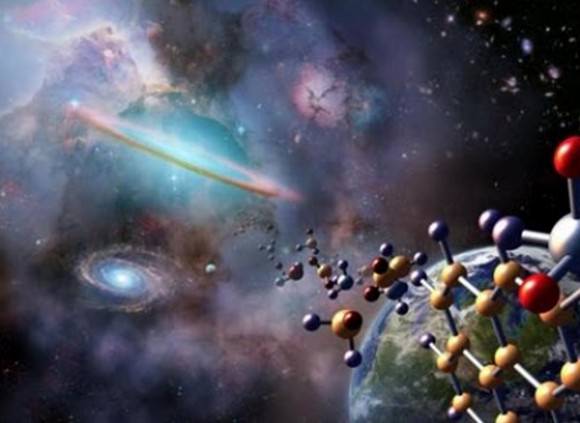
Galactic Panspermia: Interstellar Dust Could Transport Life from Star to Star The theory of Panspermia states that life exists through the cosmos, and is distributed between planets, stars and even galaxies by asteroids, comets, meteors and planetoids. In this respect, life began on Earth about 4 billion years ago after microorganisms hitching a ride on space rocks landed on the surface. Over the years, considerable research has been devoted towards demonstrating that the various aspects of this theory work. The latest comes from the University of Edinburgh, where Professor Arjun Berera offers another possible method for the transport of life-bearing molecules. According to his recentRead More →

Researchers have hypothesized that the universe contains “dark matter.” They have also posited the existence of “dark energy.” These two hypotheses account for the movement of stars in galaxies and for the accelerating expansion of the universe. But according to a researcher at UNIGE, these concepts may be no longer valid, as universal phenomena can be demonstrated without them. This research exploits a new theoretical model based on the scale invariance of empty space. This research is reported in The Astrophysical Journal. Powered by WPeMaticoRead More →

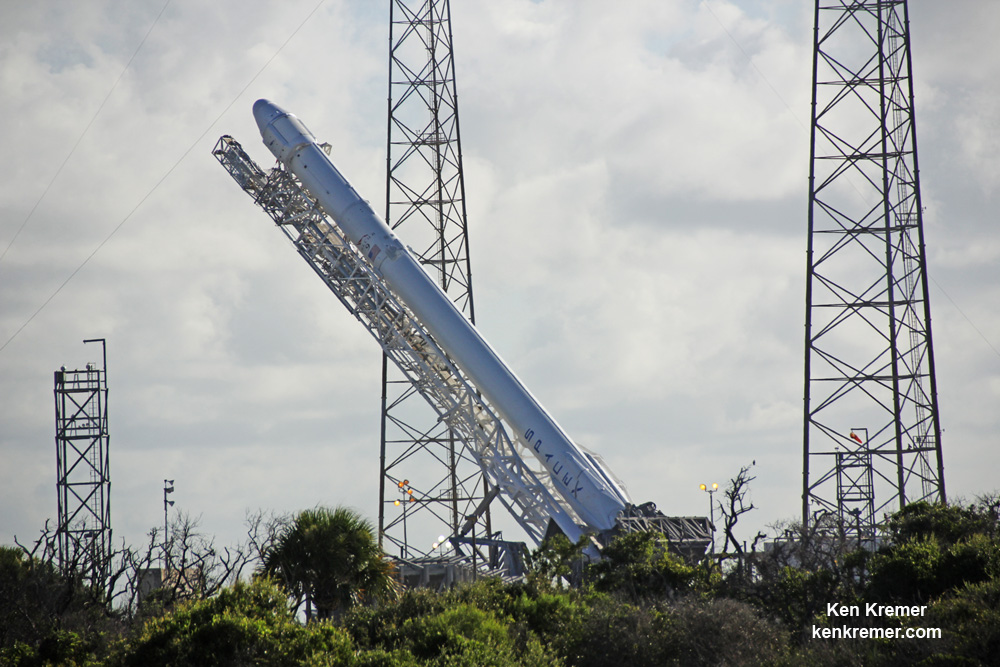
SpaceX Resuming Launches from Damaged Pad 40 on Dec. 4 with Station Resupply Flight for NASA; Covert Zuma Remains on Hold SpaceX Dragon CRS-9 was the last International Space Station resupply mission to lift off successfully from pad 40 on July 18, 2016, prior to the Cape Canaveral, FL, launch pad explosion with the Amos-6 payload that heavily damaged the pad and infrastructure on Sept. 1, 2016. Cargo launches for NASA will resume with Dragon CRS-13 in December 2017. Credit: Ken Kremer/kenkremer.com KENNEDY SPACE CENTER, FL – After postponing last week’s liftoff of the covert ‘Zuma’ spy satellite due to last minute concerns about theRead More →

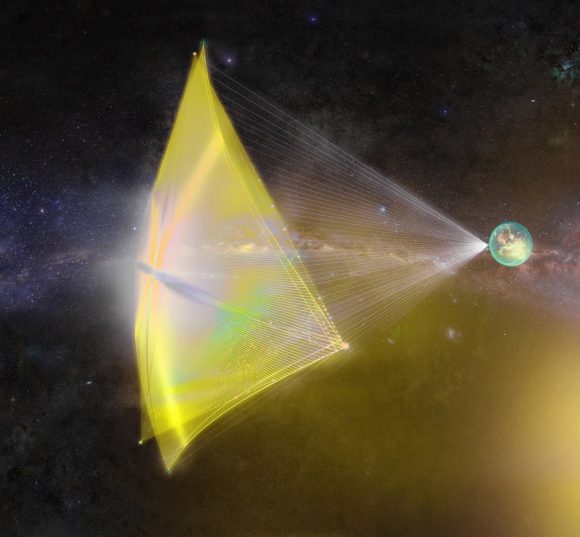
Could Magnetic Sails Slow an Interstellar Spacecraft Enough? The number of confirmed extra-solar planets has increased by leaps and bounds in recent years. With every new discovery, the question of when we might be able to explore these planets directly naturally arises. There have been several suggestions so far, ranging from laser-sail driven nanocraft that would travel to Alpha Centauri in just 20 years (Breakthrough Starshot) to slower-moving microcraft equipped with a gene laboratories (The Genesis Project). But when it comes to braking these craft so that they can slow down and study distant stars and orbit planets, things become a bit more complicated. AccordingRead More →