Caffau’s star, the most metal-poor object known to date and one of the oldest stars in the Milky Way galaxy, turns out to be a dwarf star, according to an analysis of new measurements provided by Gaia Data Release 2 (DR2). The finding was detailed April 27 in a paper published on the arXiv pre-print server. Powered by WPeMaticoRead More →
Since the limited amount of gas that survived from the first bulk star-forming process will be quickly expelled within several million years, star clusters have long been thought of as “infertile” stellar systems that cannot form new stars. Only collisions or mergers of stars can lead to rejuvenation of much older stars, making them look younger than most normal stars in much the same way as humans apply facelifts. Powered by WPeMaticoRead More →

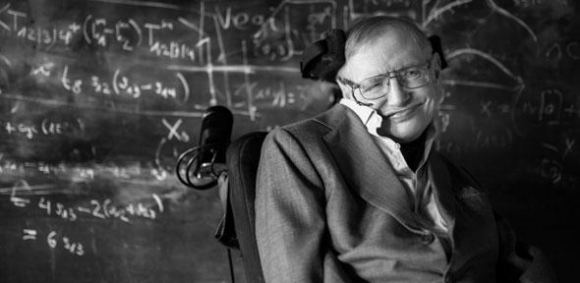
Here’s Stephen Hawking’s Final Theory About the Big Bang Stephen Hawking is rightly seen as one of the most influential scientists of our time. In his time on this planet, the famed physicist, science communicator, author and luminary became a household name, synonymous with the likes of Einstein, Newton and Galileo. What is even more impressive is the fact that he managed to maintain his commitment to science, education and humanitarian efforts despite suffering from a slow, degenerative disease. Even though Hawking recently passed away, his influence is still being felt. Shortly before his death, Hawking submitted a paper offering his final theory on theRead More →

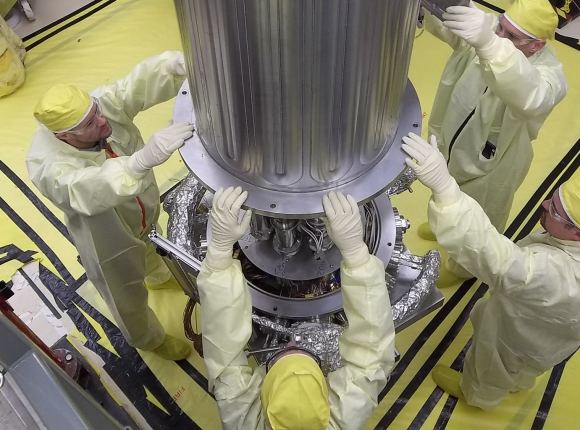
NASA Has Tested a New Fission Space Reactor that Could be Used in Future Missions Looking to the future of crewed space exploration, it is clear to NASA and other space agencies that certain technological requirements need to be met. Not only are a new generation of launch vehicles and space capsules needed (like the SLS and Orion spacecraft), but new forms of energy production are needed to ensure that long-duration missions to the Moon, Mars, and other locations in the Solar System can take place. One possibility that addresses these concerns is Kilopower, a lightweight fission power system that could power robotic missions, basesRead More →

The truth is out there. You want to believe. But you are becoming more and more frustrated because there’s no conclusive evidence. All this time, the reason could be basic physics. A study submitted to the International Journal of Astrobiology suggests that aliens living on distant planets can’t cruise the cosmos because of gravity. Powered by WPeMaticoRead More →

A new musical composition expressing the movement of gases through the galaxy as musical notes, “Milky Way Blues” by astronomer Mark Heyer, a research professor at the University of Massachusetts Amherst, will be featured for the next 30 days on the website, Astronomy Sound of the Month. Powered by WPeMaticoRead More →

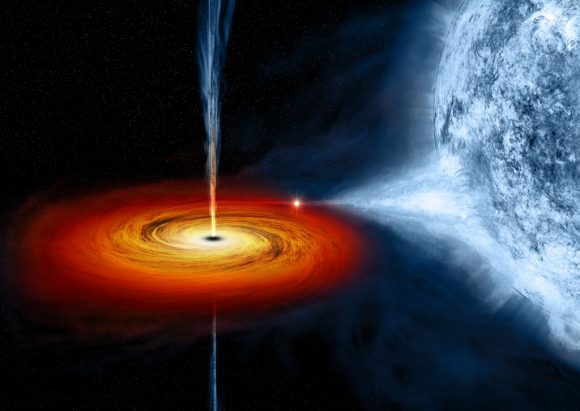
NASA’s decommissioned Rossi X-ray Timing Explorer (RXTE) satellite re-entered Earth’s atmosphere on April 30. Orbiting for more than 22 years, the 6,700-pound satellite operated from 1996 to 2012, providing scientists with an unprecedented look into the extreme environments around neutron stars—also known as pulsars—and black holes. Powered by WPeMaticoRead More →

Ever since scientists discovered the first planet outside of our solar system, 51 Pegasi b, the astronomical field of exoplanets has exploded, thanks in large part to the Kepler Space Telescope. Now, with the successful launch of the Transiting Exoplanet Survey Satellite (TESS), Professor Sara Seager sees a revolution not only in the amount of new planetary data to analyze, but also in the potential for new avenues of scientific discovery. Powered by WPeMaticoRead More →

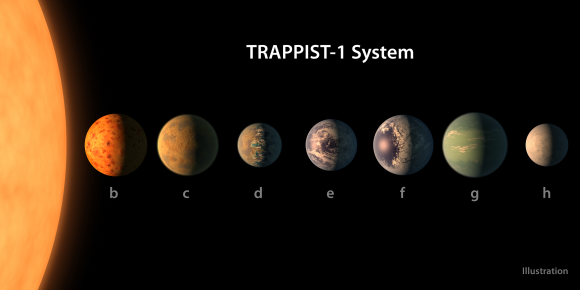
One of the Trappist-1 Planets Has an Iron Core In February of 2017, a team of European astronomers announced the discovery of a seven-planet system orbiting the nearby star TRAPPIST-1. Aside from the fact that all seven planets were rocky, there was the added bonus of three of them orbiting within TRAPPIST-1’s habitable zone. Since that time, multiple studies have been conducted to determine whether or not any of these planets could be habitable. In accordance with this goal, these studies have focused on whether or not these planets have atmospheres, their compositions and their interiors. One of the latest studies was conducted by twoRead More →

In some ways, star clusters are like giant families with thousands of stellar siblings. These stars come from the same origins—a common cloud of gas and dust—and are bound to one another by gravity. Astronomers think that our Sun was born in a star cluster about 4.6 billion years ago that quickly dispersed. Powered by WPeMaticoRead More →

NASA is Investigating a Self-Assembling Space Telescope NASA has some pretty advanced concepts in mind when it comes to the next generation of space telescopes. These include the Transiting Exoplanet Survey Satellite (TESS), which recently took to space, as well as the James Webb Space Telescope (JWST) (scheduled to launch in 2020) and the Wide-Field Infrared Survey Telescope (WFIRST), which is still in development. Beyond these, NASA has also identified several promising proposals as part of its 2020 Decadal Survey for Astrophysics. But perhaps the most ambitious concept is one that calls for a space telescope made up of modules that would assemble themselves. ThisRead More →

Weekly Space Hangout: May 2, 2018: Life on Mars: What to Know Before We Go Hosts: Fraser Cain (universetoday.com / @fcain) Dr. Paul M. Sutter (pmsutter.com / @PaulMattSutter) Dr. Kimberly Cartier (KimberlyCartier.org / @AstroKimCartier ) Dr. Morgan Rehnberg (MorganRehnberg.com / @MorganRehnberg & ChartYourWorld.org) Special Guests: Dr. David Weintraub is the author of the new book, Life on Mars: What to Know Before We Go, in which he provides a history of our fascination with the Red Planet, as well as describes the the various moral issues that surround our desire to go there. Dr. Weintraub is a Professor of Astronomy at Vanderbilt University where heRead More →

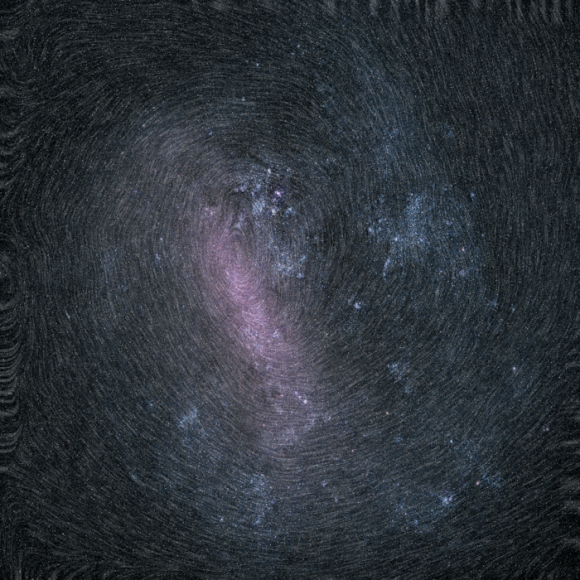
One Bonus From the Gaia Data Release: the Rotation of the Large Magellanic Cloud On December 19th, 2013, the European Space Agency’s (ESA) Gaia spacecraft took to space with for a very ambitious mission. Over the course of its planned 5-year mission (which was recently extended), this space observatory would map over a billion stars, planets, comets, asteroids and quasars in order to create the largest and most precise 3D catalog of the Milky Way ever created. Since that time, the ESA has made two data releases that cover the first three years of the Gaia mission. The second data release, which took on AprilRead More →

On May 1, NASA’s Rossi X-ray Timing Explorer spacecraft reentered and burned up in Earth’s atmosphere. Although not as well-known to the public as Hubble and Chandra, RXTE ranks among NASA’s most successful astrophysics missions. For the past 16 years RXTE continuously “listened” to the streams of X-ray radiation coming from black holes, neutron stars and pulsars. Powered by WPeMaticoRead More →

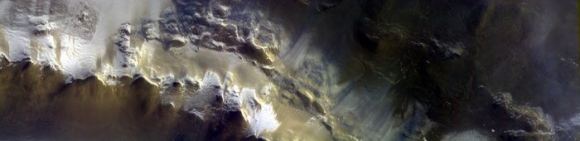
ExoMars Has Sent Back its First Images From Mars On October 19th, 2016, the European Space Agency’s Exobiology on Mars (ExoMars) mission established orbit around Mars. Consisting of the ExoMars Trace Gas Orbiter (TGO) and the Schiaparelli lander, the purpose of this mission is to investigate Mars for past signs of life. And whereas the Schiaparelli unfortunately crashed during deployment, the TGO has managed to begin its mission ahead of schedule. A few weeks ago, the satellite achieved a near circular orbit around Mars after performing a series of braking maneuvers. Since that time, the orbiter’s Color and Stereo Surface Imaging System (CaSSIS) took aRead More →

For the First Time, Astronomers Have Found a Star That Survived its Companion Exploding as Supernova A Type II supernova is a truly amazing astronomical event. As with all supernovae, a Type II consists of a star experiencing core collapse at the end of its life cycle and exploding, causing it to shed its outer layers. A subclass of this type is known as Type IIb, which are stars that have been stripped of their hydrogen fuel and undergo collapse because they are no longer able to maintain fusion in their core. Seventeen years ago, astronomers were fortunate enough to witness a Type IIb supernovaRead More →