ALMA Finds Huge Hidden Reservoirs of Turbulent Gas in Distant Galaxies ALMA has been used to detect turbulent reservoirs of cold gas surrounding distant starburst galaxies. By detecting CH+ for the first time in the distant Universe this research opens up a new window of exploration into a critical epoch of star formation. The presence of this molecule sheds new light on how galaxies manage to extend their period of rapid star formation. The results appear in the journal Nature. ESO News Feed Go to Source Powered by WPeMaticoRead More →
Soon after the Big Bang, the universe went completely dark. The intense, seminal event that created the cosmos churned up so much hot, thick gas that light was completely trapped. Much later—perhaps as many as one billion years after the Big Bang—the universe expanded, became more transparent, and eventually filled up with galaxies, planets, stars, and other objects that give off visible light. That’s the universe we know today. Powered by WPeMaticoRead More →
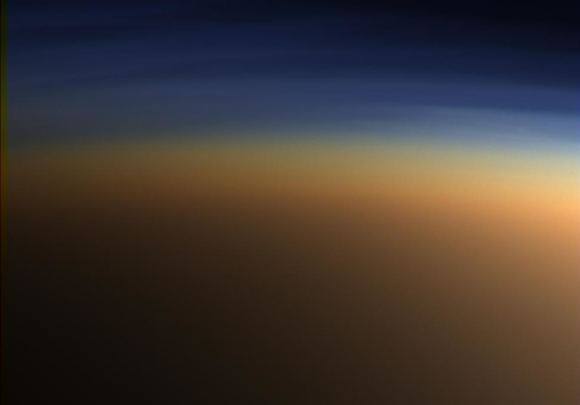
Exoplanet-Hunters Detect Two New “Warm Jupiters” The study of extra-solar planets has turned up some rather interesting candidates in the past few years. As of August 1st, 2017, a total of 3,639 exoplanets have been discovered in 2,729 planetary systems and 612 multiple planetary systems. Many of these discoveries have challenged conventional thinking about planets, especially where their sizes and distances from their suns are concerned. According to a study by an international team of astronomers, the latest exoplanet discoveries are in keeping with this trend. Known as EPIC 211418729b and EPIC 211442297b, these two gas giants orbit stars that are located about 1569 andRead More →

Watch Asteroid 3122 Florence Zip Past Earth This Weekend An artist’s conception of an NEO asteroid similar to 3122 Florence orbiting the Sun. Credit: NASA/JPL. Ready to hunt for low-flying space rocks? We’ve got an interesting pass of a Near Earth Asteroid (NEA) this upcoming U.S. Labor Day weekend, one that just slides over the +10th magnitude line into binocular range. We’re talking about asteroid 3122 Florence, which passes 4.4 million miles from our fair planet (that’s 7 million kilometers, about 18 times the distance from Earth to the Moon) this Friday on September 1st at 12:06 Universal Time (UT)/ 8:06 AM Eastern Daylight SavingRead More →

Carnival of Space #524 This week’s Carnival of Space is hosted by Allen Versfeld at his Urban Astronomer blog. Click here to read Carnival of Space #524. And if you’re interested in looking back, here’s an archive to all the past Carnivals of Space. If you’ve got a space-related blog, you should really join the carnival. Just email an entry to carnivalofspace@gmail.com, and the next host will link to it. It will help get awareness out there about your writing, help you meet others in the space community – and community is what blogging is all about. And if you really want to help out,Read More →

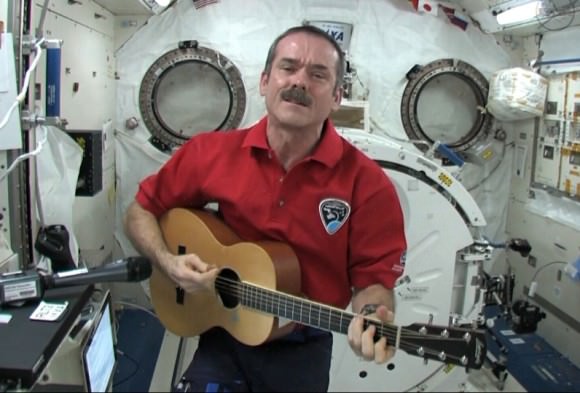
Settle the Moon Before Mars, Says Astronaut Chris Hadfield In the coming decades, NASA has some rather bold plans for space exploration. By the 2030s, they hope to mount their “Journey to Mars“. a crewed mission that will see astronauts traveling beyond Earth for the first time since the Apollo era. At the same time, private companies and organizations like SpaceX and MarsOne are hoping to start colonizing Mars within a decade or so. According to Chris Hadfield, these mission concepts are all fine and good. But as he explained in a recent interview, our efforts should be focused on renewed exploration of the MoonRead More →

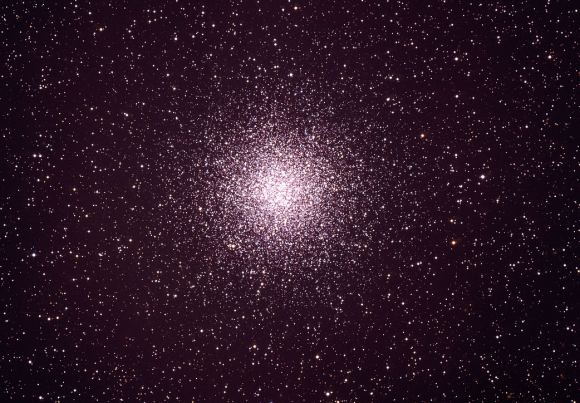
Messier 55 – the NGC 6809 Globular Star Cluster Welcome back to Messier Monday! We continue our tribute to our dear friend, Tammy Plotner, by looking at the “Summer Rose Star”, other known as the globular star cluster of Messier 55. Enjoy! In the 18th century, while searching the night sky for comets, French astronomer Charles Messier kept noting the presence of fixed, diffuse objects in the night sky. In time, he would come to compile a list of approximately 100 of these objects, with the purpose of making sure that astronomers did not mistake them for comets. However, this list – known as theRead More →

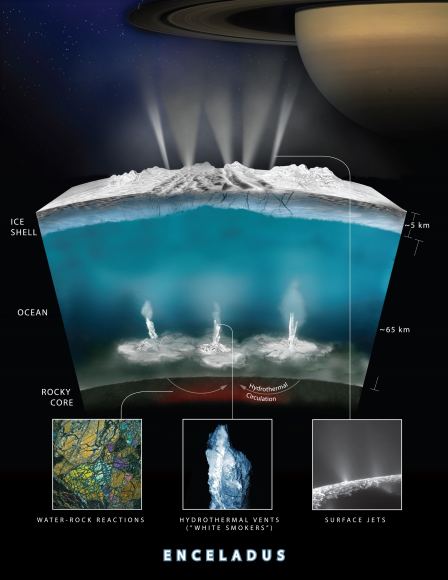
NASA Says James Webb Telescope will Study Solar System’s “Ocean Worlds” In October of 2018, the James Webb Space Telescope (JWST) will be launched into orbit. As part of NASA’s Next Generation Space Telescope program, the JWST will spend the coming years studying every phase of cosmic history. This will involve probing the first light of the Universe (caused by the Big Bang), the first galaxies to form, and extra-solar planets in nearby star systems. In addition to all of that, the JWST will also be dedicated to studying our Solar System. As NASA recently announced, the telescope will use its infrared capabilities to studyRead More →

With the help of a gigantic cosmic lens, astronomers have measured the magnetic field of a galaxy nearly five billion light-years away. The achievement is giving them important new clues about a problem at the frontiers of cosmology—the nature and origin of the magnetic fields that play an important role in how galaxies develop over time. Powered by WPeMaticoRead More →
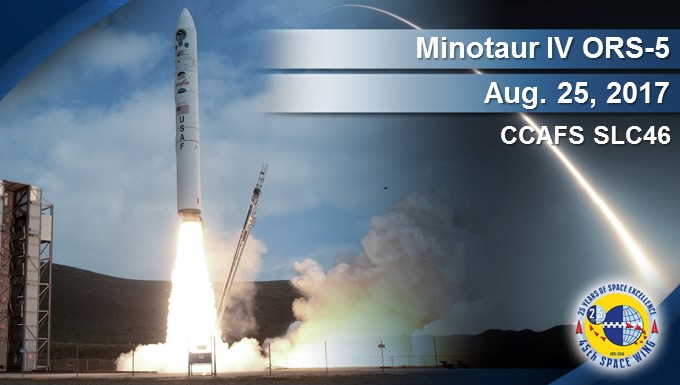
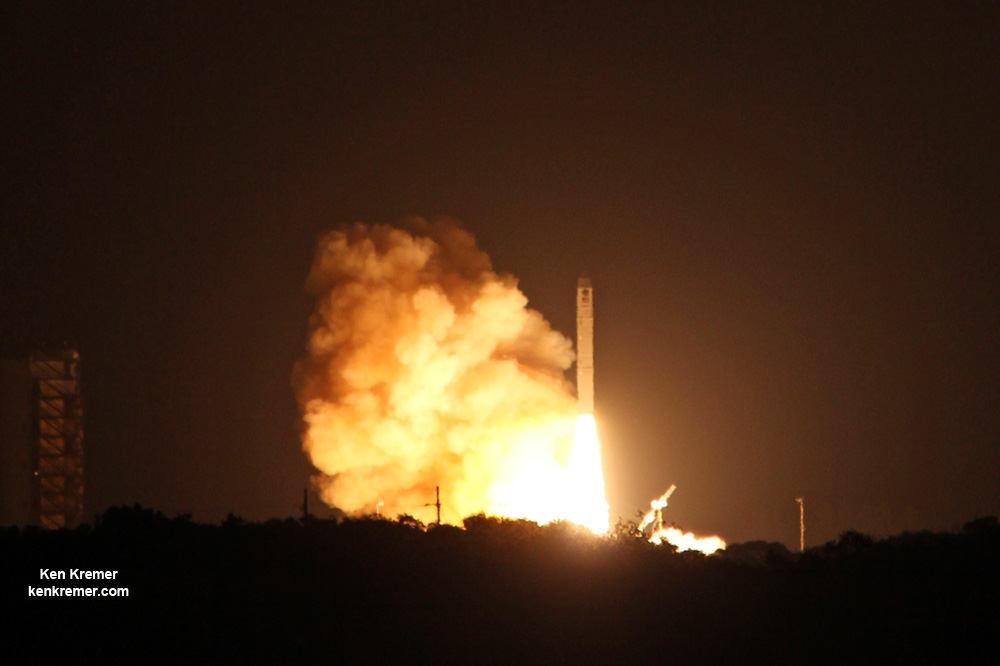
Cold-War Era Derived ICBM Blasts Military ORS-5 Surveillance and Space Junk Tracking Satellite to Orbit ICBM derived Minotaur IV overnight launch of the ORS-5 space situational awareness and debris tracking satellite for the U.S. Air Force at 2:04 a.m. EDT on August 26, 2017 from Cape Canaveral Air Force Station in Florida. Credit: Ken Kremer/kenkremer.com CAPE CANAVERAL AIR FORCE STATION, FL — A Cold War-era derived Peacekeeper ICBM missile formerly armed with multiple nuclear warheads and now modified as a payload orbiter successfully launched an urgently needed space situational awareness and space junk tracking satellite to orbit overnight this morning, Aug. 26, for the U.S.Read More →

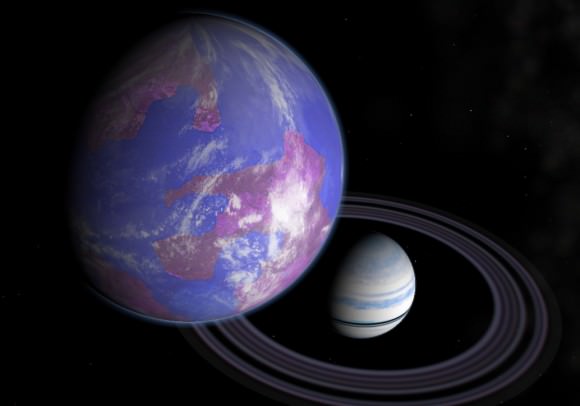
Is the “Alien Megastructure” around Tabby’s Star Actually a Ringed Gas Giant? KIC 8462852 (aka. Tabby’s Star) continues to be a source of both fascination and controversy. Ever since it was first seen to be undergoing strange and sudden dips in brightness (in October of 2015) astronomers have been speculating as to what could be causing this. Since that time, various explanations have been offered, including large asteroids, a large planet, a debris disc or even an alien megastructure. The latest suggestion for a natural explanation comes from the University of Antioquia in Colombia, where a team of researchers have proposed that both the largerRead More →

Dragonfly Proposed to NASA as Daring New Frontiers Mission to Titan In late 1970s and early 80s, scientists got their first detailed look at Saturn’s largest moon Titan. Thanks to the Pioneer 11 probe, which was then followed by the Voyager 1 and 2 missions, the people of Earth were treated to images and readings of this mysterious moon. What these revealed was a cold satellite that nevertheless had a dense, nitrogen-rich atmosphere. Thanks to the Cassini-Huygens mission, which reached Titan in July of 2004 and will be ending its mission on September 15th, the mysteries of this moon have only deepened. Hence why NASA hopesRead More →

The Seven Sisters, as they were known to the ancient Greeks, are now known to modern astronomers as the Pleiades star cluster – a set of stars which are visible to the naked eye and have been studied for thousands of years by cultures all over the world. Now Dr Tim White of the Stellar Astrophysics Centre at Aarhus University and his team of Danish and international astronomers have demonstrated a powerful new technique for observing stars such as these, which are ordinarily far too bright to look at with high performance telescopes. Their work is published in the Monthly Notices of the Royal AstronomicalRead More →

Threat Tracking USAF Satellite Launching Nighttime Aug 25 on Cape Debut of Retired ICBM Minotaur Rocket: Watch Live An Orbital ATK Minotaur IV rocket carrying the ORS-5 USAF surveillance satellite is slated for its maiden liftoff from Cape Canaveral Air Station, Florida at 11:15 p.m. EDT on August 25, 2017 on a retired ICBM. Credit: U.S. Air Force CAPE CANAVERAL AIR FORCE STATION, FL — A gap filling space surveillance satellite that will track orbiting threats for the U.S. Air Force is set for an thrilling nighttime blastoff Friday, Aug. 25 on the maiden mission of the Minotaur IV rocket from Cape Canaveral that’s poweredRead More →

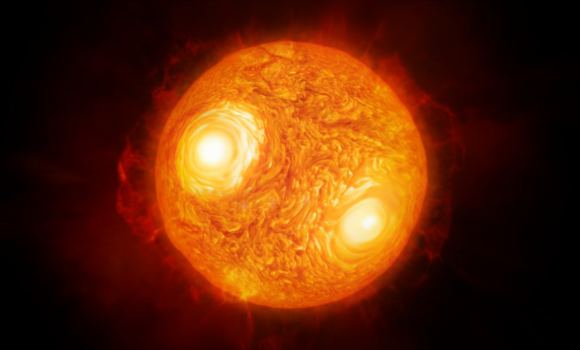
New Study of Antares Creates the Best Map Ever of a Distant Star When stars exhaust their supply of hydrogen fuel, they exit the main sequence phase of their evolution and enter into what is known as the Red Giant Branch (RGB) phase. This is characterized by the stars expanding significantly and becoming tens of thousands of times larger than our Sun. They also become dimmer and cooler, which lends them a reddish-orange appearance (hence the name). Recently, a team of astronomers used the ESO’s Very Large Telescope Interferometer (VLTI) to map one such star, the red supergiant Antares. In so doing, they were ableRead More →

Carnival of Space #523 This week’s Carnival of Space is hosted by Brad Rogers at The Evolving Planet blog. Click here to read Carnival of Space #523. And if you’re interested in looking back, here’s an archive to all the past Carnivals of Space. If you’ve got a space-related blog, you should really join the carnival. Just email an entry to carnivalofspace@gmail.com, and the next host will link to it. It will help get awareness out there about your writing, help you meet others in the space community – and community is what blogging is all about. And if you really want to help out,Read More →

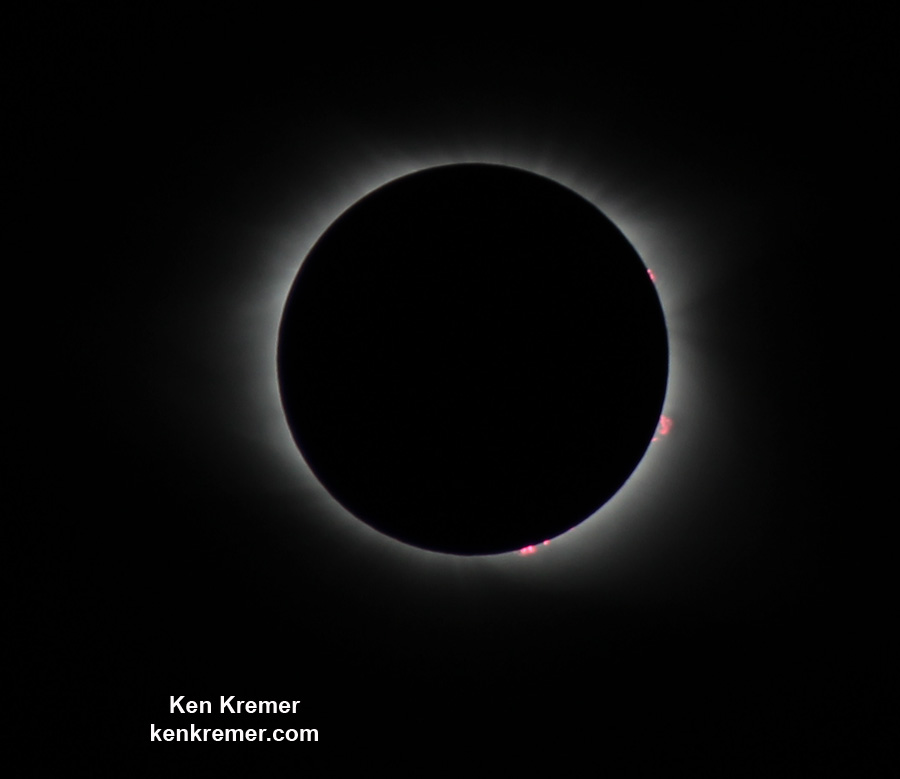
Witnessing the 2017 Total Solar Eclipse Across America Mesmerizes Millions: Photo/Video Gallery Solar corona and prominences during the total solar eclipse across America on Monday, August 21, 2017, as seen from Santee, South Carolina and 4.8 miles from the centerline. Credit: Ken Kremer/kenkremer.com SANTEE, SOUTH CAROLINA – Witnessing ‘Totality’ during Monday’s ‘Great American Solar Eclipse’ was a truly mesmerizing experience far beyond anything I imagined and something I will never forget -That’s a sentiment shared by millions upon millions of fellow gushing spectators. I was stationed in Santee, South Carolina, near Lake Marion and close to the centerline of Totality, along with space journalist friendRead More →

Mars Express Captures Mars’ Moving Bow Shock Every planet in our Solar System interacts with the stream of energetic particles coming from our Sun. Often referred to as “solar wind”, these particles consist mainly of electrons, protons and alpha particles that are constantly making their way towards interstellar space. Where this stream comes into contact with a planet’s magnetosphere or atmosphere, it forms a region around them known as a “bow shock”. These regions form in front of the planet, slowing and diverting solar wind as it moves past – much like how water is diverted around a boat. In the case of Mars, itRead More →