High-resolution observations with the Atacama Large Millimeter/submillimeter Array (ALMA) imaged a rotating dusty gas torus around an active supermassive black hole. The existence of such rotating donuts-shape structures was first suggested decades ago, but this is the first time one has been confirmed so clearly. This is an important step in understanding the co-evolution of supermassive black holes and their host galaxies. Powered by WPeMaticoRead More →
Astrophysicists at MIPT have developed a model for testing a hypothesis about supermassive black holes at the centers of galaxies. The new model enables scientists to predict how much rotational energy a black hole loses when it emits beams of ionized matter known as astrophysical jets. The energy loss is estimated based on measurements of a jet’s magnetic field. The paper was published in the journal Frontiers in Astronomy and Space Sciences. Powered by WPeMaticoRead More →
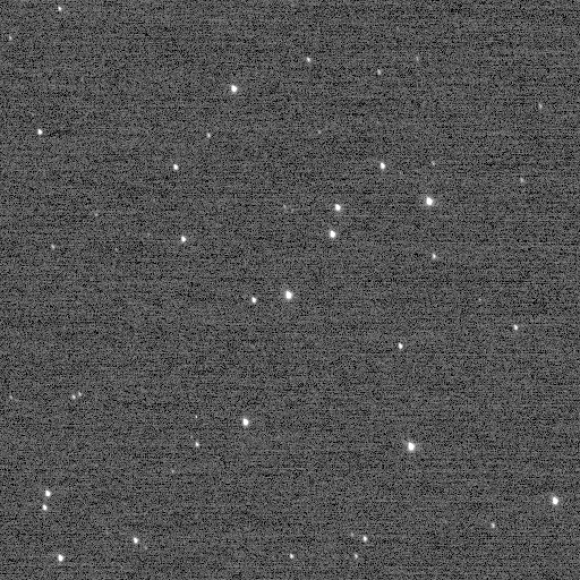
New Horizons Just Took a Record Breaking Image. No Camera Has Ever Taken a Picture From This Far From Earth In July of 2015, the New Horizons mission made history by being the first spacecraft to rendezvous with Pluto. In the course of conducting its flyby, the probe gathered volumes of data about Pluto’s surface, composition, atmosphere and system of moons. It also provided breathtaking images of Pluto’s “heart”, its frozen plains, mountain chains, and it’s mysterious “bladed terrain”. Since that time, New Horizons has carried on to the Kuiper Belt for the sake of conducting more historic encounters. In preparation for these, the probeRead More →

Carnival of Space #548 This week’s Carnival of Space is hosted by Brian Wang at his Next Big Future blog. Click here to read Carnival of Space #548 And if you’re interested in looking back, here’s an archive to all the past Carnivals of Space. If you’ve got a space-related blog, you should really join the carnival. Just email an entry to susie@wshcrew.space, and the next host will link to it. It will help get awareness out there about your writing, help you meet others in the space community – and community is what blogging is all about. And if you really want to help out, sign upRead More →

The ESPRESSO instrument on ESO’s Very Large Telescope in Chile has used the combined light of all four of the 8.2-meter Unit Telescopes for the first time. Combining light from the Unit Telescopes in this way makes the VLT the largest optical telescope in existence in terms of collecting area. Powered by WPeMaticoRead More →

ESO’s VLT Working as 16-metre Telescope for First Time The ESPRESSO instrument on ESO’s Very Large Telescope in Chile has used the combined light of all four of the 8.2-metre Unit Telescopes for the first time. Combining light from the Unit Telescopes in this way makes the VLT the largest optical telescope in existence in terms of collecting area. ESO News Feed Go to Source Powered by WPeMaticoRead More →

Researchers have carried out a chemical abundance analysis of three chemically peculiar stars, HD 51959, HD 88035 and HD 121447. The research, based on spectroscopic data acquired by the Fiber-fed Extended Range Optical Spectrograph (FEROS), finds that the three objects are nitrogen-enhanced barium stars. The results were presented February 5 in a paper published on arXiv pre-print server. Powered by WPeMaticoRead More →

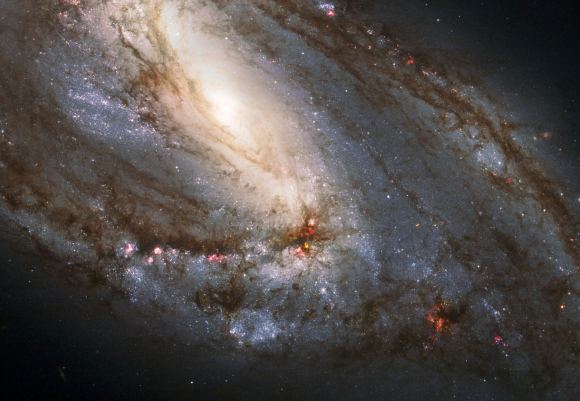
Messier 66 – the NGC 3627 Intermediate Spiral Galaxy Welcome back to Messier Monday! Today, we continue in our tribute to our dear friend, Tammy Plotner, by looking at the intermediate spiral galaxy known as Messier 65. In the 18th century, while searching the night sky for comets, French astronomer Charles Messier kept noting the presence of fixed, diffuse objects he initially mistook for comets. In time, he would come to compile a list of approximately 100 of these objects, hoping to prevent other astronomers from making the same mistake. This list – known as the Messier Catalog – would go on to become oneRead More →

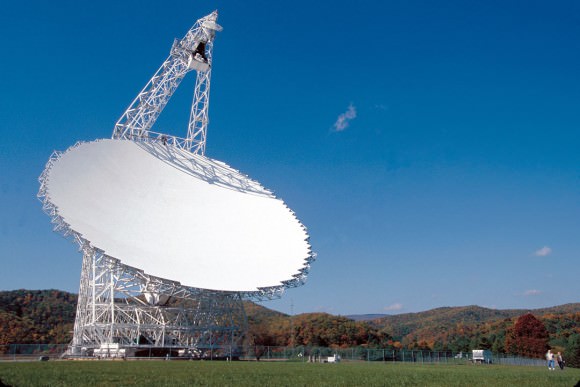
If We Receive a Message From Aliens, Should We Delete it Without Reading it? Roughly half a century ago, Cornell astronomer Frank Drake conducted Project Ozma, the first systematic SETI survey at the National Radio Astronomy Observatory in Green Bank, West Virginia. Since that time, scientists have conducted multiple surveys in the hopes of find indications of “technosignatures” – i.e. evidence of technologically-advanced life (such as radio communications). To put it plainly, if humanity were to receive a message from an extra-terrestrial civilization right now, it would be the single-greatest event in the history of civilization. But according to a new study, such a messageRead More →

When the Mayall first opened its eye to the sky 45 years ago, it was one of the largest optical telescopes in existence. Designed to be versatile, its mission was to assist astronomers in addressing the wide diversity of astronomical questions facing the field. Tremendously successful, it played an important role in many astronomical discoveries, such as establishing the role of dark matter in the Universe from measurements of galaxy rotation, and determining the scale and structure of the Universe. Powered by WPeMaticoRead More →

An international group of astronomers has detected a new “hot Jupiter” exoplanet making a near-grazing transit of its host star. The newly found alien world, designated WASP-174b, is most likely similar in size and mass to Jupiter, however much hotter than our solar system’s biggest planet. The discovery is reported February 2 in a paper published on arXiv.org. Powered by WPeMaticoRead More →

Researchers Just Scanned 14 Worlds From the Kepler Mission for “Technosignatures”, Evidence of Advanced Civilizations When it comes to looking for life on extra-solar planets, scientists rely on what is known as the “low-hanging fruit” approach. In lieu of being able to observe these planets directly or up close, they are forced to look for “biosignatures” – substances that indicate that life could exist there. Given that Earth is the only planet (that we know of) that can support life, these include carbon, oxygen, nitrogen and water. However, while the presence of these elements are a good way of gauging “habitability”, they are not necessarilyRead More →

Carnival of Space #547 It’s that time again! This week’s Carnival of Space is hosted by Pamela Hoffman at the Everyday Spacer blog. Click here to read Carnival of Space #547. And if you’re interested in looking back, here’s an archive to all the past Carnivals of Space. If you’ve got a space-related blog, you should really join the carnival. Just email an entry to susie@wshcrew.space, and the next host will link to it. It will help get awareness out there about your writing, help you meet others in the space community – and community is what blogging is all about. And if you really want toRead More →

A star about 100 light years away in the Pisces constellation, GJ 9827, hosts what may be one of the most massive and dense super-Earth planets detected to date according to new research led by Carnegie’s Johanna Teske. This new information provides evidence to help astronomers better understand the process by which such planets form. Powered by WPeMaticoRead More →

The Solar System Probably has Thousands of Captured Interstellar Asteroids On October 19th, 2017, the Panoramic Survey Telescope and Rapid Response System-1 (Pan-STARRS-1) in Hawaii announced the first-ever detection of an interstellar asteroid, named 1I/2017 U1 (aka. ‘Oumuamua). Originally thought to be a comet, this interstellar visitor quickly became the focus of follow-up studies that sought to determine its origin, structure, composition, and rule out the possibility that it was an alien spacecraft! While ‘Oumuamua is the first known example of an interstellar asteroid reaching our Solar System, scientists have long suspected that such visitors are a regular occurrence. Aiming to determine just how common,Read More →