Most galaxies lie in clusters containing from a few to thousands of objects. Our Milky Way, for example, belongs to a cluster of about fifty galaxies called the Local Group whose other large member is the Andromeda galaxy about 2.3 million light-years away. Clusters are the most massive gravitationally bound objects in the universe and form (according to current ideas) in a “bottoms-up” fashion with smaller structures developing first and larger groupings assembling later in cosmic history. Dark matter plays an important role in this growth process. Powered by WPeMaticoRead More →

There’s trouble in paradise as Christmas evening in the Cydonia bunker turns ugly. Alcohol may be the culprit. But equally, the blame may lie with suffering a whole day of pretending to like one another and f***ing Christmas songs!   So, while tensions rise and arguments flare, Ralph, Paul and Jen run through the memorable space and astronomy events of 2017 and look forward to the treats in store for 2018.   Then there’s the small matter of John’s annual outtake reel specifically designed to embarrass the hosts and push the bounds of decency as far as politeness will allow!   Main music courtesy ofRead More →

We are currently under the influence of a coronal hole solar wind stream. The solar wind speed has picked up to 550km/s but there hasn’t really been much of a geomagnetic response as the solar wind density and interplanetary magnetic field values have been rather mediocre. Powered by WPeMaticoRead More →
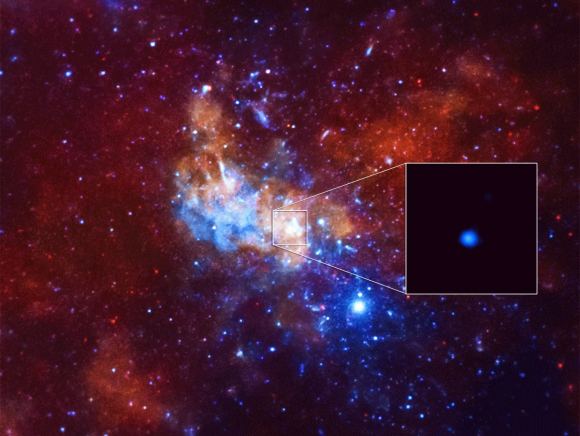
Mysterious Filament is Stretching Down Towards the Milky Way’s Supermassive Black Hole The core of the Milky Way Galaxy has always been a source of mystery and fascination to astronomers. This is due in part to the fact that our Solar System is embedded within the disk of the Milky Way – the flattened region that extends outwards from the core. This has made seeing into the bulge at the center of our galaxy rather difficult. Nevertheless, what we’ve been able to learn over the years has proven to be immensely interesting. For instance, in the 1970s, astronomers became aware of the Supermassive Black HoleRead More →

With the BBC Stargazing live clouding over this year. The team at Go Stargazing are coming to our rescue. Over the 16th & 17th February various Societies across the UK will be hosting events. Check out their website for more information. http://gostargazing.co.uk/2018Read More →

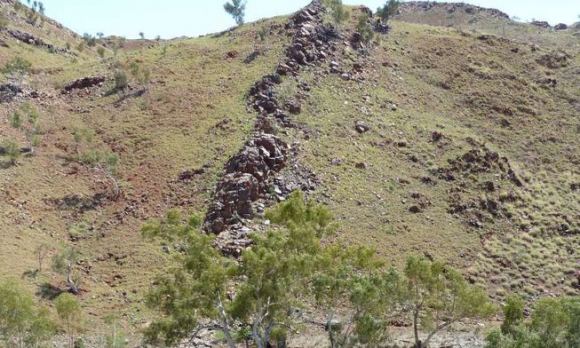
Just a Billion Years After the Earth Formed, Life had Already Figured out Plenty of Tricks Life on Earth has had a long and turbulent history. Scientists estimate that roughly 4 billion years ago, just 500 million years after planet Earth formed, the first single-celled lifeforms arose. By the Archean Eon (4 to 2.5 billion years ago), multi-celled lifeforms are believed to have emerged. While the existence of such organisms (Archaea) has been inferred from carbon isotopes found in ancient rocks, fossil evidence has remained elusive. All of that has changed, thanks to a recent study performed by a team of researchers from UCLA andRead More →

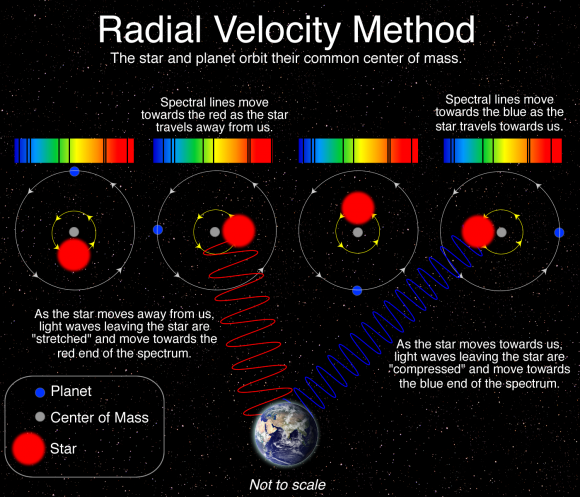
What is the Radial Velocity Method? Welcome back to our series on Exoplanet-Hunting methods! Today, we look at another widely-used and popular method of exoplanet detection, known as the Radial Velocity (aka. Doppler Spectroscopy) Method. The hunt for extra-solar planets sure has heated up in the past decade or so! Thanks to improvements made in instrumentation and methodology, the number of exoplanets discovered (as of December 1st, 2017) has reached 3,710 planets in 2,780 star systems, with 621 system boasting multiple planets. Unfortunately, due to the limits astronomers are forced to contend with, the vast majority have been discovered using indirect methods. When it comesRead More →

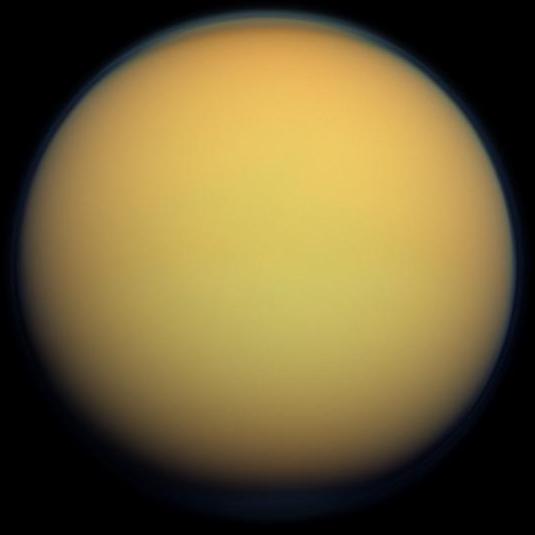
Yes Please! NASA is Considering a Helicopter Mission to Titan The only thing cooler than sending a helicopter drone to explore Titan is sending a nuclear powered one to do the job. Called the “Dragonfly” spacecraft, this helicopter drone mission has been selected as one of two finalists for NASA’s robotic exploration missions planned for the mid 2020’s. NASA selected the Dragonfly mission from 12 proposals they were considering under their New Horizons program. Titan is Saturn’s largest moon, and is a primary target in the search for life in our Solar System. Titan has liquid hydrocarbon lakes on its surface, a carbon-rich chemistry, andRead More →

Astronomers Figure Out a New Way to Search for Planets at Alpha Centauri At a distance of 4.37 light-years from Earth, Alpha Centauri is the nearest star system to our own. For generations, scientists and speculative thinkers have pondered whether it might have a planetary system like our own Sun, and whether or not life may also exist there. Unfortunately, recent efforts to locate extra-solar planets in this star system have failed, with potential detections later shown to be the result of artifacts in the data. In response to these failed efforts, several more ambitious projects are being developed to find exoplanets around Alpha Centauri.Read More →

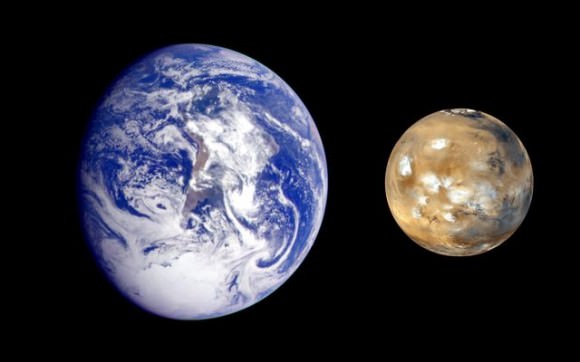
Maybe Mars and Earth Didn’t Form Close to Each Other In recent years, astronomers have been looking to refine our understanding of how the Solar System formed. On the one hand, you have the traditional Nebular Hypothesis which argues that the Sun, the planets, and all other objects in the Solar System formed from nebulous material billions of years ago. However, astronomers traditionally assumed that the planets formed in their current orbits, which has since come to be questioned. This has come to be challenged by theories like the Grand Tack model. This theory states that Jupiter migrated from its original orbit after it formed,Read More →

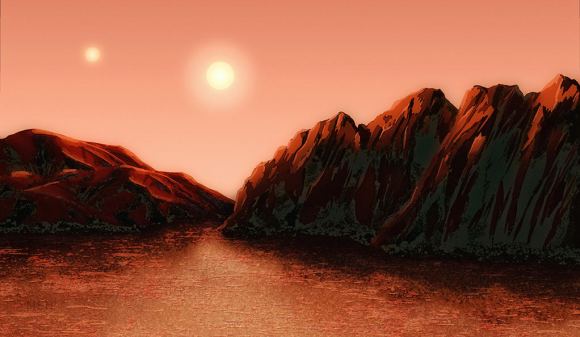
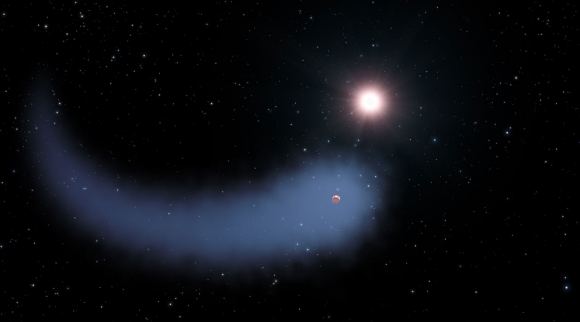
Red Dwarf Star, Planet Orbiting at Right Angles. Mayhem. When we think of other planetary systems, we tend to think that they will operate by the same basic rules as our own. In the Solar System, the planets orbit close to the equatorial plane of the Sun – meaning around its equator. The Sun’s rotational axis, the direction of its poles based to its rotation, is also the same as most of the planets’ (the exception being Uranus, which rotates on its side). But if the study of extra-solar planets has taught us anything, it is that the Universe is full of possibilities. Consider theRead More →

Weekly Space Hangout – Dec 20, 2017: The Year in Review Hosts: Fraser Cain (universetoday.com / @fcain) Dr. Paul M. Sutter (pmsutter.com / @PaulMattSutter) Dr. Kimberly Cartier (KimberlyCartier.org / @AstroKimCartier ) Dr. Morgan Rehnberg (MorganRehnberg.com / @MorganRehnberg & ChartYourWorld.org) Announcements: If you would like to join the Weekly Space Hangout Crew, visit their site here and sign up. They’re a great team who can help you join our online discussions! We record the Weekly Space Hangout every Wednesday at 5:00 pm Pacific / 8:00 pm Eastern. You can watch us live on Universe Today, or the Weekly Space Hangout YouTube page – Please subscribe! TheRead More →